
24/7 Customer Support

Free returns

Same-day & Next-day Delivery

Quality Guaranteed

Unlock Your Welcome Offers: FREE Delivery | Up to 80% OFF | Free 30-day JoyPlus trial
Download the APP
Replacing dim or ageing halogen bulbs can make night driving feel more comfortable, but choosing LED car headlight bulbs is not simply a matter of selecting the highest lumen figure. The wrong fitting may not lock into the housing, an unsuitable beam pattern can dazzle other road users, and some vehicles may display a dashboard warning after installation.
This guide explains which specifications matter, how to avoid common buying traps and which options may suit different UK driving needs.
Terms such as “universal fit” usually refer to a range of vehicles, not every car. A bulb labelled H7 will not normally replace an H4, H11 or HIR2 fitting. Check the original bulb, owner’s manual or vehicle parts catalogue before ordering.
Common types include:
A physical match does not automatically guarantee electrical or optical compatibility.
Listings may quote very large lumen figures or percentage improvements over halogen. These figures can be useful for comparison within one product range, but they do not alone confirm useful road illumination. Beam control, LED chip position, reflector or projector design and correct bulb alignment are equally important.
A poorly focused high-output bulb can create scattered light and glare. Look for a 1:1 bulb design, a focused beam description and an installation orientation that matches the original filament position.
LEDs produce less waste light than halogen, but the LED chips and driver still generate heat. Compact bulbs may use an aluminium heat sink, copper components or a cooling fan. Fan-cooled designs can offer active heat removal but need sufficient clearance behind the dust cover.
Modern vehicles may also monitor bulb resistance. CANbus error-free LED bulbs can reduce the risk of flickering or warning messages, but “error-free” is not a guarantee for every vehicle. Sensitive cars may still require a decoder or resistor module.
Start with the exact code printed on the original bulb. Do not rely solely on a retailer’s vehicle list, particularly if the car has been modified or has different headlamp options across trim levels.
For HID replacements, confirm that the vehicle has a compatible HID assembly. A D1S or D4S LED replacement is not a direct substitute for a halogen H7 or H11 system. Likewise, a HIR2 9012 bulb is not interchangeable with H4, H7 or H13 fittings.
A practical LED replacement should place its light-emitting chips as close as possible to the original filament position. This helps the reflector or projector create a more controlled beam.
Colour temperature is also worth considering:
For fog lamps, colour alone does not determine suitability. Check the lamp’s approved function, beam pattern and whether the bulb physically fits. Some products are listed as LED fog light bulbs, but their use on public roads still depends on the complete lamp and applicable requirements.
Aluminium housings can help transfer heat away from the LED chips. Fan-cooled bulbs need room for the fan and may produce some operating noise, while fanless designs avoid a moving part and can be easier to package in a confined housing.
An IP rating, such as IP65 or IP68, indicates resistance to dust and water under defined test conditions. It does not confirm road legality or guarantee that every headlamp housing will remain sealed after installation.
Before purchasing, compare the bulb dimensions with the rear of the headlamp. A bulb that is technically the correct code may not allow the dust cap to close properly.
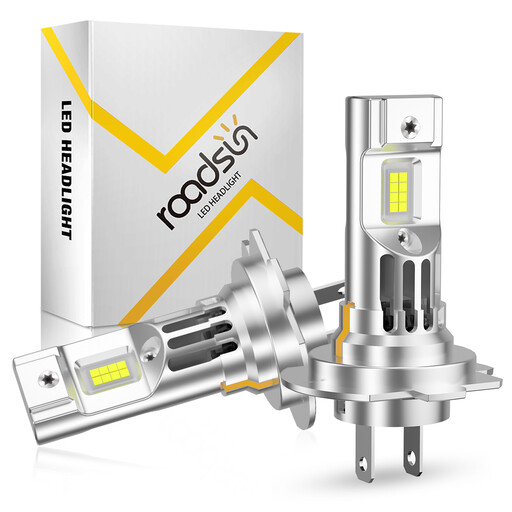
Why This Fits Their Persona: A straightforward option for DIY motorists whose vehicle already uses H7 bulbs and who want direct installation without a separate adapter.
The listing specifies an H7 socket, direct plug-and-play installation and a built-in fan, helping buyers check the key requirements before ordering.
6500K white light, IP68-rated housing according to the listing and a claimed 50,000-hour operating life.
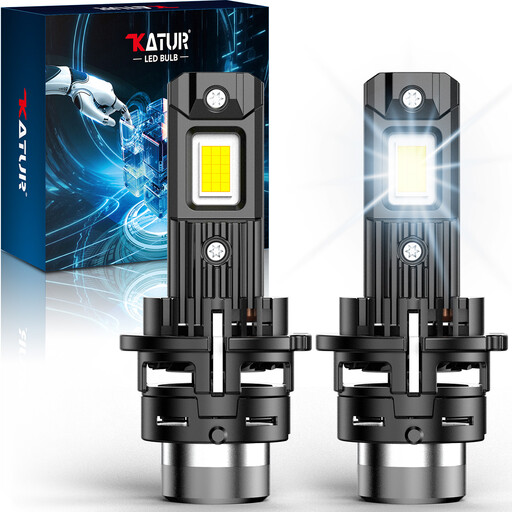
Why This Fits Their Persona: Suitable for drivers with a D4S HID headlamp assembly who want a compact replacement with active cooling and a cool-white appearance.
The product information clearly states that it is for HID assemblies only, preventing an unsuitable halogen-to-D4S purchase.
1:1 design, built-in 16,000 RPM fan and aluminium construction, with a claimed 60,000-hour lifespan.
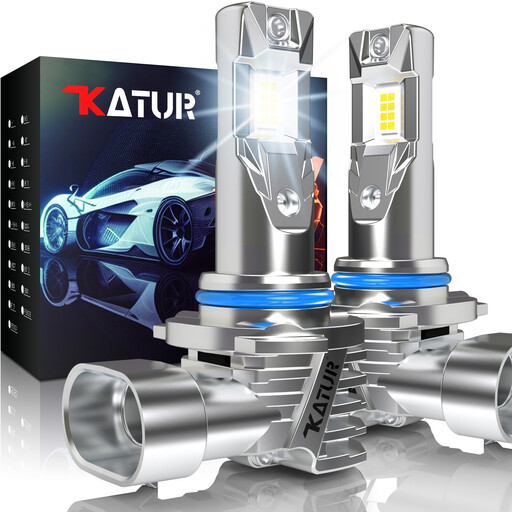
Why This Fits Their Persona: A compact choice for drivers using HIR2/9012 sockets, particularly where limited rear clearance makes a fanless design practical.
Its product information identifies the HIR2/9012 fitting and advises checking clearance beneath the dust cover, rather than relying on a generic compatibility claim.
Fanless mini format, 6000K white output and IP-rated construction according to the listing.
We have compiled a complete, real-time list of products that fully satisfy these strict selection criteria and UK safety regulations.
Before fitting any bulb:
LED retrofits may not be suitable for every headlamp approval. Check the lamp markings, product documentation and current UK requirements before using a conversion bulb on public roads. A successful physical installation does not automatically establish compliance, and incorrect beam aim can create an MOT issue or glare for oncoming traffic. Inform your insurer if the lighting system is modified.
They can be, provided the replacement uses the same fitting and the headlamp has enough rear clearance. “Plug and play” normally means no external wiring modification, but some vehicles still need an adapter, retaining clip or CANbus decoder.
Many listings quote operating lives between 50,000 and 60,000 hours. These are manufacturer or seller specifications rather than a guarantee of real-world service life. Heat, vibration, voltage stability, moisture and daily usage all affect longevity.
LEDs can use less electrical power for a comparable lighting function, but the exact saving depends on wattage, driving hours and the vehicle’s charging system. Purchase price, installation requirements and replacement compatibility should be considered alongside energy use.