
24/7 Customer Support

Free returns

Same-day & Next-day Delivery

Quality Guaranteed

Unlock Your Welcome Offers: FREE Delivery | Up to 80% OFF | Free 30-day JoyPlus trial
Download the APP
Driving at night on poorly lit British roads can be a challenge. If your car is still equipped with standard halogen bulbs, you are likely familiar with that dim, yellowish glow that offers limited visibility, especially in rain or fog. Upgrading to modern LED car headlight bulbs can transform your nighttime driving experience, improving both safety and the look of your vehicle.
However, the market is filled with options, making it difficult to know what to choose. This guide is designed to cut through the clutter, providing practical advice to help you select the right LED headlight upgrade for your car. We will cover key features to look for and present some of our top recommendations for 2026.
Before purchasing, it is important to consider a few key factors to ensure you get a product that is compatible, safe and effective.
The first step is to identify the correct bulb fitment for your vehicle. Headlight bulbs come in various standardised types, such as H7, H4 or 9005. Using the wrong fitment will mean the bulb simply will not install in your headlight housing. You can find this information in your vehicle’s owner's manual or by inspecting the base of the existing bulb you wish to replace. A correct fit is the foundation of a successful H4 headlight upgrade or 9005 LED conversion kit installation.
A quality LED bulb should do more than just produce bright light; it must direct that light correctly. A poor beam pattern can create dark spots on the road and, more dangerously, cause significant glare for oncoming drivers. Look for bulbs designed to mimic the original halogen filament placement. Many modern options, including some with an integrated LED projector lens for cars, are engineered to create a sharp, focused beam with a clear cut-off line.
In terms of colour, most drivers prefer 6000K headlight bulbs. This colour temperature produces a bright white car bulb light, similar to natural daylight, which can improve clarity and reduce eye strain.
For many DIY enthusiasts, ease of installation is a major factor. Many modern LED bulbs are designed as plug and play car lights, requiring no complex wiring or modifications.
Additionally, most vehicles manufactured in the last 15-20 years use a CANbus (Controller Area Network) system to monitor the vehicle's electronics. Because LEDs draw less power than halogens, the system can mistakenly register a fault and display a warning light on your dashboard. To avoid this, it is advisable to choose CANbus ready LED headlights, which have built-in components to communicate correctly with your car’s computer.
Based on their features and design, here are a few noteworthy options available on the market.
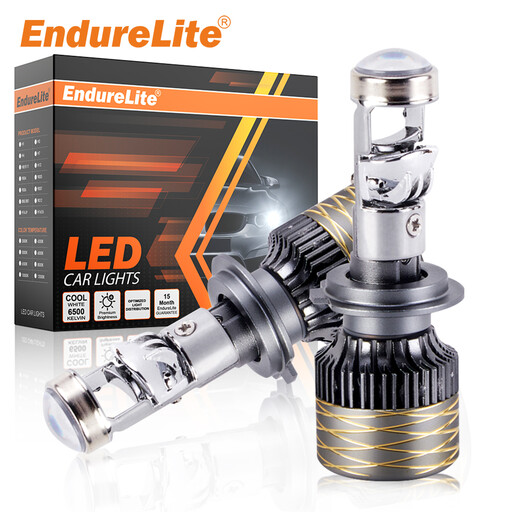
Why It Stands Out: This kit’s main advantage is its versatility and focus on replicating the original beam pattern. Designed to be the same size as stock bulbs and featuring ultra-thin chip spacing, it aims to provide a focused beam without creating dark spots or glare. The manufacturer states it offers a significant brightness increase over standard halogen bulbs.
Pros:
Who is it for? Drivers looking for a reliable and direct replacement for their dim halogen bulbs, who value an easy installation process and a clean, correct beam pattern.
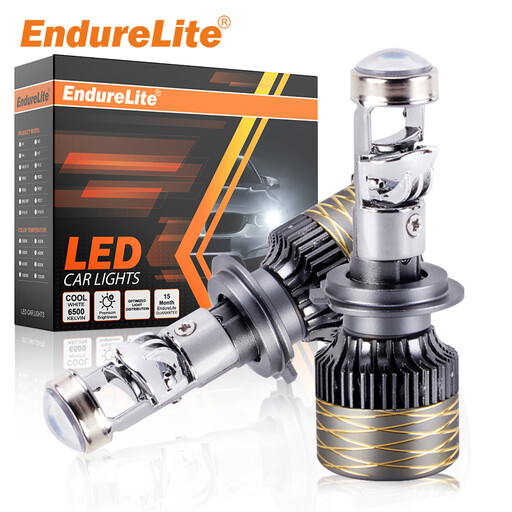
Why It Stands Out: The key feature here is the integrated LED projector lens. This design focuses the light into a highly controlled beam with a very sharp cut-off, maximising light on the road ahead while minimising stray light that could dazzle other drivers. It is an all-in-one solution for achieving a premium, projector-style beam without replacing the entire headlight housing.
Pros:
Who is it for? Car owners and DIY enthusiasts who want to achieve the sharpest possible beam pattern from their reflector headlights, prioritising performance and safety.
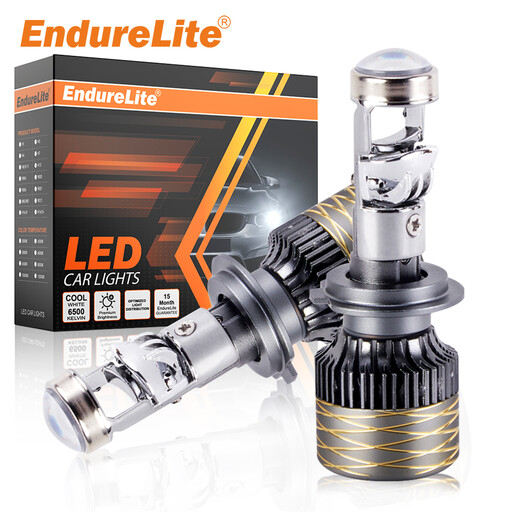
Why It Stands Out: This product offers the benefits of an integrated projector lens specifically for the very common H7 LED bulbs fitment. Its design is the same size as a standard H7 bulb, making it a direct, plug & play replacement that brings advanced lighting technology to a wide range of vehicles.
Pros:
Who is it for? Drivers with vehicles using H7 bulbs who want a simple yet highly effective upgrade that provides the sharp cut-off of a projector lens.
These recommendations represent just a fraction of the lighting upgrades available. If you are exploring different styles, fitments or technologies, we invite you to browse our full collection.
1. Are LED headlight conversion kits legal in the UK? In the UK, regulations for aftermarket lighting are specific. For a vehicle to pass its MOT test, the headlight must produce a beam pattern that is correct for the vehicle, has a clear cut-off and does not cause dazzle to other road users. When choosing an LED upgrade, it is crucial to select a high-quality bulb designed to accurately replicate the beam pattern of the original halogen bulb it is replacing. We always recommend checking the latest DVSA guidelines before making modifications to your vehicle's lighting system.
2. Will I need a CANbus decoder for my car? It depends on your vehicle. Many modern European cars (such as those from Audi, BMW, Volkswagen and Mercedes-Benz) use a CANbus system to monitor bulb status. Installing a low-power LED can trigger a "bulb out" warning on the dashboard. CANbus ready LED headlights have integrated circuitry to prevent this issue, making for a much simpler installation. If you are unsure, check your vehicle's specifications or forums for your specific model.
3. Will 6000K headlight bulbs appear blue? No, 6000K headlight bulbs produce a bright, neutral white light, often described as "cool white" or "daylight white." This colour is widely considered optimal for visibility and aesthetics. Light only begins to take on a noticeable blue tint at higher colour temperatures (e.g., 8000K and above), which can reduce effective illumination and may not be suitable for road use.