
24/7 Customer Support

Free returns

Same-day & Next-day Delivery

Quality Guaranteed

Unlock Your Welcome Offers: FREE Delivery | Up to 80% OFF | Free 30-day JoyPlus trial
Download the APP
Driving with older, dimmer halogen headlights can be a real challenge, especially on unlit country roads or during a classic British downpour. Not only does it reduce your visibility, but it also dates the appearance of your vehicle. An LED car light upgrade is a popular and effective way to enhance both safety and style, casting a brighter, clearer light on the road ahead while giving your car a sharp, modern look.
However, the market for automotive LED lighting is vast and can be confusing. How do you choose between a simple bulb swap and a full assembly replacement? How do you ensure compatibility with your specific vehicle? This guide is designed to cut through the clutter, providing practical advice to help you select the right lighting solution for your needs.
Before you commit to a purchase, it's important to understand a few key factors. Getting these right will ensure your upgrade is effective, compliant and a perfect fit for your car.
Your first decision is whether to replace the entire headlight unit or just the bulbs inside.
There is no one-size-fits-all solution in vehicle lighting. To avoid disappointment, you must verify compatibility with your car's make, model, year and, most importantly, its original headlight type. A vehicle originally fitted with halogen headlights requires a different upgrade kit than one fitted with factory Xenon (HID) lights. Always check the product specifications against your vehicle's details before purchasing.
The colour of a car bulb is measured in Kelvin (K). A standard halogen bulb is typically around 3200K, giving it a warm, yellowish hue. A 6000K white car bulb produces a crisp, cool white light that is much closer to natural daylight, significantly improving colour perception and clarity at night.
Equally important is the beam pattern. A correctly designed LED upgrade, whether a bulb or a full assembly, will replicate the original beam pattern to illuminate the road effectively without dazzling oncoming drivers. After any headlight installation, it is essential to have the beam alignment checked to ensure it complies with UK road traffic regulations.
As your Joybuy Product Recommendation Officer, I've filtered through the options to highlight some practical solutions that address common upgrade goals.
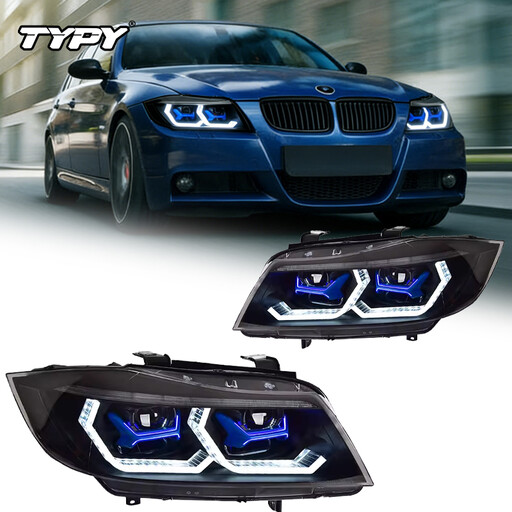
TYPY LED Head Lamp For BMW E90 (For Original Halogen Models)

TYPY LED Head Lamp For BMW E90 (For Original Xenon Models)
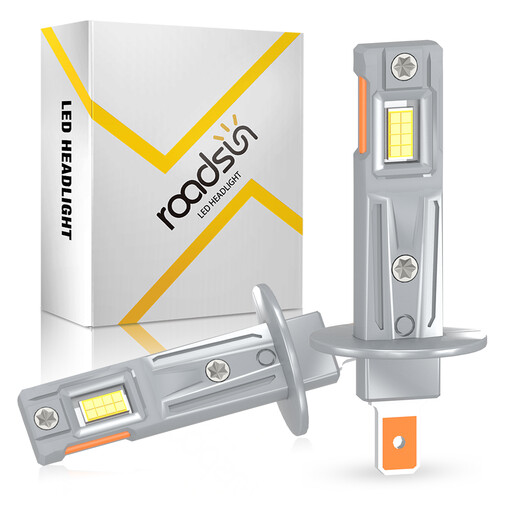
Roadsun H1 Fog Light Bulb, 6000K White
If these specific solutions aren't quite what you're looking for, or if you need to upgrade other lights on your vehicle, a wider selection is available. For components like individual indicator or brake light bulbs, you can find a variety of options to suit your needs.
Explore our full range of LED turn signals and other lighting solutions to find the perfect fit for your vehicle.
Yes, provided they meet certain criteria. For a car headlight assembly replacement, the entire unit must be E-marked (or meet equivalent standards) and be installed and aligned correctly to produce a legal beam pattern that does not cause glare for other road users. For bulb-only upgrades, it is vital that the LED bulb is designed to work correctly in the original headlight housing to maintain a safe and compliant beam pattern. Always check for correct alignment after installation.
These terms refer to the technology used to produce light. Halogen bulbs use a heated tungsten filament in a glass capsule filled with halogen gas, creating a yellowish light. Xenon, also known as High-Intensity Discharge (HID), creates light by passing an electric arc through xenon gas, resulting in a much brighter, whiter light. LEDs (Light-Emitting Diodes) are semiconductors that emit light when current flows through them. They are highly efficient, durable, offer instant-on brightness and provide a very clean, white light.
This depends on your vehicle's electrical system. Many modern cars use a CANbus (Controller Area Network) system to monitor for burnt-out bulbs. Because LEDs use significantly less power than halogen bulbs, the system may incorrectly flag a fault, leading to a dashboard warning light or flickering. A CANbus-compatible bulb or an external decoder (resistor) solves this by telling the car's computer that the bulb is functioning correctly. Check the product details and your vehicle's specifications to see if one is required.