
24/7 Customer Support

Free returns

Same-day & Next-day Delivery

Quality Guaranteed

Unlock Your Welcome Offers: FREE Delivery | Up to 80% OFF | Free 30-day JoyPlus trial
Download the APP
Upgrading to LED car lights seems like a straightforward way to enhance your vehicle's style and visibility. Whether you're after brighter headlights for dark country lanes or a customisable cabin with car interior ambient lighting, the market is flooded with options. However, many UK drivers find their exciting automotive lighting upgrade quickly turns into a frustrating experience with flickering bulbs, dashboard error messages or lights that fail an MOT.
Before you make a purchase, it's important to be aware of a few common pitfalls. Many sellers make bold claims about brightness that don't translate to better on-road performance. Others offer "universal" kits that create more problems than they solve. Here are the key issues to watch out for:
To avoid these issues, you don't need to be a mechanic but you do need to know what to look for. Focusing on a few core parameters will ensure you get a reliable and safe product.
The first step is ensuring the light physically fits your car. Headlight bulbs come in specific fittings like H4, H7 or H11. Your vehicle's owner's manual is the most reliable source for this information. For a hassle-free installation, look for bulbs designed with a 1:1 ratio to the original halogen bulb, as this usually means a direct, plug-and-play replacement.
Equally important is electronic compatibility. If your car was made in the last 15 years, you should look for kits that are advertised as "CANbus ready" or have a built-in error-free driver. This feature helps the bulbs communicate correctly with your car's computer, preventing those annoying dashboard warnings.
For headlights, the quality of the light output is paramount. A well-designed LED headlight bulb will have its LED chips positioned to mimic the filament of a traditional halogen bulb. This is what creates a sharp, focused beam pattern that illuminates the road without blinding others.
For all types of LED lights, from headlights to an RGB car light strip, the cooling system is a marker of quality. Look for components made from aerospace-grade aluminium and those that feature either a passive heat sink (fins to dissipate heat) or a small, high-RPM cooling fan. This is crucial for achieving the long operational life often quoted by manufacturers.
When it comes to car atmosphere lights, the considerations are different. These kits are more about aesthetics and customisation. Key things to check are:
Based on these practical criteria, we've matched a few standout options to different types of UK drivers.
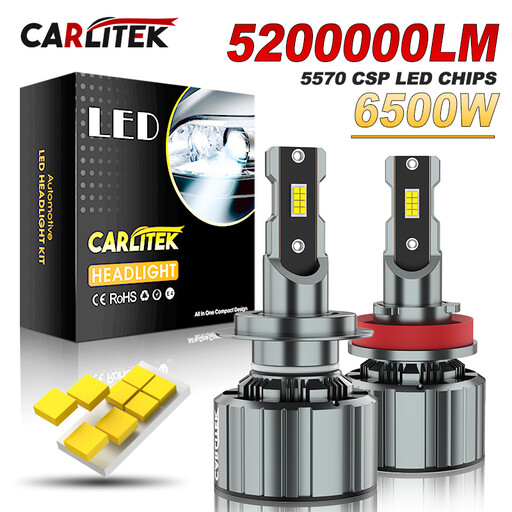
Why This Fits Their Persona: This is for the driver whose priority is road safety and MOT compliance. They need a reliable, no-fuss upgrade for their daily commute on unlit A-roads and motorways, not a complex modification project.
Its 1:1 halogen filament position design directly addresses the dangerous light-scatter issue, creating a super-focused beam pattern that won't blind oncoming traffic.
The built-in CANbus technology ensures compatibility with over 99% of vehicles, preventing flickering and dashboard errors. The IP68 waterproof rating adds durability for UK weather.
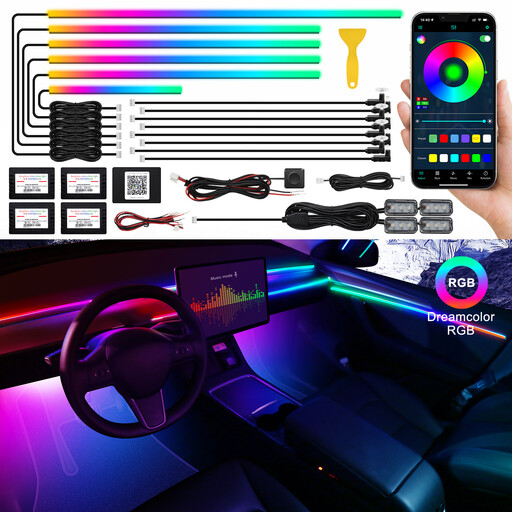
Why This Fits Their Persona: Perfect for the car enthusiast who loves personalising their ride. This comprehensive kit provides everything needed for a full cabin makeover, from dashboard and door strips to footwell and storage box lighting.
Unlike basic strips, this is a complete 18-in-1 system with main and sub-controllers, ensuring all lights work in sync and are powered correctly, avoiding dim or mismatched sections.
The acrylic light strips provide a uniform, soft glow and the kit is fully controllable via a smartphone app, including dynamic "Dreamcolor" chasing effects and a music sync function.
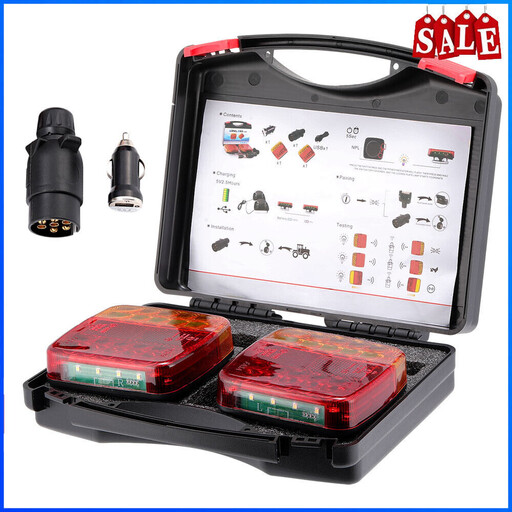
Why This Fits Their Persona: This is for anyone who tows a trailer, horsebox or caravan and is tired of dealing with faulty wiring. It offers a simple, robust and highly practical solution for essential towing safety.
It completely eliminates the most common point of failure: the wiring. There are no cables to corrode, get damaged or work loose. The strong magnetic base ensures they stay put on bumpy roads.
These **wireless trailer lights** are USB rechargeable and E11 marked, making them road legal. They can be swapped between vehicles in seconds with no tools required.
We have compiled a complete, real-time list of products that fully satisfy these strict selection criteria and UK safety regulations.
This is a common point of confusion. For a vehicle to pass its MOT, its headlights must produce a clear and correct beam pattern, be of an appropriate colour and not cause dazzle. While simply being an LED bulb is not illegal, many cheap aftermarket ones fail on the beam pattern requirement. To be compliant, an LED bulb must be E-marked and specifically designed to replicate the beam of its halogen equivalent in your car's specific headlamp unit. Always choose products from reputable sources that prioritise beam pattern accuracy.
Many LED kits are advertised with lifespans of 30,000 to 50,000 hours, which is significantly longer than halogen bulbs. However, this lifespan is heavily dependent on heat management. A bulb with a robust aluminium body and an active cooling fan is far more likely to reach its advertised lifespan than one with poor thermal design. For interior strips, longevity is generally excellent as they operate at very low temperatures.
Most modern car atmosphere lights and RGB car light strip kits are designed for DIY installation. Many are plug-and-play, drawing power from the 12V socket. The installation process typically involves tucking the fibre optic or acrylic strips into the gaps of your dashboard and door panels using a provided pry tool. While this is achievable for most people, if you want a seamless look with hidden wires connected directly to the fuse box, you may prefer to consult a professional auto electrician.