
24/7 Customer Support

Free returns

Same-day & Next-day Delivery

Quality Guaranteed

Unlock Your Welcome Offers: FREE Delivery | Up to 80% OFF | Free 30-day JoyPlus trial
Download the APP
Finding the right ceiling light can feel overwhelming. It’s no longer just about illuminating a room; it’s about setting the mood, complementing your decor and improving energy efficiency. With so many styles, features and technical terms, it's easy to get lost. This guide is designed to cut through the clutter, offering clear, practical advice to help you select the perfect LED ceiling lights for your home.
Before diving into specific products, let's cover a few key considerations. Thinking about these points will help you narrow down your options and find a light that truly fits your needs.
Modern ceiling lights offer more than just a simple on/off switch. Consider what extra functionality could enhance your space:
The physical design of the light is just as important as its features. It should complement your interior design and fit the physical constraints of your room.
The quality of the light itself is crucial. Two key terms to understand are:
Here are a few standout options that cater to different needs and styles, selected for their design, functionality and user-focused features.
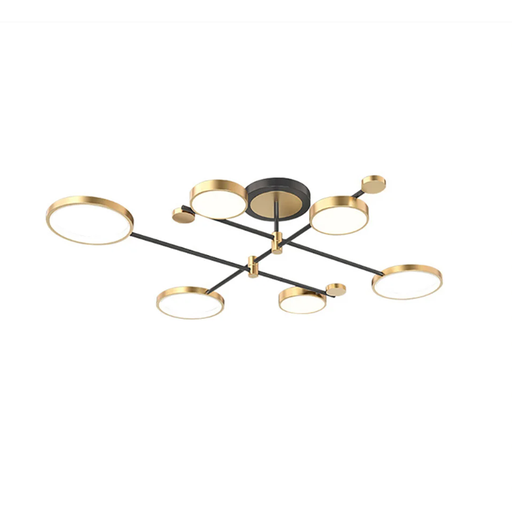
Why It Stands Out: This fixture makes a bold statement with its elegant, sputnik-inspired ring design. The gold ceiling light finish provides a touch of mid-century modern glamour, serving as both a light source and a decorative art piece. Its semi-flush mount design makes it suitable for standard ceiling heights while still commanding attention.
Pros:
Who is it for? Design-conscious individuals looking for a statement piece to elevate their living room or dining area with a touch of modern luxury.

Why It Stands Out: This is a clever solution for those who want the function of a ceiling fan without the constant visual bulk. The transparent fan blades retract and hide away when not in use, leaving a clean, modern light fixture. It combines bright, adjustable lighting with a comfortable breeze, all controlled by a convenient ceiling light with remote.
Pros:
Who is it for? Practical homeowners seeking a multi-functional solution for a bedroom ceiling light with fan or home office, where both comfort and a tidy aesthetic are important.

Why It Stands Out: This is a highly versatile smart ceiling light for those who love to customise their home's atmosphere. It features a main dimmable and tunable white light for everyday use, plus a side-glowing RGB ceiling light with 16 million colours. The RGBICWW technology allows for flowing, multi-zone colour effects, creating dynamic, immersive ambiances perfect for movie nights or parties.
Pros:
Who is it for? Tech-savvy users and anyone who wants ultimate control over their lighting, from functional task lighting to vibrant, mood-setting ambiances in living rooms or entertainment spaces.
The options above represent some of the most popular trends in modern lighting. However, if you're looking for a different aesthetic, such as a fixture that hangs lower to create a focal point over a dining table or kitchen island, you might want to explore pendant lighting.
For a clean and timeless look, discover our curated selection of white pendant ceiling light options.
Browse White Pendant Lights on Joybuy.co.uk
1. Are integrated LED ceiling lights a good idea? Yes, they are an excellent choice for modern homes. Integrated LEDs are designed to last for many years (often 15,000-50,000 hours), far outlasting traditional bulbs. They are also highly energy-efficient. The main consideration is that the LED module is part of the fixture and cannot be replaced, so the entire unit is replaced at the end of its long life.
2. How many lumens do I need for a living room? A general guideline for a living room is to aim for 10-20 lumens per square foot. For a typical UK living room of 15 square metres (approx. 160 sq ft), this would mean you need a light source providing 1,600-3,200 lumens. However, this can be adjusted based on wall colour, ceiling height and personal preference. Using a dimmable light provides the flexibility to adjust the brightness as needed.
3. Can I install an LED ceiling light myself in the UK? In the UK, any electrical work in specific locations like kitchens or bathrooms, or work that involves a new circuit, falls under "notifiable work" in Part P of the Building Regulations. This means it must be carried out or certified by a qualified electrician. For your safety and to ensure compliance, it is always recommended to have any hardwired light fixture installed by a qualified professional.