
24/7 Customer Support

Free returns

Same-day & Next-day Delivery

Quality Guaranteed

Unlock Your Welcome Offers: FREE Delivery | Up to 80% OFF | Free 30-day JoyPlus trial
Download the APP
Choosing the right lighting can feel like a complicated task. An outdated or poorly chosen fixture can make a room feel dim and uninviting, while the right one can transform a space, enhance its functionality and even help manage energy costs. If you're planning a home update, upgrading to modern LED ceiling lights is a practical step that offers significant benefits in style, efficiency and versatility.
This guide is designed to help you navigate the options. We'll walk through the key features to consider and share some of our top recommendations to help you find a lighting solution that fits your home and lifestyle.
Before browsing, it helps to clarify what you need. Thinking about these three points will narrow down your search and ensure you select a light that you'll be happy with for years to come.
The physical dimensions of your room play a huge role in your choice. For rooms with lower ceilings, common in many UK properties, flush ceiling lights or a slim ceiling light are excellent choices. These fixtures sit close to the ceiling, creating a clean, unobtrusive look that maximises headroom and makes the space feel more open.
For rooms where you want to direct light towards specific areas—like a kitchen island, a piece of art or a reading nook—a fixture with adjustable spotlights offers superior flexibility. You can aim the light exactly where it's needed, creating layers of illumination and functional zones within a single room.
Modern lighting is about more than just on and off. Dimmable ceiling lights allow you to adjust the brightness to suit any activity, from bright, focused light for working to a soft glow for relaxing in the evening. This is a simple feature that adds a great deal of atmospheric control to your living room lighting.
For even greater control, a smart ceiling light integrates with your home's Wi-Fi network. This allows you to manage your lighting via a smartphone app or voice commands through assistants like Alexa or Google Home. Many smart models also offer an RGB ceiling light function, letting you choose from millions of colours to create the perfect ambiance for a movie night or a party.
The colour of the light itself has a significant impact on a room's feel. This is measured in Kelvins (K). A warm white ceiling light (typically 2700K-3000K) produces a cosy, yellowish glow similar to traditional incandescent bulbs. It's ideal for living rooms and bedrooms where you want to create a relaxing atmosphere.
Cool white light (4000K and above) is crisper and more energising, appearing closer to natural daylight. This makes it a popular choice for kitchens, home offices and bathrooms where clear, task-oriented visibility is important. Many dimmable and smart lights offer tunable white, allowing you to adjust the colour temperature throughout the day.
Based on features, design and user needs, here are a few standout options to consider for your home improvement project.
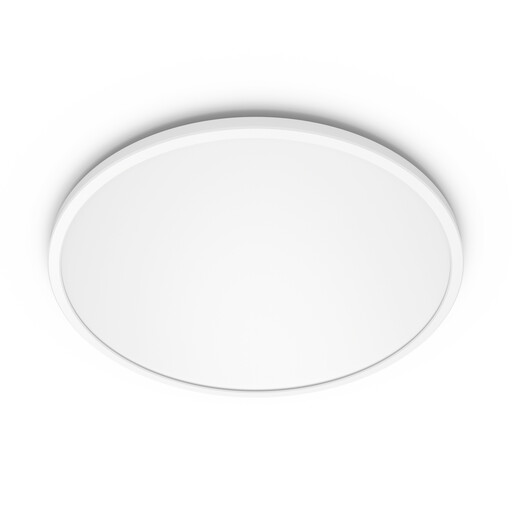
Why It Stands Out: This fixture is the definition of minimalist efficiency. Its super slim design (just 23mm high) sits almost flush with the ceiling, making it an ideal solution for modern homes and rooms with limited vertical space. It delivers even, uniform light without drawing attention to itself.
Pros:
Who is it for? Anyone seeking a simple, effective and unobtrusive lighting solution for bedrooms, hallways or living areas. It's a practical choice for those who value function and a clean aesthetic.

Why It Stands Out: This smart ceiling light turns illumination into an experience. Beyond its main downlight, it features a side-glowing RGB ceiling light that can wash your ceiling in flowing, dynamic colours. With full smart home compatibility and high colour rendering (Ra90), it accurately displays the true colours of your decor.
Pros:
Who is it for? The tech-savvy homeowner, families who enjoy creating a cinematic atmosphere for movie nights or anyone who wants to use light to dynamically change the mood of a room.
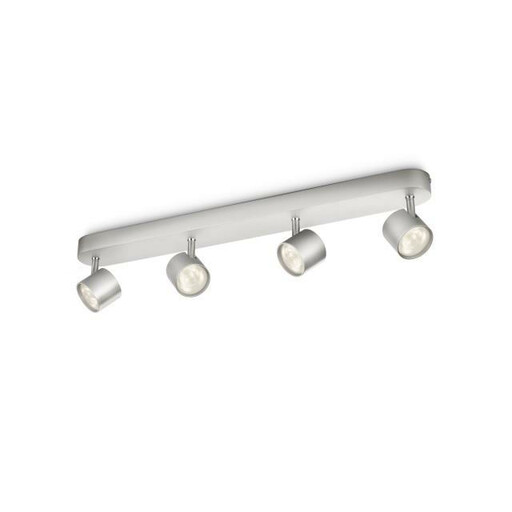
Why It Stands Out: Offering precision and flexibility, this spotlight bar is a functional powerhouse. Each of the four adjustable spotlights can be independently aimed, making it perfect for task lighting or accenting architectural features. Its durable metal construction and brushed aluminium finish add a touch of modern ceiling lights style.
Pros:
Who is it for? Homeowners needing functional, directional light in kitchens, home offices or utility rooms. It's also great for those in living rooms who want to highlight artwork, bookshelves or other key features.
If you haven't found the perfect fit here or are looking for different styles, there are many other possibilities to explore. From single pendants to integrated panel systems, the right light for your project is out there.
Discover a wider variety of lighting solutions in our full Ceiling panels collection.
Yes, very. LED (Light Emitting Diode) technology uses up to 85% less energy than traditional incandescent or halogen bulbs to produce the same amount of light. They also have a much longer lifespan, often lasting for 20,000 hours or more, which means lower electricity bills and fewer replacements over time.
The difference is in colour temperature, measured in Kelvins (K). A warm white ceiling light (around 2700K-3000K) emits a soft, yellowish glow that feels cosy and is well-suited for living rooms and bedrooms. Cool white light (4000K-5000K) is a brighter, more neutral white that is excellent for task-oriented spaces like kitchens, garages and home offices.
This depends on the fitting and your level of expertise. Some simple, plug-in style fixtures are designed for DIY installation. However, for any hardwired light fitting, UK safety regulations strongly recommend hiring a qualified electrician. This ensures the installation is safe, compliant with electrical codes and correctly earthed, which is particularly important for fixtures in metal casings or smart devices requiring specific wiring.