Choose a dimmable task lamp that you can aim at the page, rather than relying on a general bedside glow. On a small surface, check the base, reach and power arrangement as carefully as the light controls; if print remains difficult with well-positioned lighting, RNIB also identifies magnification and other reading options.
Who needs this kind of lamp?
Readers checking small print
If you read labels, instructions or paperwork with small text, you need light directed at the material rather than just a brighter room. RNIB describes lighting as one reading aid alongside options such as magnification and larger print.
Evening readers sharing a bedroom
If someone else may be resting, dimming and a movable lamp head let you adjust the light on your page without using room-wide lighting. The useful setting and position will depend on both the print and where the other person is resting.
Readers with little bedside space
A small table makes the base, reach and cable arrangement part of the decision. Check that the lamp can reach your reading material while sitting securely on the available surface.
What matters when choosing?
Start with whether you can aim and adjust the light for your usual reading material. Then consider light reaching the other side of the room and whether the lamp and its power connection fit safely beside the bed.
| Concern |
What to check |
Who this matters to |
| Light on the print |
Can the head reach and aim at your usual pages, and can you adjust the brightness? |
When small text is the main difficulty, I want the page lit where I actually read it. Around 42% of consumers would put directed light for fine print first. |
| Light spill |
Can you dim the lamp and point its head away from the other person’s sightline? |
If someone is resting nearby, I need enough light to read without lighting more of the room than necessary. For around 33% of consumers, limiting that disturbance is the primary concern. |
| Bedside fit and power |
Compare the base and reach with your surface; check the cable length and power arrangement. |
With little space beside the bed, I need a stable place for the lamp and a practical route to power. Those fit and cable needs come first for around 25% of consumers. |
Common buying mistakes
-
Choosing a bedside glow instead of a task light
A decorative lamp may light the room without letting you direct enough light onto a label or open book.
Look for an adjustable head and dimming, then check whether its lit area covers the material you usually read.
-
Assuming the brightest setting is the most considerate
In a shared bedroom, the aim is readable print without unnecessary light reaching the other person.
Position the head over the page and try the lowest useful setting. Check the result from the other person’s sightline too.
-
Assuming a USB cable means cordless use
A USB-powered lamp can still need an adapter or another power source. Anglepoise specifies that its 90 Mini Mini has no battery and uses mains power through a supplied adapter.
Check for a battery, the supplied power accessories and enough cable length for your intended position.
-
Overlooking the cable and nearby bedding
Electrical Safety First warns against overloading bedroom extension leads. A crowded bedside setup also needs careful lamp and cable placement.
Use a stable surface, keep the lamp away from bedding and curtains, route the cable clear of walkways, and stop using damaged plugs or cables.
Brands to consider
BenQ
The e-Reading Genie is a larger, settings-led task lamp to consider when you read across an open book or several documents.
- BenQ lists manual brightness and colour-temperature adjustment, an ambient-light sensor and a stated 90 cm lighting width for this model.
- The lighting-width and anti-glare descriptions are BenQ’s product claims; check whether the lamp fits your surface and directs light where you need it.
Anglepoise
The 90 Mini Mini is a compact articulated option for a limited desk or bedside surface.
- Anglepoise lists a dimmable integrated LED, 50 cm maximum reach and a 12 cm base diameter for this model.
- Its listed colour temperature is fixed at 3200 K, and it has no battery: it requires mains power through the supplied adapter.
IKEA
The KORVSNÖRE focuses on straightforward light adjustment rather than automatic controls.
- IKEA describes seamless dimming, an adjustable head and a replaceable LED light source for this model.
- Those features alone do not establish how clearly it will illuminate your particular print; assess the head position and lit area in your room.
Joybuy lamps for compact spaces
These compact desk and bedside lamps offer brightness adjustment. Before choosing either for fine print, check how it will direct light onto your usual reading material and fit your available space.
 No image available
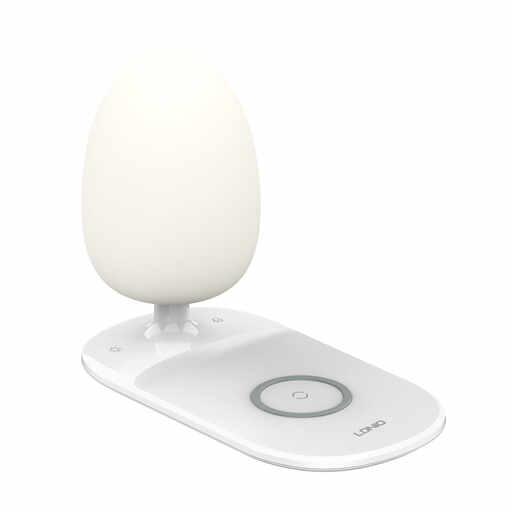
LDNIO Wireless USB-C Charging Desk Lamp, 1 m, White
For bedside reading, its described adjustable gooseneck and multiple brightness levels let you change the lamp’s position and setting.
The product name specifies a 1 m length and USB-C charging. Check the illuminated area against your usual print and confirm that the power arrangement works where the lamp will sit.
View on Joybuy
 No image available
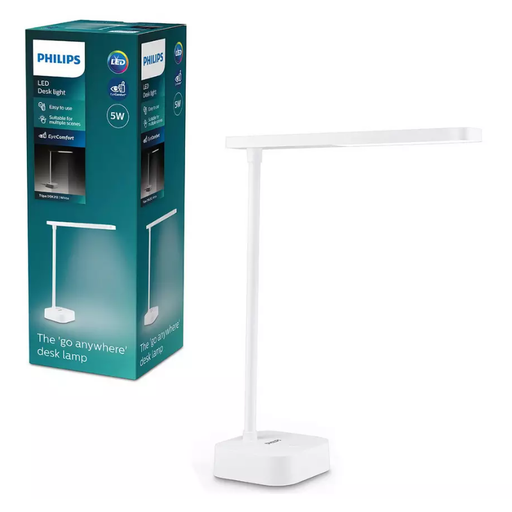
Philips Tilpa LED USB Rechargeable Table Lamp, 18 W, White
For a small bedside setup, its three brightness settings offer a choice of light levels.
The product name specifies USB charging and 18 W. Check whether you can aim its light onto the page and whether its coverage suits your print. Self-assembly is required, and the charging adapter is not included.
View on Joybuy
Frequently asked questions
How bright should a lamp be for checking fine print?
Choose adjustable brightness rather than treating one figure as a requirement for every reader. Aim the lamp at your usual print and use the lowest setting at which you can read it clearly; the result will depend on the material, distance and room.
Will a brighter lamp solve every fine-print difficulty?
No. RNIB describes lighting, magnification, larger print and other reading options as possible aids. If ordinary print remains difficult with suitable lighting, an optometrist or low-vision service can advise on your circumstances.
How can I position a desk lamp safely beside the bed?
Put it on a stable surface, keep it clear of bedding and curtains, and route its cable out of walkways. Electrical Safety First also advises against overloading bedroom extension leads; stop using a lamp if its plug or cable is damaged.


