Writers with little free desk space
If notebooks or forms already fill your desk, consider how much room a base, arm and cable will occupy. A clamp is worth considering only if the desk edge fits the particular lamp.


Start with how the lamp will sit on your desk: a compact base suits an edge that cannot take a clamp, while a compatible clamp can leave more room for paper. Then look for light you can aim and dim at your writing position; output figures alone cannot tell you whether the page will have useful light without glare or shadows.
If notebooks or forms already fill your desk, consider how much room a base, arm and cable will occupy. A clamp is worth considering only if the desk edge fits the particular lamp.
An aimable, dimmable task lamp lets you adjust the light as room conditions change. The Health and Safety Executive notes that more detailed tasks generally need more light; placement and glare still matter.
If you move between paper and a monitor, consider where reflections will fall. For coloured annotations or diagrams, check the exact model’s stated colour-rendering specification rather than relying on a general product label.
Decide where the lamp can go before comparing its light controls: a suitable mount or base must leave room to write, and the light must reach the page from your usual position.
| Concern | What to check | Who this matters to |
|---|---|---|
| Writing space | Measure the available surface for a base, or check desk-edge thickness and clearance against the exact clamp specification. | I need my notebook to fit beside the lamp without an arm or base getting in the way. Around 40% of consumers put usable writing space first. |
| Light control | Look for an aimable head or arm and dimming you can use from your writing position; read any lux figure with its stated measurement distance. | When room light changes, I want to direct light onto the page without creating a harsh patch or shadow. For around 40% of consumers, control of the writing light is the primary need. |
| Detail, colour and screens | For coloured work, check the model’s stated colour rendering and colour temperature; with a monitor, plan where reflections will fall. | My notes include colours or fine detail, or I switch between paper and a screen. Around 20% of consumers chiefly need light suited to that mixed work. |
A clamp frees writing space only if it fits an accessible, suitably shaped edge. The Daylight Slimline 4 has a stated maximum clamp opening of 55mm; Anglepoise specifies horizontal surfaces 7–60mm thick for its Type 75 Mini clamp.
Measure the edge and underside clearance, including anything a clamp could obstruct, then check the mounting instructions for the exact model.
Lumens describe emitted light; a lux measurement describes light reaching an area under stated conditions. Anglepoise lists 470 lumens for the 90 Mini Mini, while BenQ lists 1,600 lux at a 45cm height for E-Reading Intelligent. Those figures cannot be compared as though they measured the same thing.
Check the measurement setup and whether you can position the lamp to light your own page.
More light on a specification sheet does not settle how shadows, paper contrast or screen reflections will look at your desk.
Prioritise adjustable direction and dimming, then position the lamp at your usual writing spot. If you use a monitor, change its position or aim if reflections appear.
Anglepoise says the integrated LED light source in its 90 Mini Mini is replaceable only by a professional or competent person.
Before buying an integrated-LED lamp, check the exact model’s replacement arrangement and warranty terms rather than assuming you can change a bulb yourself.
Compact articulated lamps, including base and model-specific clamp configurations.
E-Reading lamps aimed at broader task-light coverage and adjustable light settings.
Task lamps with tabletop-mount and clamp options for detailed work.
Integrated-LED desk lamps with controls that vary by model.
These lamps offer folding, adjustable or desk-clip formats to consider for handwriting in limited space. Check each lamp’s fit and light placement against your own desk before choosing.
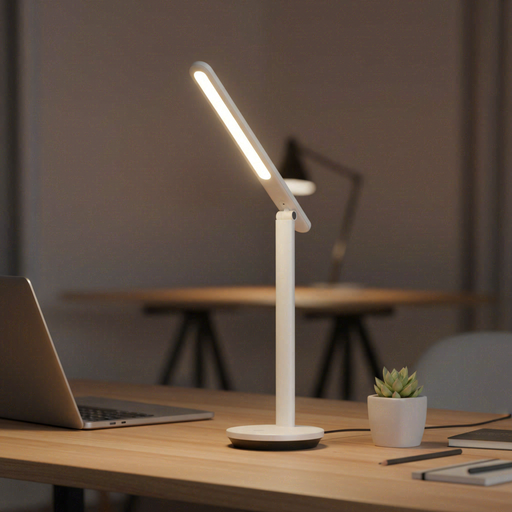 No image available
Consider the folding design if you need to put the lamp away between writing sessions. The product name also specifies rechargeable operation and adjustable brightness; check its dimensions, battery runtime and light placement for your setup.
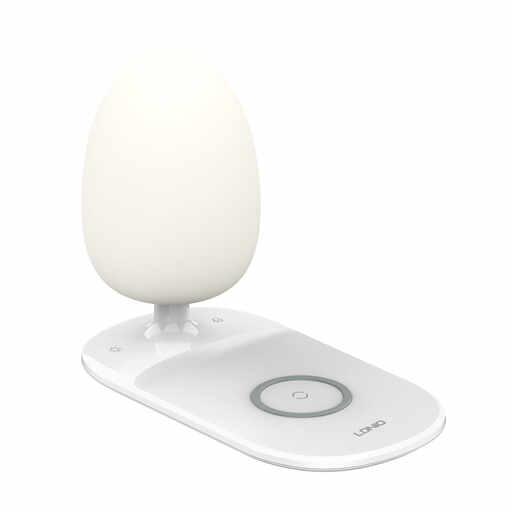 No image available
If you want device charging at the desk as well as a lamp, check which devices and connections its charging function accepts. Measure the base against your paper space and confirm that the light can be directed where you write.
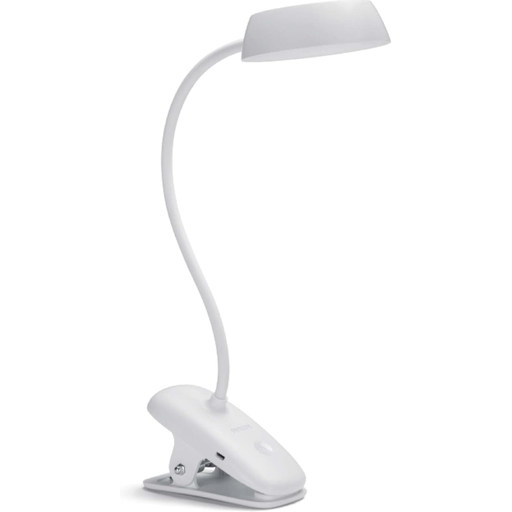 No image available
A desk clip may leave more of a small writing surface clear if the edge accepts it. Check the clip opening, underside clearance and where the light will fall on your page; the product name specifies USB-rechargeable operation and 3W.
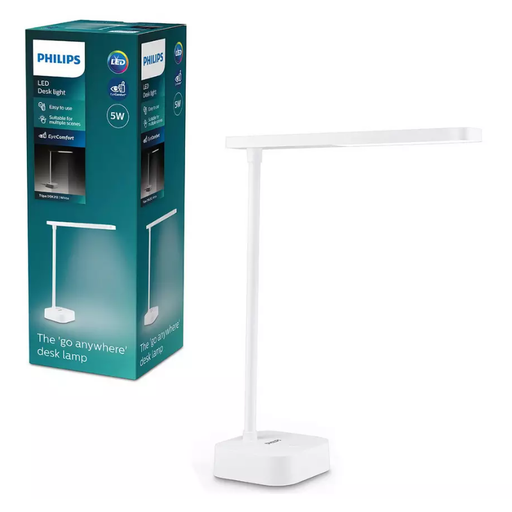 No image available
Consider its three brightness settings if you want to change the light while writing. The product name also specifies 18W and USB-rechargeable operation; check how it attaches to your desk and whether you can aim the light across the page.
Not automatically: a desk lamp can light the page, but the surrounding light, paper contrast and glare still affect the setup. The Health and Safety Executive says more detailed tasks generally need more light, so assess the whole writing area rather than relying on one lamp specification.
Measure the desk edge’s thickness and available space underneath, then compare both with the exact lamp’s mounting requirements. For example, Daylight specifies a maximum 55mm clamp opening for Slimline 4, while the Anglepoise Type 75 Mini clamp is specified for horizontal surfaces 7–60mm thick.
Position the task lamp so the page is lit without disturbing reflections on the display. For workplace display-screen use, the Health and Safety (Display Screen Equipment) Regulations 1992 require room or task lighting to provide satisfactory conditions and appropriate contrast, taking account of the work and the user’s visual requirements.
No. Department for Business and Trade guidance dated 31 March 2026 says Great Britain continues to recognise CE marking alongside or in place of UKCA marking where the relevant product rules permit it. The guidance concerns England, Scotland and Wales; Northern Ireland follows a different market process. Check the documentation for the exact product and market version rather than treating a mark alone as proof of suitability for your desk.