Readers with little desk space
If a score, keyboard or laptop already fills the work surface, a clamp or clip can move the lamp off the desk. Check that the desk or other support offers a suitable mounting point.


If your desk has a suitable exposed edge, a clamp-mounted lamp can leave more room for sheet music. For an open two-page score, check coverage and arm reach rather than assuming a compact clip light will reach both pages. Adjustable positioning and dimming help you direct light away from your eyes and nearby screens; a rechargeable clip light also requires attention to charging and runtime.
If a score, keyboard or laptop already fills the work surface, a clamp or clip can move the lamp off the desk. Check that the desk or other support offers a suitable mounting point.
An open score calls for light that reaches both pages without the lamp or your own position casting a shadow over the notation. Coverage and adjustable reach matter more here than a compact shape alone.
If you read in the evening or beside a screen, look for brightness control and a head you can aim at the page. RNIB advises positioning task lighting to reduce glare, while the Health and Safety Executive advises arranging screens to avoid bright reflections.
Choose a mounting format that fits the desk, then check whether the lamp can reach the whole score from that position. These formats solve different parts of the same small-desk problem.
Consider it: When a conventional base would crowd your score and the desk has an accessible edge.
Trade-off: The clamp must fit the edge and have clearance underneath; Daylight Company specifies a 45 mm maximum opening for its UnoPro Clamp Lamp.
Consider it: When you routinely read an open two-page score and can position a larger lamp around the desk.
Trade-off: Allow room for the lamp and its arm. BenQ UK specifies 90 cm of coverage at at least 500 lx for its e-Reading Intelligent model, not for wide-head lamps generally.
Consider it: When you need to move a small light between a desk and another suitable support.
Trade-off: Check coverage and session length. Daylight Company specifies up to four hours of bright light per charge for its Smart Clip-On Lamp.
| Concern | What to check | Who this matters to |
|---|---|---|
| Desk space and mounting | Measure edge thickness and clearance underneath; check the clamp or clip capacity for that support. | If my score and laptop fill the desk, I need a secure mounting point that leaves the surface free. Around 42% of consumers would put desk space and mounting first. |
| Two-page coverage | Check stated coverage or illuminance distance and whether the arm reaches over both pages from its mounting point. | When I read an open score, I need to see notation on both pages without continually shifting the lamp. Broad score coverage would come first for around 33% of consumers. |
| Glare and brightness | Look for dimming and an adjustable head; aim the light away from your eyes and any nearby screen. | While reading beside a screen or in lower room light, I want to control reflections without losing sight of the notes. For around 25% of consumers, glare control and adjustability would be the primary need. |
Neither tells you whether light will reach both pages of an open score from your intended lamp position.
Compare coverage, the distance used for any illuminance figure and the head’s aiming range.
An edge that is too thick, obstructed underneath or unsuitable for clamping may prevent secure mounting.
Measure the usable edge and underside clearance. For the Daylight UnoPro Clamp Lamp, compare the desk with Daylight Company’s stated 45 mm maximum clamp opening.
Even a lamp that covers the score can create distracting glare when aimed poorly. RNIB advises placing task lighting between the reader and the task with the shade below eye level; the Health and Safety Executive advises avoiding bright screen reflections.
Aim the head at the music and adjust the lamp or screen position if reflections appear.
A clip light may be easy to move, but its stated bright-light runtime may be shorter than a long reading session. Daylight Company specifies up to four hours for its Smart Clip-On Lamp.
Check runtime, charging method and whether the particular lamp can be used while connected to power.
Its clamp and clip-on formats are relevant when a lamp base would take up space beside sheet music.
Its e-Reading Intelligent model is relevant when lighting an open score takes priority over choosing the smallest lamp format.
Its reading-focused table lights are another format to consider if a table lamp will fit your setup.
These clamp and rechargeable clip lamps offer ways to keep a conventional lamp base off a crowded desk. Check mounting fit and light coverage against your own score before choosing.
 No image available
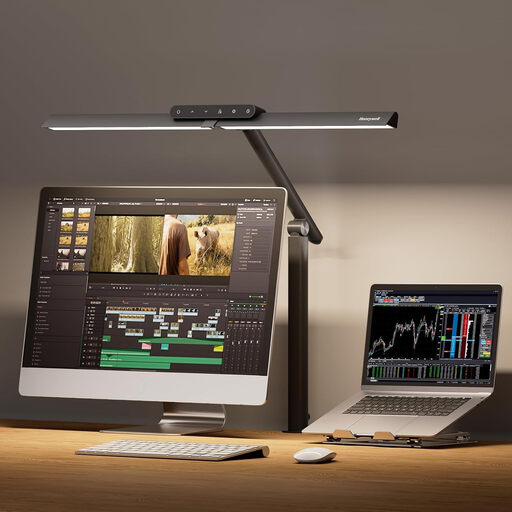
Consider this clamp format if a lamp base would crowd your sheet music, provided your desk has a suitable edge.
The product name states 1200 lm, four colour modes and stepless dimming. Lumens alone do not tell you how evenly it will light an open score; check page coverage at your intended position, clamp fit and UK power connection details.
 No image available
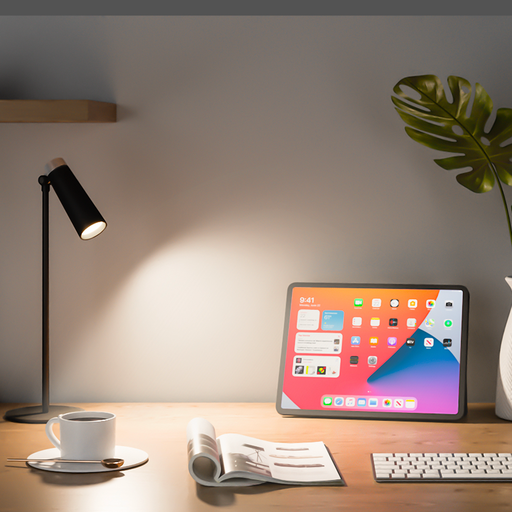
The clip and wall-mount formats are worth considering if you want to position a light away from the desk surface or move it between reading spots.
The product name identifies cordless, rechargeable use. Check clip fit, coverage across your score and runtime for the length of your reading sessions.
 No image available
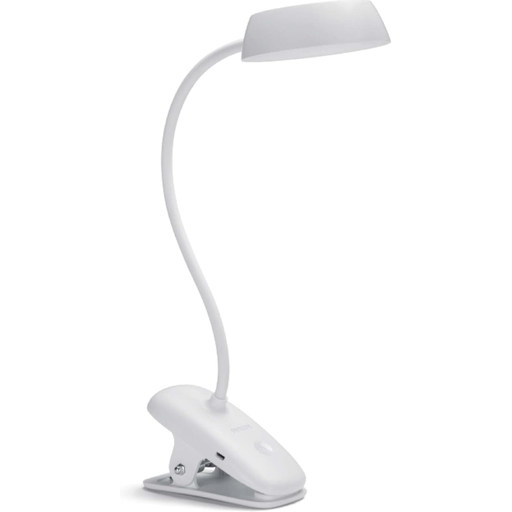
Consider this clip format if you have a suitable support beside the music and want to leave the desk surface clear.
The product name specifies USB-rechargeable operation and 3 W. Check that the clip holds securely and that the light reaches your score for the required session length; wattage alone does not establish coverage.
Position it between you and the score and aim it down at the page. RNIB advises keeping the shade below eye level to reduce glare; if you use a nearby screen, adjust its position or the lamp angle to avoid the bright reflections highlighted by the Health and Safety Executive.
A clip-on lamp may do so if its beam reaches both pages from a stable mounting point, but its compact format does not establish that coverage. Daylight Company specifies 550 lux at 30 cm for its Smart Clip-On Lamp; check the beam across your actual score at the distance where you will mount it.
A high colour-rendering index, or CRI, is worth considering if distinguishing colours matters to your score, but it does not tell you whether the lamp covers both pages. For black notation on white paper, check coverage, brightness control and positioning as separate requirements.
Check that the particular lamp’s supplied plug and power connection suit your UK setup. Also confirm its mounting dimensions and where the lead will run, so you can position the light over the score without obstructing the desk.