Who this is for

Printed-note hobby readers

If you follow paper instructions, patterns or reference sheets, you need light directed onto the page as daylight and room lighting change. CIBSE advises assessing lighting in relation to the task, space and people using it.

Small-worktop hobbyists

When notes and tools compete for desk space, the lamp’s base, arm and possible clamp position matter alongside its light. IKEA describes NÄVLINGE as adjustable for small spaces, while Anglepoise specifies the 90 Mini Mini as a compact USB-powered lamp.

Detail-and-colour craft users

If you also sew, draw or work with coloured materials at the same station, look at coverage and colour-rendering specifications as well as paper readability. Daylight Company positions its task lamps for this kind of detailed work; that positioning is not an independent performance comparison.

What matters when choosing

Work out how much of the worktop needs light before deciding whether a base or clamp fits your space; colour-rendering specifications matter most when reading shares the desk with colour-sensitive work.

ConcernWhat to checkWho this matters to
Readable notes as room light changes Check for brightness control and a movable head or arm. Read any lux figure with its stated distance and setting. If I read paper instructions in changing light, I want to aim the beam at the whole page without looking into the bright source; around 40% of consumers put adjustable, directed light first.
Usable desk space Measure space for the base or, for a clamp, check the desk edge and the model’s opening limit. Confirm arm reach and the power arrangement. When notes and tools crowd my worktop, I need a lamp I can position without losing the space I work in. Preserving desk space comes first for around 30% of consumers.
Detail and colour in mixed hobbies Compare stated colour-rendering index (CRI) and illuminated area where those details are relevant; check the conditions behind coverage claims. If I read notes alongside sewing, drawing or sorting coloured pieces, I need to see the materials across my working area. Around 30% of consumers prioritise detail and colour in their lamp choice.

Buying pitfalls

  • Comparing lux figures without their conditions

    Lux describes illumination at a particular location. BenQ quotes 1,000 lux directly below its lamp in Paper Mode, whereas Daylight Company quotes 2,100 lux for DuoPro at 30 cm; those figures describe different stated conditions.

    Check the measurement distance, position and setting, then consider whether the beam covers your notes where you normally sit.

  • Ordering a clamp lamp without checking the desk edge

    A clamp frees surface space only if its opening and mounting position suit the worktop.

    Measure the edge thickness, look for obstructions and compare it with the exact lamp’s clamp specification.

  • Expecting a compact lamp to light the whole worktop

    A focused reading area and a desk spread with papers and tools call for different coverage. IKEA lists NÄVLINGE at 220 lm; Daylight Company lists a 51 cm shade and 1,700 lm for Lumi. Those specifications alone do not establish comparable illumination at the page.

    Map out the area you use before choosing a small directional head or investigating a wider lamp.

  • Relying on anti-glare wording instead of lamp position

    Even where a manufacturer describes a shade or mode as anti-glare, whether you see the bright source or cast a shadow depends on the lamp’s position relative to your notes.

    Aim the light onto the page from the side or above and check that your usual working position does not put the bright source in direct view.

Brands to consider for task lighting

BenQ

Its e-Reading Desk Lamp Genie is an option to investigate for a broad work surface and changing paper or screen tasks.

  • BenQ lists adjustable brightness and colour temperature, an ambient-light sensor and Paper and Screen modes for this model.
  • Its stated 90 cm lighting width and mode-specific illumination and glare descriptions are manufacturer claims. Check the lamp’s placement against your worktop rather than assuming the quoted coverage will fit it.

Daylight Company

Its task-lamp range is relevant when printed notes share a station with detailed crafts or colour-sensitive materials.

  • Daylight Company lists 95+ CRI, four brightness levels and a flexible clamp arm for DuoPro.
  • The clamp must suit the desk edge. The listed colour-rendering specification does not by itself establish how every material will appear under the lamp.

Anglepoise

The 90 Mini Mini offers a compact, movable USB-powered form for a restricted desk area.

  • Anglepoise lists a dimmable integrated LED module, 470 lm output and a 38 cm full-stretch size for this model.
  • Check whether its reach covers your paper area. Anglepoise says the integrated light source is replaceable only by a professional or competent person.

IKEA

NÄVLINGE is a straightforward adjustable work lamp to consider for a contained reading area.

  • IKEA describes an adjustable arm and head and lists 220 lm output.
  • Its listed 2700 K light is fixed warm white. Check whether its output and coverage suit your note position, particularly if materials occupy more of the worktop.

Joybuy products for a compact hobby desk

This desk-lamp option is relevant to reading notes where worktop space is limited; check its lighting area and power requirements against your setup.
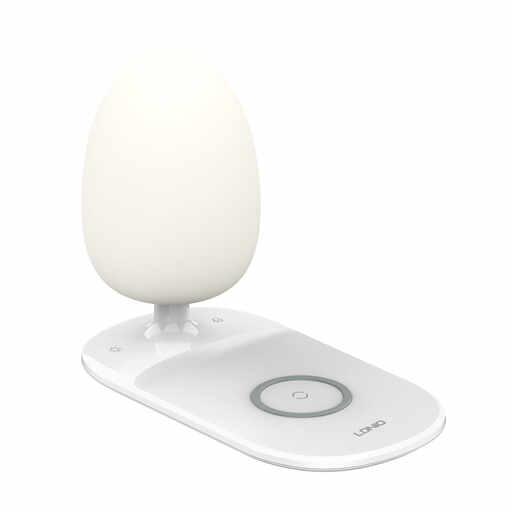
LDNIO Wireless USB-C Charging Desk Lamp, 1M, White

LDNIO Wireless USB-C Charging Desk Lamp, 1M, White

For notes on a small worktop, check that you can position this lamp to cover your usual page area without seeing the bright source directly.

Wireless charging is named for this variant; confirm device compatibility and the USB-C power equipment required. Check the available brightness settings and illuminated area for your reading position.

View on Joybuy

Common questions

How should I interpret a lamp’s lux figure for reading notes?

Read it as illumination at the stated position and setting, not as a guarantee across your whole desk. CIBSE advises considering the task, space and occupants when assessing lighting; check the lamp’s measurement distance and whether its beam reaches your printed page.

Should I choose a base lamp or a clamp lamp?

Choose a clamp if saving worktop space matters and the exact model fits your desk edge; otherwise, a base avoids that mounting requirement but occupies desk space. Measure the edge and check the manufacturer’s clamp limit before ordering.

What does a UKCA or CE mark tell me when buying in Great Britain?

GOV.UK says these markings indicate that the manufacturer believes the product meets applicable requirements; they are not an independent assessment of how well a lamp lights your notes. Check the product’s applicable conformity information and power arrangement. This guidance concerns Great Britain, not Northern Ireland.

Can I replace the light source in an integrated LED lamp?

Check the exact model’s instructions, because replacement arrangements vary. Anglepoise says the 90 Mini Mini light source is replaceable only by a professional or competent person. For end-of-life handling, GOV.UK identifies waste electrical and electronic equipment rules intended to encourage recovery, reuse and recycling.