Start with a task lamp that lets you direct and adjust light over the sorting tray. The Health and Safety Executive notes that detailed work generally needs more light, but colour, contrast and glare also matter. If the base would crowd your desk, consider a clamp lamp after checking the edge; choose a magnifier only when illumination alone does not give you a clear enough view of tiny parts.
Who these lamps suit
Small-desk craft organisers
If beads, findings or miniatures share the desk with sorting trays, look for a lamp you can aim without giving up too much room for your hands and containers. A compact table lamp or a clamp format is a practical starting point.
Colour-sensitive makers
When similar shades or materials need separating, check colour-rendering information as well as where the lamp places light and glare. A lumen figure alone does not describe how your materials will look on the tray.
Detail-sensitive close workers
If the smallest parts remain difficult to inspect under directional light, an integrated magnifier may help you work within its lens area. Check that the area suits the way you sort.
What matters when choosing
Decide whether seeing fine detail, keeping the desk clear or enlarging tiny parts is your main need. Then check whether the lamp can cover your working area from a position that fits the desk.
| Concern |
What to check |
Who this matters to |
| Fine detail and colour |
Check head positioning, brightness control and stated colour rendering. Compare lux figures only at comparable measurement distances. |
When similar-looking parts sit together, I need to distinguish their edges and shades without looking into the light. Around 45% of consumers put fine-detail and colour visibility first. |
| Usable desk space |
Check the base footprint or measure the desk edge and underside clearance for a clamp. |
With trays taking up my work surface, I need room to move parts and my hands. Keeping that space clear comes first for around 33% of consumers. |
| Magnification |
Check lens size, arm reach and whether your parts can be handled within the viewing area. |
If brighter light still leaves the smallest pieces hard to inspect, I need enlargement at the point of work. Around 22% of consumers prioritise magnification. |
Buying pitfalls
-
Treating different lux measurements as a brightness ranking
Daylight Company states 1,150 lux at 30 cm for the UnoPro and 5,500 lux at 15 cm for the Magnificent Pro On Clamp. Those distances differ, so the figures do not establish which lamp lights a whole sorting tray more effectively.
Compare stated lux only alongside its measurement distance and illuminated area. Also consider where you can position the lamp and whether you can reduce glare.
-
Ordering a clamp before measuring the desk
A thick edge or an obstruction beneath it may prevent the clamp from fitting. Lepro specifies a maximum 58 mm opening for its cited swing-arm model; Daylight Company specifies 60 mm for its cited magnifying clamp.
Measure edge thickness and underside clearance at the exact place where the arm would sit.
-
Assuming the light source comes with the lamp
Lepro states that the E27 bulb for its cited swing-arm lamp is sold separately. The bulb you choose affects the resulting light.
Check the lamp’s stated bulb limits and select a compatible bulb with the brightness and colour characteristics you need for sorting.
-
Choosing a monitor light without checking the monitor
A monitor-mounted bar depends on both the screen and the position of the sorting area. BenQ specifies the ScreenBar Halo for flat monitors 0.7–6 cm thick or curved monitors 1.6–3.8 cm thick.
Check your monitor’s shape and thickness, and whether you sort directly in front of it rather than elsewhere on the desk.
Brands to consider
Daylight Company
Its cited range includes adjustable table lighting and clamp-mounted magnifying lamps for close craft work.
- Daylight Company specifies a pivoting head, four brightness levels and CRI 95+ for the UnoPro Table Lamp. Its Magnificent Pro On Clamp specifies a 1.75x lens and a 60 mm maximum clamp opening.
- The magnifying model confines close inspection to the lens area; neither model’s stated lux figure should be compared without its measurement distance.
Lepro
Its cited desk-lamp options include a folding lamp with light controls and a separate swing-arm design that attaches to a desk edge.
- Lepro specifies five colour modes and five brightness levels for its cited 9.2 W folding model.
- The cited swing-arm model needs a separately purchased E27 bulb and a desk edge that fits its 58 mm maximum clamp opening.
BenQ
Its cited ScreenBar Halo mounts on a monitor, a format to consider when the sorting area is directly in front of the screen.
- A monitor mount leaves the desk surface available for trays and parts.
- ScreenBar Halo compatibility depends on monitor shape and thickness, and its position is less flexible for sorting away from the screen.
Joybuy lamps for this setup
These table lamps are options for a small sorting desk. Check each lamp’s fit and how it can light your tray; the models below do not represent the clamp, magnifying or monitor-mounted formats discussed above.
 No image available
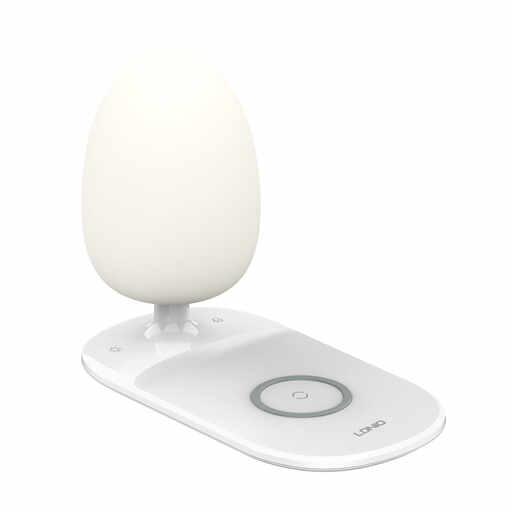
LDNIO Wireless USB-C Charging Desk Lamp, 1M, White
For a small sorting desk, check how much room the lamp takes and whether its light reaches your tray. The named white variant specifies wireless USB-C charging and 1M; confirm the charging arrangement and what the 1M designation refers to for your setup.
View on Joybuy
 No image available
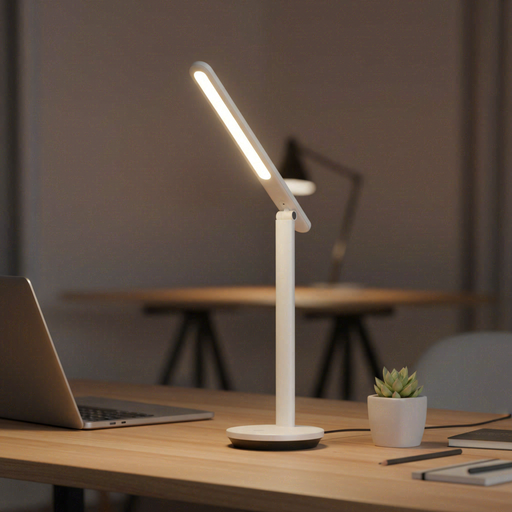
Yeelight LED Folding Desk Lamp Z1 Pro, White
If you clear the desk between tasks, a folding lamp may suit that routine. The Z1 Pro is identified as rechargeable, with adjustable brightness; check its dimensions and the area it lights before choosing it for a sorting tray.
View on Joybuy
 No image available
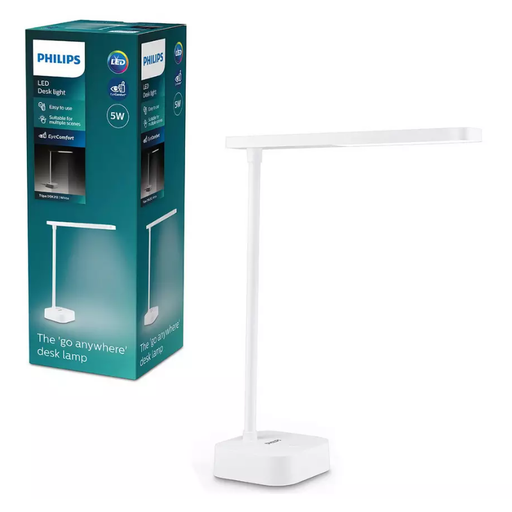
Philips Tilpa LED USB-Rechargeable Table Lamp, 18W, White
If three brightness settings meet your needs, check whether the Tilpa can be positioned to light the parts tray before choosing it. The named white model specifies 18W and USB-rechargeable operation.
View on Joybuy
Common questions
How bright should a lamp be for sorting tiny craft parts?
Choose light you can place over the parts without shining it into your eyes, rather than choosing by lumens alone. The Health and Safety Executive notes that more detailed work generally needs more light and that colour, contrast and glare matter; compare stated lux figures only when their measurement distances are comparable.
Is a table lamp or a clamp lamp better for a small desk?
A table lamp suits a desk with room for its base and lets you move it between work areas; a clamp lamp keeps that surface available if the edge fits. Measure both edge thickness and clearance underneath before choosing a clamp.
When is a magnifying lamp worth choosing?
Choose magnification when directional light alone does not give you a clear enough view of repeatedly handled tiny parts. Daylight Company specifies a 13 cm, 1.75x lens for its Magnificent Pro On Clamp, so check whether your work fits within that viewing area.
Can a monitor light bar replace a movable desk lamp?
A monitor light bar can suit sorting directly in front of a compatible screen, but it will not offer the same freedom to reposition light elsewhere on the desk. For the BenQ ScreenBar Halo, check the monitor’s shape and specified thickness range before choosing that format.


