
24/7 Customer Support

Free returns

Same-day & Next-day Delivery

Quality Guaranteed

Unlock Your Welcome Offers: FREE Delivery | Up to 80% OFF | Free 30-day JoyPlus trial
Download the APP
Replacing standard halogen bulbs with LED fog light bulbs can improve the appearance and perceived brightness of your vehicle, but choosing the wrong fitment may lead to poor beam control, warning lights or installation problems. The socket number, housing space and electrical system all matter more than a large lumen figure on a product page.
This guide explains the main buying traps and compares suitable options for cars, trucks, SUVs, motorcycles, ATVs and UTVs.
A bulb marked H7, H11 or 9006 does not fit every vehicle. These codes describe the socket and base type, not a universal vehicle fit. For example, H7 LED fog light bulbs are not interchangeable with H8 H9 H11 LED bulbs, 9005 HB3 LED bulbs or 9006 HB4 LED bulbs.
Before ordering, check:
A 1:1 halogen replacement bulb is usually easier to fit, but the vehicle’s original socket must still match.
Listings may quote figures such as 10,000 lumens or “500% brighter”. These are product claims and should not be treated as a guaranteed measure of real-world road performance. Beam shape, reflector design, bulb alignment and headlamp condition can affect the result.
A well-positioned bulb with controlled light distribution is generally more useful than an excessively bright bulb that scatters light. After installation, check the beam pattern and adjust the headlamps where necessary to avoid dazzling other road users.
LEDs produce less heat at the light-emitting chip than halogen bulbs, but they still need effective heat management. Fan-cooled LED bulbs can offer active cooling, while aluminium housings and passive heat sinks provide another approach. Fans also introduce moving parts and may need enough space to operate correctly.
Some modern vehicles monitor bulb power consumption. Even CANbus-ready LED bulbs may require an additional decoder on particularly sensitive systems. Warning messages, flickering or radio interference should not be ignored.
Match the exact bulb code. Common options include:
A “plug-and-play LED headlight bulb” should connect to the factory wiring without cutting or splicing, but confirm that the product is genuinely 1:1 in size before purchasing.
Many products use 6000K cool white fog lights, while some use 6500K. Cool white light has a noticeably whiter appearance than traditional halogen. However, colour temperature alone does not determine beam quality or performance in rain, mist or snow.
If your priority is a factory-style appearance, check the stated colour temperature and compare it with your existing headlamps.
Look for clearly stated construction details, such as:
Advertised lifespans of 50,000 or 70,000 hours are manufacturer or seller specifications, not a guarantee of actual service life in every vehicle. Correct installation, heat clearance and voltage stability all affect durability.
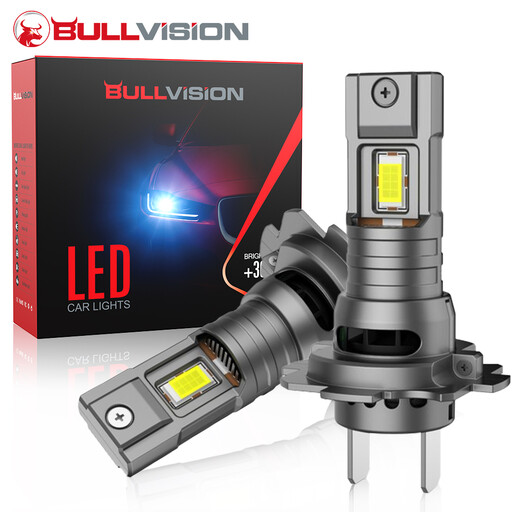
Why This Fits Their Persona: A practical starting point for drivers who have confirmed an H7 socket and want a compact replacement for everyday commuting in the UK.
The listed 1:1 mini size and plug-and-play format help address clearance and complicated-wiring concerns. Note that an additional CANbus decoder may be needed for some Volkswagen, Mercedes-Benz, BMW or similar vehicles.
6000K cool white output, IP68 waterproof construction, built-in fan and stated 50,000-hour operating life.
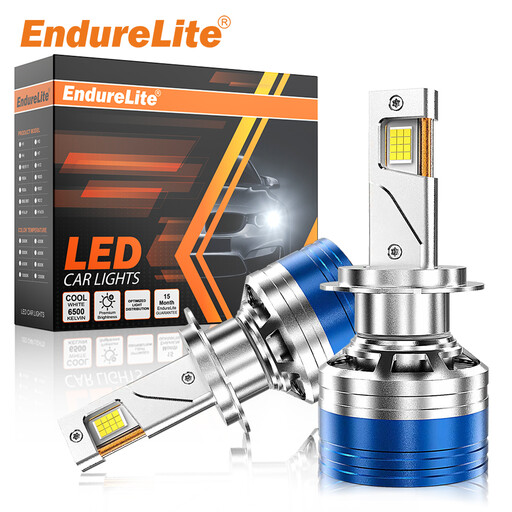
Why This Fits Their Persona: Suitable for owners seeking multi-socket flexibility, a compact fit and active cooling for regular use.
Its stated H8, H9 and H11 compatibility reduces the risk of ordering the wrong related socket, while the 1:1 design is intended to fit standard housings.
Built-in cooling fan, IP68 waterproof rating, CANbus-ready driver and stated 50,000-hour operating life.
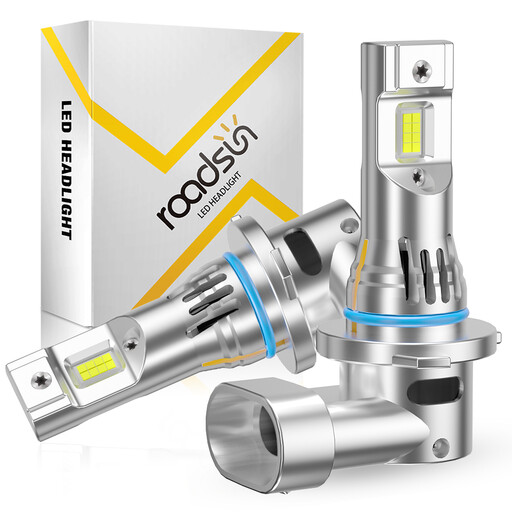
Why This Fits Their Persona: A practical option for HB4/9006 owners, including drivers of trucks, SUVs and powersports vehicles exposed to wet or dusty conditions.
The product specification identifies the 9006/HB4 socket and 1:1 installation, helping avoid incompatible-base purchases. Check clearance for the turbo fan before ordering.
6500K white light, built-in turbo fan, IP68 protection and stated operation from -40°C to 85°C.
Switch off the ignition and allow the old bulb to cool fully. Wear gloves, avoid touching the LED chip or lens, and secure wiring away from the fan or moving parts. Confirm that the bulb is seated correctly and that the dust cover can be refitted.
Test both sides for flickering or dashboard warnings. Check the beam pattern against a wall and have the alignment corrected if necessary. For vehicles used on public roads, confirm that the lighting arrangement is suitable for the vehicle and intended use; off-road and powersports lighting may not be appropriate for unrestricted road use.
LED bulbs may use less electrical power than equivalent halogen bulbs, depending on the specific product and vehicle circuit. The actual running cost is usually small, so compare the stated wattage rather than assuming every LED option has the same consumption.
No. A plug-and-play connection simplifies installation, but some vehicles monitor bulb load closely. CANbus-ready designs can reduce compatibility issues, although sensitive European vehicles may still require a separate decoder.
Many listings state lifespans between 50,000 and 70,000 hours. These figures are product specifications rather than a guaranteed result. Heat, moisture, vibration, voltage and installation quality can all affect real service life.