
24/7 Customer Support

Free returns

Same-day & Next-day Delivery

Quality Guaranteed

Unlock Your Welcome Offers: FREE Delivery | Up to 80% OFF | Free 30-day JoyPlus trial
Download the APP
Upgrading your car's lighting is one of the most impactful changes you can make, enhancing both safety and style. A switch from dim, yellowing halogens to crisp, modern LED headlight bulbs can transform your night-time driving experience. However, the market is flooded with options and it's easy to make a purchase you'll regret.
As a Joybuy Product Recommendation Officer, my role is to help you navigate the technical jargon and marketing hype. Many drivers are caught out by a few common pitfalls that lead to wasted money, poor performance and even potential MOT failures. Before you buy, let's look at the most frequent mistakes.
1. The "Brighter is Better" Trap: Many products boast incredibly high lumen counts, but sheer brightness is not the goal. An improperly designed bulb, no matter how bright, will scatter light everywhere. This not only fails to illuminate the road effectively but also creates dangerous glare that can dazzle oncoming drivers. A quality LED bulb focuses its light into a precise beam pattern, just like your car's original halogen bulbs.
2. The CANbus Error Code Nightmare: Modern vehicles, particularly European models from brands like BMW and VW, use a Controller Area Network (CANbus) system to monitor the car's electronics. Because LEDs use significantly less power than halogens, the system can mistakenly believe a bulb has failed, triggering a persistent warning light on your dashboard. Choosing a bulb that isn't CANbus error free can lead to constant flickering or a frustrating error message that won't go away.
To make an informed choice, you need to look past the headline figures and focus on three core parameters. These are the non-negotiable factors that determine performance, safety and longevity.
This is the single most important factor. Your car's headlight housing (the reflector or projector unit) is designed to work with a light source of a specific size and shape. For an LED to work correctly, its light-emitting chips must be positioned to precisely mimic the filament of the original halogen bulb.
As mentioned, CANbus compatibility is crucial for most cars made in the last 15-20 years. A bulb labelled "CANbus ready" or "error free" has an integrated circuit (a driver or decoder) that communicates with your car's computer, telling it that the bulb is functioning correctly. This prevents dashboard warnings and ensures stable, flicker-free operation, making for a true plug-and-play headlights experience. For some highly sensitive systems, an additional external decoder may still be required, but a good built-in system solves the issue for the vast majority of vehicles.
Heat is the enemy of any LED. Without effective cooling, an LED chip will quickly overheat, causing its brightness to fade permanently and leading to premature failure. There are two main types of cooling systems:
To help you choose, we've matched some options to common driver profiles. These selections are based on their design, features and how they address the buying pitfalls discussed earlier.
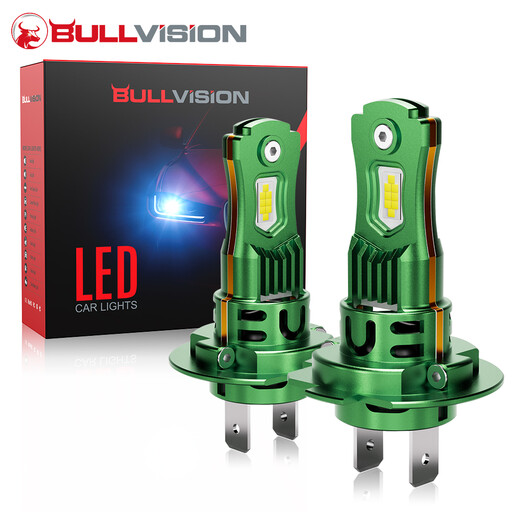
Why This Fits Their Persona: This is for the driver seeking a straightforward and effective car light upgrade from standard halogens. They want better visibility and a modern look without complex installation or a high price tag. The H7 fitment is one of the most common in UK vehicles.
Its 1:1 size design directly mimics the original halogen bulb, ensuring it fits correctly and produces a focused beam pattern that avoids dazzling other drivers. The built-in CANbus driver is designed to prevent dashboard errors on most compatible vehicles.
True plug-and-play installation with no adapter required. The 6000K xenon white colour provides a crisp, clear light for improved night driving.
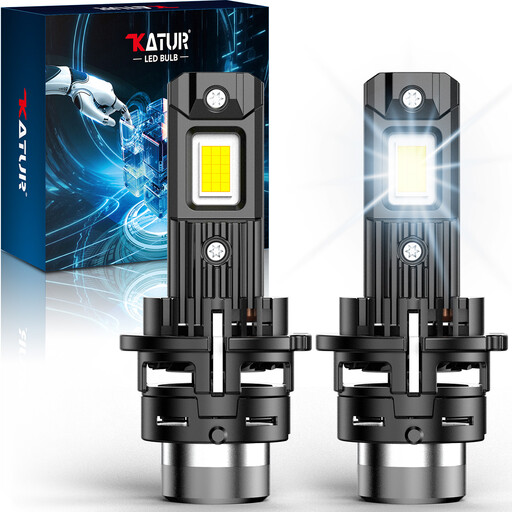
Why This Fits Their Persona: This user drives a vehicle equipped with factory HID (Xenon) headlights and is looking for a significant performance boost. They prioritise maximum safe illumination, longevity and are prepared for a premium product.
It is specifically designed as a 1:1 replacement for D4S HID bulbs, not halogens, ensuring it works correctly with the vehicle's existing projector optics. The advanced cooling system with dual copper tubes and a high-speed fan is built to handle the heat from a high-output bulb, preventing dimming and failure.
Offers a substantial increase in brightness over standard HIDs. The instant-on feature provides immediate full illumination, unlike the warm-up time required by Xenon bulbs.
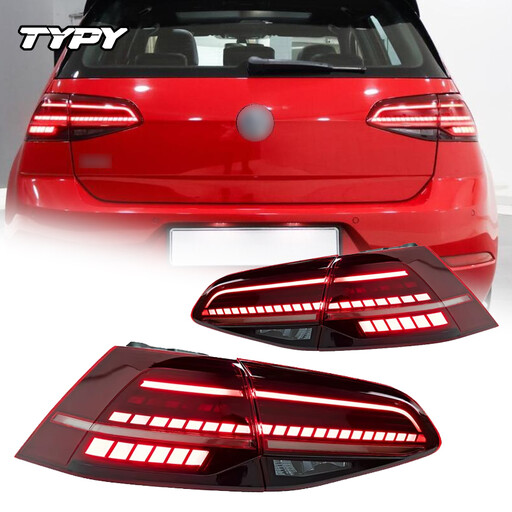
Why This Fits Their Persona: This owner isn't just replacing a bulb; they're upgrading an entire light assembly for a modern aesthetic and enhanced functionality. They likely own a popular model like a VW Golf or a premium car like a BMW and want a specific, tailored look.
By replacing the entire housing, it completely avoids issues of incorrect bulb fitment or poor beam patterns. These units are engineered specifically for the vehicle, ensuring a perfect fit and flawless integration with the car's bodywork and electrical system.
Provides a complete visual transformation with modern features like sequential indicators. As a full assembly, it's a comprehensive solution for popular models seeking an update, such as these VW Golf tail lights.
We have compiled a complete, real-time list of products that fully satisfy these strict selection criteria and UK safety regulations.
The legality of aftermarket LED bulbs in the UK for road use is a complex area. For a vehicle to pass its MOT, the headlight beam pattern must be correct, have a clear cut-off and not cause glare. The key is to choose a high-quality LED bulb that is specifically designed to replicate the beam pattern of the original halogen bulb in your car's specific headlight housing. Low-quality bulbs that scatter light are likely to be illegal and will fail an MOT.
Colour temperature, measured in Kelvin (K), describes the colour of the light. Traditional halogen bulbs are typically around 3200K, which is a warm, yellowish colour. A 6000K xenon white bulb produces a crisp, modern light that is very close to natural daylight. This can improve the visibility of road signs and markings, but going much higher (e.g., 8000K+) can result in a blue-tinted light that performs poorly, especially in rain or fog.
For many vehicles, a bulb advertised as "CANbus ready" is all you need. However, some cars have particularly sensitive computer systems. If you install a CANbus-ready bulb and still experience flickering or a dashboard error, you may need to install an additional, external CANbus decoder. It's often a good idea to check forums for your specific car model to see what other owners have experienced.