
24/7 Customer Support

Free returns

Same-day & Next-day Delivery

Quality Guaranteed

Unlock Your Welcome Offers: FREE Delivery | Up to 80% OFF | Free 30-day JoyPlus trial
Download the APP
Upgrading your car's dim, yellow halogen bulbs to crisp, bright LED headlight bulbs is one of the most satisfying and practical modifications you can make. A proper car light upgrade not only gives your vehicle a modern look but significantly improves night-time visibility and safety. However, the market is flooded with options, and it's easy to fall into common traps that lead to wasted money, frustrating installations and even MOT failures.
As the Joybuy Product Recommendation Officer, my role is to help you navigate the marketing clutter. Before you add any bulbs to your basket, let's look at the three most common pitfalls UK drivers encounter and how to sidestep them.
To ensure you get a reliable and effective halogen replacement LED, focus on these non-negotiable specifications.
Your vehicle's headlight housing is designed for a specific bulb type. Installing the wrong one is impossible without modification and will result in a poor, unsafe beam pattern.
How to check: Your vehicle's owner's manual is the most reliable source. Alternatively, the code is usually printed on the base of the existing bulb you are replacing.
As mentioned, the CANbus system is the electronic nerve centre of your car. To avoid issues, you need bulbs designed to communicate with it correctly.
Look for products explicitly labelled as Canbus error free LED bulbs or "CANbus ready." These have built-in resistors or intelligent drivers that mimic the power draw of a halogen bulb, keeping your car's computer happy and your dashboard clear of warnings. While most modern LED kits are highly compatible, some sensitive vehicles (often from German manufacturers) may still require an additional decoder.
A bulb's longevity depends on its cooling. Look for models with either:
For appearance and clarity, most drivers prefer 6500K cool white car bulbs. This colour temperature mimics natural daylight, improving contrast and making it easier to spot hazards on the road.
Here are a few options that address the common pitfalls, matched to different types of UK drivers.
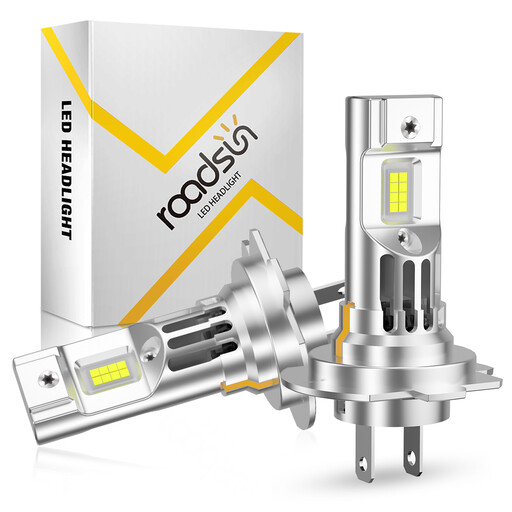
Why This Fits Their Persona: Ideal for the commuter who wants a straightforward, effective safety and cosmetic upgrade for their daily drive. The H7 fitment is one of the most common in UK cars, making this a versatile choice.
Its "No Adapter Needed" and plug and play LED headlights design directly counters the trap of overly complex installations that require extra parts or wiring modifications.
Features a built-in high-speed fan to address the overheating flaw, ensuring a long operational life. The 6500K white light provides a significant clarity boost over stock halogens.
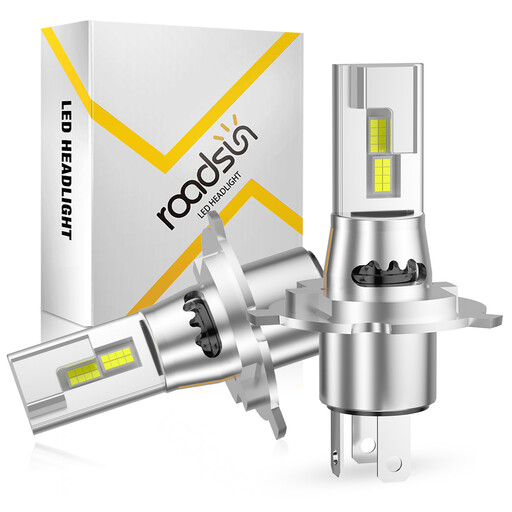
Why This Fits Their Persona: Perfect for the hands-on owner who appreciates robust engineering. The H4 dual-beam function and emphasis on high-performance components like a fast fan and IP68 rating appeal to those seeking a durable, high-output solution.
The 16000RPM high-speed cooling fan and aviation aluminium body directly combat the overheating flaw, ensuring the bulb maintains its brightness and achieves its stated 50,000+ hour lifespan.
Offers an all-in-one high and low beam upgrade with a 1:1 halogen size for easy fitting. Its IP68 waterproof rating ensures reliability in all British weather conditions.
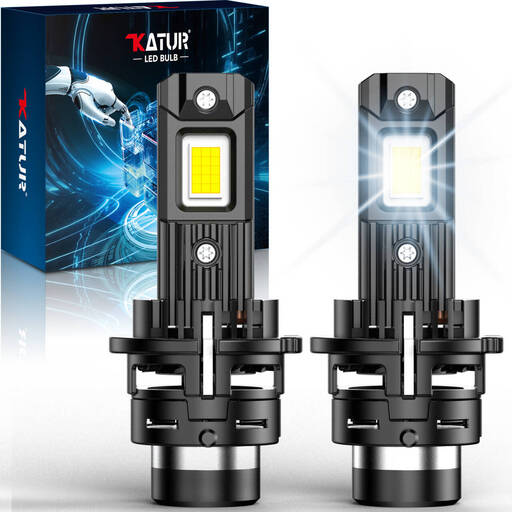
Why This Fits Their Persona: This is not for halogen cars. It's for owners of vehicles with factory-fitted D2S Xenon HID headlights who want the instant-on performance and crisp white colour of LED technology without the warm-up time of HIDs.
It directly tackles the "Universal Fit" gamble by being a specific replacement for D2S HID systems. Its "99% CANBUS ERROR FREE" design with an intelligent IC driver is built to satisfy the complex electronics of modern premium cars.
Provides an instant start-up to full brightness, eliminating the warm-up delay common with HID bulbs. The 1:1 design allows for a direct, plug-and-play replacement of the original HID bulb and ballast connection.
We have compiled a complete, real-time list of products that fully satisfy these strict selection criteria and UK safety regulations.
This is a critical point. As of 2026, regulations require that any replacement headlight bulb must have the same approval marking as the original. Most aftermarket road legal LED bulbs UK kits are sold for "off-road use only" as they may not carry the same E-marking as the halogen bulb they replace. For a vehicle to pass its MOT, the headlight beam pattern must be correct, free from glare and the colour must be within the permissible white or yellow spectrum. Always check the latest DVSA guidelines and ensure your beam pattern is correctly aligned post-installation.
If you choose a quality kit designed for modern cars, you shouldn't. Look for bulbs that are explicitly advertised as Canbus error free LED bulbs. These have integrated electronics to prevent flickering and dashboard warnings. For a small percentage of highly sensitive vehicles, a separate CANbus decoder or resistor may still be necessary, but this is becoming less common.
A significant advantage of LED technology is its longevity. A typical halogen bulb might last for 500-1,000 hours. In contrast, a well-made LED bulb with an effective cooling system can last for 30,000 to 60,000 hours. This means that while the initial cost is higher, you may not need to replace your bulbs again for many years, making them a cost-effective car light upgrade in the long run.