
24/7 Customer Support

Free returns

Same-day & Next-day Delivery

Quality Guaranteed

Unlock Your Welcome Offers: FREE Delivery | Up to 80% OFF | Free 30-day JoyPlus trial
Download the APP
Upgrading your car's standard halogen bulbs to modern LED headlight bulbs is one of the most impactful changes you can make for night-time driving. The promise is clear: a significant bright headlight upgrade, improved visibility and a crisp, modern look. However, the market is flooded with options, and many drivers find themselves disappointed by bulbs that flicker, fail prematurely or trigger dashboard warning lights.
As the Joybuy Product Recommendation Officer, my role is to help you navigate the marketing jargon. Before you spend your money, let's look at the common pitfalls that catch out UK drivers and how to avoid them.
Many online listings make bold claims, but a few key design flaws can render a new set of bulbs useless within months. Here’s what to watch out for:
To ensure you get a reliable and effective upgrade, focus on these three non-negotiable parameters.
This is the most critical first step. Your vehicle owner's manual will specify the bulb fitment code. Common types include:
Checking this code is essential. An incorrect fitment simply will not install in your headlight housing.
For any car made in the last 15-20 years, especially European makes, a robust CANBUS-ready design is vital. Look for bulbs that have the CANBUS decoder and driver built-in. This creates a single, compact unit that is easier to install and less prone to compatibility issues. While most integrated systems work for the majority of vehicles, be aware that some highly sensitive models may still require an additional, external decoder.
The longevity of an LED bulb is directly tied to its heat management.
A well-engineered cooling system is the difference between a bulb that lasts for years and one that fails after a single winter.
We've filtered through the options to match specific products to common UK driver profiles, focusing on models that address the pitfalls we've discussed.

Why This Fits Their Persona: Ideal for drivers of popular UK cars like the Ford Focus or VW Golf who want a significant and reliable visibility boost for daily driving on motorways and country lanes without overspending. The H7 fitment is one of the most common for dipped beams.
This model integrates a high-speed turbo fan and an aluminium housing to actively manage heat, addressing the premature failure trap. Its built-in CANBUS system is designed for high compatibility with common UK and European cars.
Features a 1:1 mini size design for a true plug-and-play installation without needing external drivers or adapters, simplifying the upgrade process for DIYers.
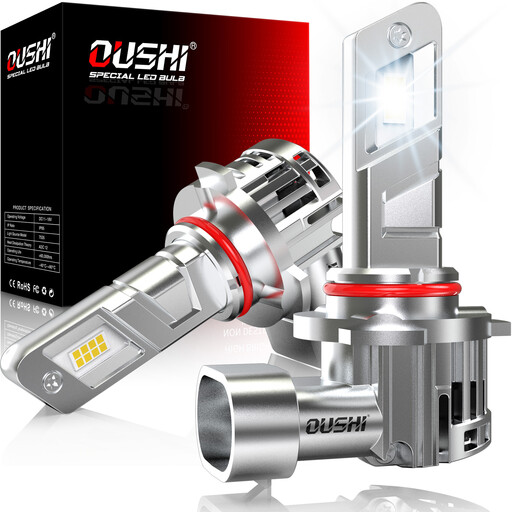
Why This Fits Their Persona: Specifically for owners of modern German or other European vehicles who are most concerned about triggering dashboard errors. Their priority is seamless electronic integration and reliability over absolute lowest cost.
This bulb's description notes its latest generation CANBUS system is designed for enhanced compatibility with European vehicles, directly addressing the primary concern of dashboard errors and flickering on sensitive onboard computer systems.
It delivers a high power output of 90W per pair, which helps satisfy the electrical monitoring systems of many modern cars, reducing the chance of the system flagging a "low power" error compared to less powerful LEDs.
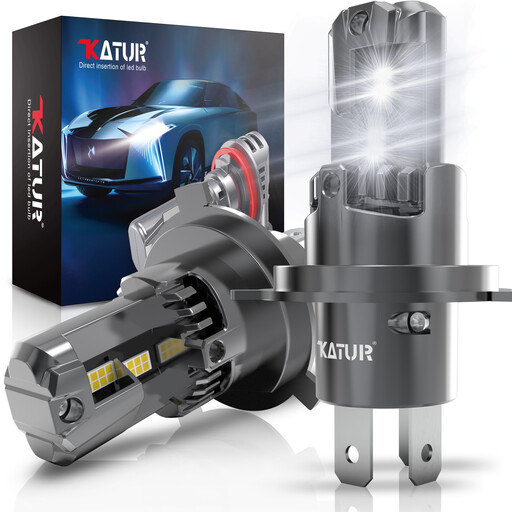
Why This Fits Their Persona: This user wants a straightforward, no-fuss installation. They value a product that is genuinely "plug and play" and doesn't require modifications to the headlight housing or dust covers. The H4 dual-beam function simplifies the upgrade for compatible vehicles.
This bulb is designed to be a true 1:1 size match to the original halogen bulb, with no bulky external driver. This directly counters the "mini size that doesn't fit" trap, ensuring the dust cover can be refitted correctly.
The all-in-one, wireless design makes for one of the simplest installations possible. The combination of a 16,000RPM fan and a hollow-carved heat sink provides robust cooling to support a long operational life.
We have compiled a complete, real-time list of products that fully satisfy these strict selection criteria and UK safety regulations.
The legality of aftermarket LED headlight bulbs in the UK for road use is a nuanced topic. As of early 2021, MOT test guidelines were updated. For a vehicle to pass its MOT, any halogen headlight unit must be fitted with a halogen bulb. Fitting an LED bulb into a unit designed for a halogen bulb is technically an MOT failure. However, this is often only checked if the beam pattern is incorrect and causes dazzle. For this reason, many drivers continue to use them, focusing on high-quality bulbs that produce a clean, sharp beam pattern that mimics the original halogen to avoid dazzling other road users. They are legal for off-road use without question.
It depends on your vehicle. Many modern xenon white LED bulbs come with a CANBUS decoder built-in, which is sufficient for over 95% of cars on the road. However, a small number of vehicles, particularly from premium German brands, have exceptionally sensitive monitoring systems. If you install a "CANBUS ready" bulb and still get a dashboard error, you may need to fit an additional external CANBUS decoder.
For most vehicles, installing plug and play car bulbs is a straightforward DIY job that takes 15-30 minutes. It typically involves opening the bonnet, removing the headlight dust cover, unclipping and removing the old bulb, inserting the new LED bulb and reconnecting the plug. The main challenge can be accessing the back of the headlight unit, which may be tight on some car models. Always consult your vehicle's manual before starting.