
24/7 Customer Support

Free returns

Same-day & Next-day Delivery

Quality Guaranteed

Unlock Your Welcome Offers: FREE Delivery | Up to 80% OFF | Free 30-day JoyPlus trial
Download the APP
Struggling with dim, yellow halogen headlights on dark British roads? You're not alone. Poor visibility at night is not just an inconvenience; it's a safety concern. A modern set of LED headlight bulbs can transform your nighttime driving experience, offering superior brightness, a clearer field of vision and a sleek, contemporary look for your vehicle.
Navigating the market for the right car headlight bulb replacement can be confusing. With terms like lumens, Kelvin and CANbus, it's easy to feel overwhelmed. This guide is designed to cut through the jargon, providing clear, practical advice to help you choose the right bulbs for your car. We'll break down the key features to look for and present our top recommendations for 2026.
Making the right choice is about more than just picking the brightest option. Here are three key factors to consider to ensure a successful upgrade.
The most critical step is ensuring the bulb fits your vehicle. Headlight bulbs come in specific fitment types, such as H4, H7 or HIR2 (also known as 9012). Using the wrong type will not work. The easiest way to confirm your car's requirement is to check your owner's manual or inspect the markings on your existing bulbs.
Many modern options are designed as plug and play LED headlights. This means they are built to the same dimensions as the original halogen bulbs, allowing for a direct replacement without needing complex modifications or adapters.
The performance of an LED bulb is defined by its brightness and colour.
bright LED headlight bulbs that illuminate more of the road ahead.Many modern cars, particularly European models, use a Controller Area Network (CANbus) system to monitor the vehicle's electrical components, including the headlights. Since LED bulbs draw less power than halogens, the CANbus system can mistakenly interpret this as a burnt-out bulb, leading to dashboard error messages or flickering lights.
To avoid this, look for CANbus ready LED headlights. These bulbs have built-in resistors or drivers that communicate correctly with the vehicle's computer, ensuring smooth, error-free operation.
Based on features, user-friendliness and performance specifications, here are our recommendations to help you upgrade car headlights.
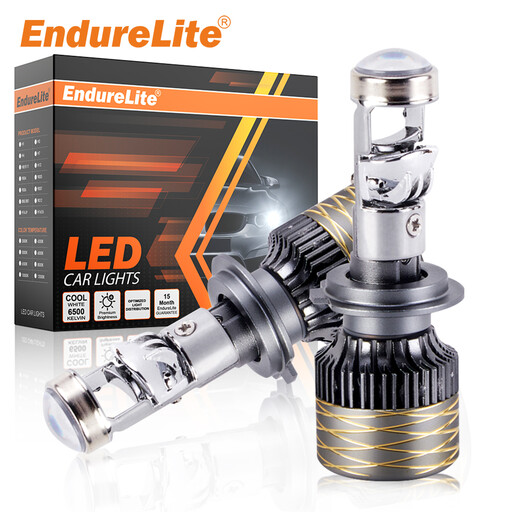
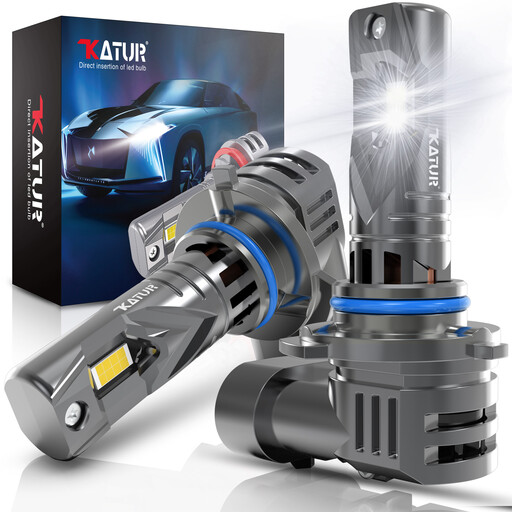

plug and play design for a quick and easy installation.If our recommendations don't quite match your vehicle's needs or if you're interested in exploring other advanced lighting solutions, we have a wider selection available.
Discover more options in our Car projector light category.
1. Are LED headlight bulbs legal for road use in the UK? The regulations can be complex. For cars first used after 1st April 1986, fitting LED bulbs into a headlight unit designed for halogen bulbs may be an MOT failure. The key is ensuring the bulb produces the correct beam pattern without causing glare to other road users. It is essential to check the latest DVSA guidelines and confirm the legality for your specific vehicle and use case.
2. Will I need special tools for a car headlight bulb replacement? Generally, no. Most plug and play LED headlights are designed for a tool-free installation. You may need to remove a dust cover or unclip the old bulb, but the process is typically straightforward. We recommend wearing gloves, as halogen bulbs can be very hot if they were recently in use.
3. What is the difference between an H4 and an H7 LED bulb? An H4 LED bulb is a dual-function bulb that contains two diodes to provide both high and low beams from a single unit. An H7 LED bulb is a single-function bulb, meaning your vehicle will have separate bulbs for the low beam and the high beam. It is crucial to purchase the correct type specified for your vehicle's headlight assembly.