
24/7 Customer Support

Free returns

Same-day & Next-day Delivery

Quality Guaranteed

Unlock Your Welcome Offers: FREE Delivery | Up to 80% OFF | Free 30-day JoyPlus trial
Download the APP
Upgrading your car's standard halogen bulbs to a modern set of LED headlight bulbs is one of the most impactful changes you can make. It promises not just a sharper, more contemporary look, but a significant improvement in night-time visibility and safety. However, the market is flooded with options, and it's easy to make a costly mistake.
As the Joybuy Product Recommendation Officer, my role is to help you navigate the marketing jargon. Many drivers are lured in by impressive-sounding specifications, only to end up with bulbs that flicker, throw error codes on the dashboard or fail their next MOT. Before you buy, be aware of these common pitfalls.
To make a smart purchase, focus on the technical details that determine performance and compatibility. Ignore the hype and check these three core parameters for any LED headlight conversion kit.
The first step is ensuring the bulb physically fits your car's headlight housing. Your vehicle's manual will specify the fitment you need, with common types being H7 LED headlight bulbs (single beam) and H4 LED bulbs (dual high/low beam).
Beyond the base, the overall size is crucial. Look for bulbs advertised with a 1:1 mini size or compact design that matches the dimensions of the original halogen bulb. This ensures a true plug and play LED headlights installation without needing to modify your car's dust covers—a common headache with oversized, poorly designed bulbs.
If your car was manufactured after the mid-2000s, it likely has a Controller Area Network (CANbus) system. This system monitors the electrical components, including your headlights. Since LEDs draw less power than halogens, the CANbus system can mistakenly interpret this as a burnt-out bulb, triggering a warning light.
To avoid this, look for CANbus LED headlights or those described as "CANbus ready" or "error-free". These have built-in resistors or intelligent drivers to communicate correctly with your car's computer. For some sensitive vehicles, an additional external CANbus decoder may still be required, and reputable sellers will often note this.
A safe and effective car headlight upgrade is all about the beam pattern. A well-engineered LED bulb will have its chips placed to mimic the filament of a halogen bulb, directing light onto the road in a controlled, focused beam. This prevents dazzling other drivers and ensures you pass your MOT.
Colour temperature, measured in Kelvin (K), determines the colour of the light. Most drivers prefer 6000K headlight bulbs, which produce a crisp, modern xenon white light. This colour is close to natural daylight, which can help reduce eye strain and improve the visibility of road signs and hazards.
Based on these critical factors, we've matched a few standout options to different types of UK drivers.
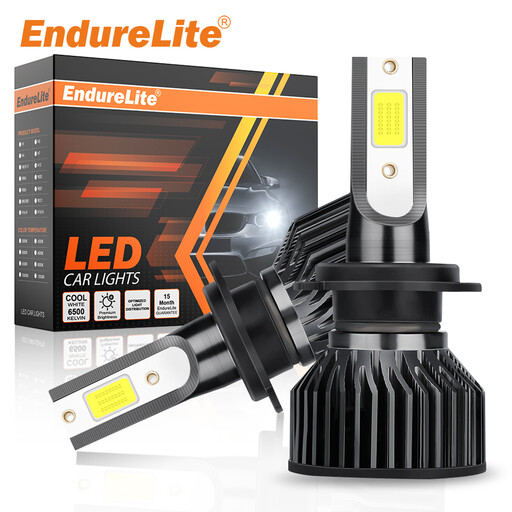
Why This Fits Their Persona: This is an ideal choice for a straightforward, effective upgrade on a wide range of common UK cars. It offers a significant boost in visibility for daily commuting and motorway driving without a premium price tag.
Its 1:1 sizing and plug-and-play design directly counter the "universal fit" trap, ensuring it fits into standard housings without modification. The built-in CANbus-ready driver aims for broad compatibility, reducing the risk of errors on many non-premium vehicles.
Features a focused beam pattern designed to mimic halogen bulbs, improving visibility without causing glare. The integrated fan and aluminium body provide effective heat dissipation for a reliable lifespan.
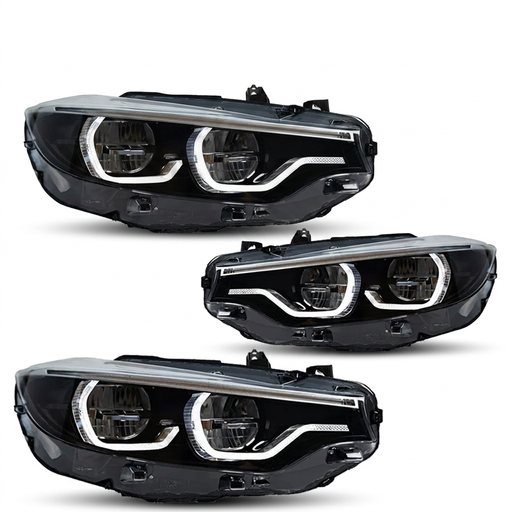
Why This Fits Their Persona: For owners of premium vehicles like a BMW 4 Series, a simple bulb swap isn't enough. This is a full headlight assembly replacement, designed to provide a factory-level aesthetic and functional upgrade, complete with modern features like dynamic turn signals.
This bespoke unit completely bypasses compatibility issues. It's engineered specifically for the F32 chassis, ensuring a perfect fit and seamless integration with the vehicle's complex electronics, eliminating any risk of CANbus errors or warning lights.
Provides an OEM-quality fit and finish with advanced features like LED projectors and dynamic indicators. It's a complete, integrated solution rather than a simple bulb replacement, ensuring optimal performance and reliability.
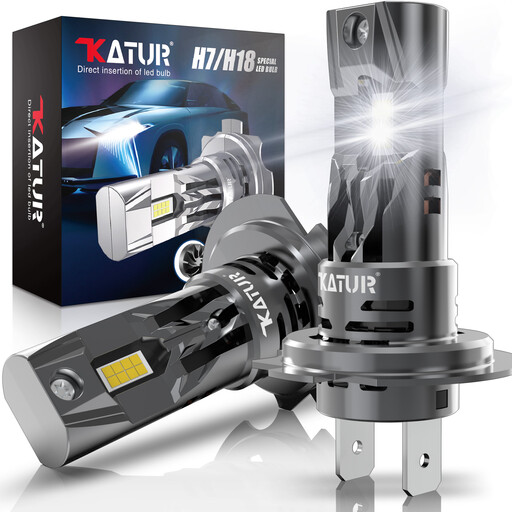
Why This Fits Their Persona: This user wants maximum light output and is drawn to high-performance specifications. The high wattage and lumen figures, combined with a robust cooling system, appeal to the enthusiast looking for the most powerful **bright car headlights** available.
It directly tackles the heat dissipation problem that plagues high-output bulbs. The combination of an aviation aluminium body and a powerful 16,000 RPM turbo fan is designed to maintain performance and prevent the rapid degradation seen in cheaper alternatives.
Delivers exceptionally high brightness with a design focused on longevity. The external driver and advanced cooling system are hallmarks of a performance-oriented product built for sustained output.
We have compiled a complete, real-time list of products that fully satisfy these strict selection criteria and UK safety regulations.
This is a critical point of consideration. According to UK government guidelines updated in 2021, retrofitting halogen headlight units with LED bulbs is not technically legal for road use and may result in an MOT failure. The rules state that any conversion should involve replacing the entire headlight unit with one that is type-approved for LED sources and carries the appropriate E-mark. However, if the LED bulb produces a correct and safe beam pattern that doesn't cause glare, some MOT testers may pass it. It is the owner's responsibility to ensure their vehicle is road legal.
It depends on your vehicle. As a general rule, most European cars manufactured from 2005 onwards (such as Audi, BMW, Volkswagen, Mercedes-Benz and Porsche) will require a CANbus decoder to prevent dashboard error messages or flickering. Many Japanese and Korean cars do not. Always check the product description, as many bulbs now come with "CANbus ready" drivers, but some sensitive models may still need an additional, external decoder.
The main difference lies in their function. An H4 bulb is a dual-filament bulb, meaning it contains both the high beam and low beam in a single unit. When you switch between them, a different part of the bulb lights up. An H7 bulb is a single-filament bulb, used for only one function—either the low beam or the high beam. Cars with H7 bulbs will have four bulbs in total at the front (two for low beam, two for high beam), whereas cars with H4 bulbs will only have two.