
24/7 Customer Support

Free returns

Same-day & Next-day Delivery

Quality Guaranteed

Unlock Your Welcome Offers: FREE Delivery | Up to 80% OFF | Free 30-day JoyPlus trial
Download the APP
Replacing tired halogen bulbs can improve the appearance and usable illumination of a car, but choosing LED headlight bulbs is not simply a matter of selecting the highest lumen figure. The correct bulb must fit the vehicle, work with its electrical system and produce a controlled beam.
This guide explains the key checks for UK drivers, DIY motorists and car enthusiasts before buying car headlight replacement bulbs.
Listings may quote impressive figures such as 30,000 lumens per pair or claims of several hundred per cent more brightness. These are product specifications supplied by the manufacturer, rather than a universal measurement of usable road illumination. Beam shape, reflector design, alignment and lens condition all affect what reaches the road.
A poorly positioned LED chip can create scattered light and glare, even if the bulb appears bright when viewed directly. Look for a design that attempts to replicate the original halogen filament position, such as a 1:1 mini-size LED bulb, and check the beam after installation.
A plug-and-play LED bulb may connect to the original socket without rewiring, but physical and electronic compatibility are separate issues. A car may have limited space behind the headlamp, a retaining clip that does not suit the replacement, or a CANbus system that detects a different electrical load.
Some vehicles, particularly certain Volkswagen, Mercedes-Benz, BMW and similar models, may need an additional CANbus decoder. Always confirm the original fitting and check whether the product specifically supports your vehicle.
LEDs use less energy than many halogen bulbs, but they still generate heat at the chip and base. Cooling fans, aluminium housings, heat sinks and copper components are designed to move heat away from the LED. However, a fan also introduces a moving part that may produce noise or eventually require maintenance.
Check the available rear clearance before choosing a fan-cooled bulb. A bulb that cannot be fitted with its dust cover correctly may be unsuitable, regardless of its advertised lifespan.
Use the vehicle handbook, an existing bulb marking or a trusted registration-based parts catalogue to identify the fitting. Common options include:
The connector, locking tabs, collar position and beam function must all match. A bulb that physically enters the socket may still be incorrectly positioned.
Many replacement bulbs advertise 6000K xenon white headlight bulbs, while others use 6500K. These produce a cool white appearance. A higher Kelvin number does not automatically mean more usable light, and very blue-looking output can be less comfortable in rain, mist or spray.
For UK driving, prioritise a controlled beam and suitable approval information over colour alone. Confirm whether the product is permitted for your specific vehicle and road use. Check current GOV.UK guidance, the vehicle handbook, product markings and MOT requirements before fitting LED bulbs to a headlamp originally designed for halogen.
Useful specifications to compare include:
After fitting, inspect the beam pattern and adjust the headlamp if necessary. Do not drive with a bulb that causes glare or an error warning that has not been resolved.
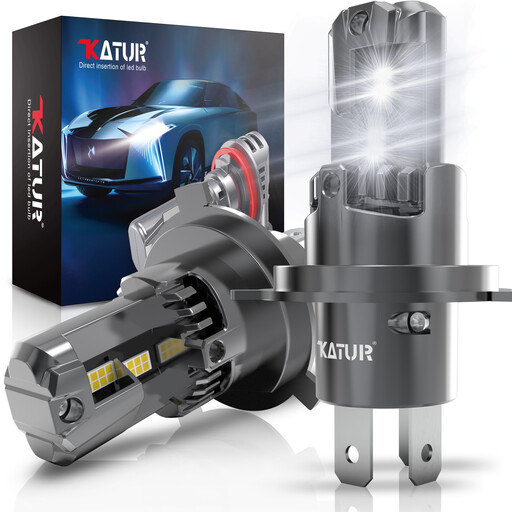
Why This Fits Their Persona: A practical option for drivers whose vehicle uses the combined H4/HB2/9003 high- and low-beam fitting and who want a compact replacement without an external driver.
The listing specifies a 1:1 mini size, 6000K output and CANbus-ready external driver, helping buyers check fit and electrical requirements before ordering.
Pair supplied; aviation aluminium body; fan-assisted cooling; IP65 rating listed.
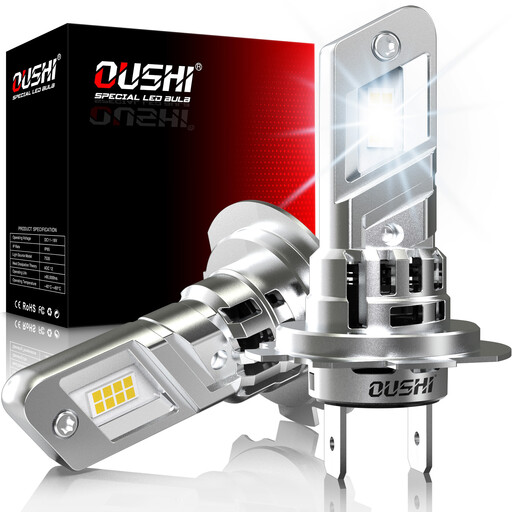
Why This Fits Their Persona: Suits H7 drivers seeking a tidy installation and a cool white appearance for regular commuting, motorway journeys and darker rural routes.
Its product information identifies the 1:1 format, built-in driver and CANbus system, while noting that some sensitive vehicles may still require a decoder.
6500K colour temperature; built-in turbo fan; 1:1 installation format; pair supplied.
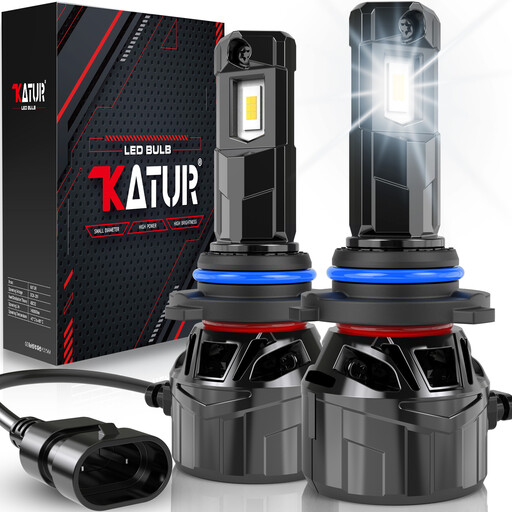
Why This Fits Their Persona: Designed for drivers with HB4/9006 sockets, including some cars, SUVs, pick-ups and vehicles requiring wider voltage support.
The specification identifies HB4/9006 fitment, 1:1 dimensions, 9–32V support and possible CANbus sensitivity, rather than presenting compatibility as universal.
6000K white output; built-in fan; aluminium housing; no external power driver listed.
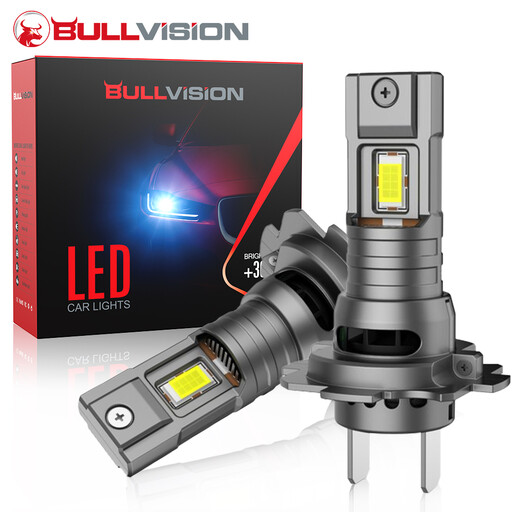
Why This Fits Their Persona: A suitable listing to consider when the vehicle uses H7 bulbs for front lighting and the buyer wants one fitting for a headlight or fog-light replacement.
The listing clearly warns that some German vehicles require an additional CANbus decoder, giving buyers a useful compatibility checkpoint.
6000K cool white output; IP68 rating listed; 10,000RPM cooling fan; plug-and-play format.
We have compiled a complete, real-time list of products that fully satisfy these strict selection criteria and UK safety regulations.
Before installation, switch off the ignition, allow the original bulb to cool and use gloves where appropriate. Avoid touching LED chips or glass surfaces. Confirm that the sealing ring sits correctly and that the rear dust cover can be refitted without pressing against the fan or driver.
After installation:
The same process applies to LED fog light bulbs. Fog lamps should not be used as a substitute for dipped headlights, and their beam must not inconvenience other road users.
Legality depends on the bulb, vehicle, headlamp assembly, approval markings and how the conversion affects the beam. A plug-and-play connection does not by itself confirm road legality. Check current UK regulations, MOT guidance, manufacturer instructions and approval information before using a retrofit bulb on public roads.
LEDs commonly have lower electrical consumption for a comparable lighting application, but the actual load varies by model. CANbus-equipped vehicles may still require a decoder because the car monitors bulb resistance or current draw rather than simply whether the light works.
Product listings in this category commonly state figures from 50,000 to 60,000 hours. These are manufacturer estimates, not a guaranteed service period. Heat, vibration, voltage, fan condition, moisture and daily operating time can all affect real-world lifespan. Proper cooling and correct installation are therefore as important as the printed number.