
24/7 Customer Support

Free returns

Same-day & Next-day Delivery

Quality Guaranteed

Unlock Your Welcome Offers: FREE Delivery | Up to 80% OFF | Free 30-day JoyPlus trial
Download the APP
Replacing tired halogen bulbs with LED headlight bulbs can improve the appearance and illumination of a car, SUV, pick-up, truck or motorcycle. However, a high lumen figure alone does not guarantee a useful or road-friendly upgrade. Socket compatibility, beam control, cooling and vehicle electronics all matter.
This guide explains the main buying pitfalls and compares suitable options for different UK drivers.
Listings may advertise figures such as 13,000LM, 20,000LM or 30,000LM per pair. These figures are useful for comparing the stated output of products, but they are not a complete measure of real-world performance. Packaging, beam direction, reflector design and the condition of the headlamp housing also affect the light reaching the road.
A poorly positioned LED chip can create bright patches, dark areas or excessive glare. Look for 1:1 halogen-size designs, adjustable bases and descriptions that explain beam control rather than relying only on a brightness claim.
An H4 bulb is not interchangeable with an H7 LED bulb, H11 LED bulb, 9005 HB3 LED bulb or 9006 HB4 LED bulb. Even bulbs with similar names can use different bases, connectors and high/low beam arrangements.
Check the existing bulb marking, the vehicle handbook and a reliable fitment guide before ordering. Also inspect the space behind the headlamp: a fan, external driver or large heat sink may not fit beneath the dust cover.
Plug and play LED bulbs generally use the original socket and require no wire cutting, but some vehicles monitor bulb resistance. This can cause flickering, warning messages or radio interference after installation.
CANbus-ready headlight bulbs may reduce these issues, but “ready” does not mean guaranteed compatibility with every model. Sensitive vehicle systems may still need a separate decoder or load resistor. Never ignore a dashboard warning or unstable light output.
Common replacement headlight bulbs include:
A bulb may be suitable for high beam, low beam or both, depending on the vehicle’s housing. Confirm the function before buying rather than assuming that “high and low beam LED bulbs” will fit every headlamp.
Many products in this range produce 6000K cool white headlights, while some use 6500K. Cool white light can look sharper than traditional halogen lighting, but colour temperature does not determine beam accuracy.
The LED chips should sit in a position that closely replicates the original filament. After installation, check the beam cutoff on a flat surface and have the headlamps aligned if necessary. A brighter bulb that points into oncoming traffic is not a suitable upgrade.
For UK road use, check the product information, vehicle requirements and relevant approval markings. Headlamp alignment, glare and the condition of the complete lighting unit can affect roadworthiness and MOT results.
LED chips produce heat at the rear of the bulb. Fan-cooled LED bulbs can move heat away quickly but may create a small amount of noise and require clearance behind the housing. Fanless designs are quieter and have fewer moving parts, but still need an effective aluminium heat sink.
For wet roads and winter conditions, look for waterproof LED headlight bulbs with a stated IP rating. IP65, IP67 and IP68 describe resistance to dust and water under specified test conditions; they do not mean a bulb can be submerged indefinitely.
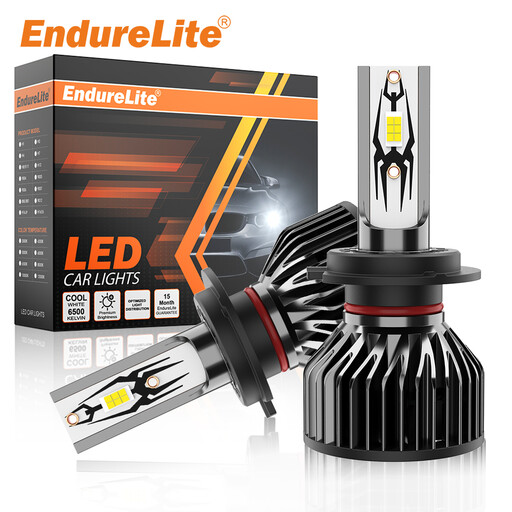
Why This Fits Their Persona: A straightforward option for drivers replacing H4 bulbs at home, with a two-bulb pack and plug-and-play format.
The listing specifies H4 high/low beam use, a 1:1 beam design and CANbus-ready electronics. Compatibility should still be confirmed for the individual vehicle.
6000K cool white output, aluminium housing, built-in fan and stated 50,000-hour operating life.
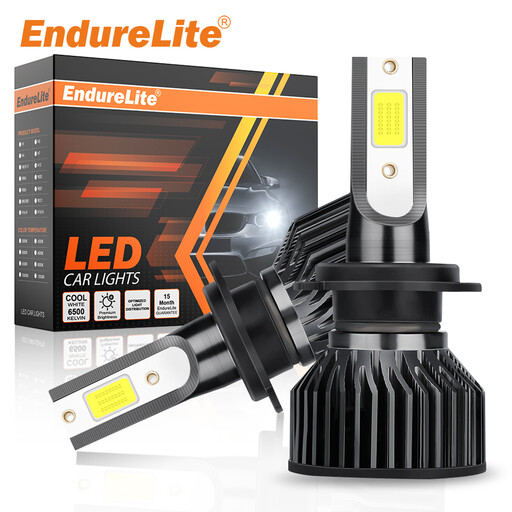
Why This Fits Their Persona: Useful for households with different vehicles or drivers who want one listing covering several common socket types.
The product information identifies multiple socket formats, IP68 sealing and CANbus-ready operation, helping buyers check practical fit details before ordering.
6000K output, fan cooling, waterproof construction and a two-bulb pack.
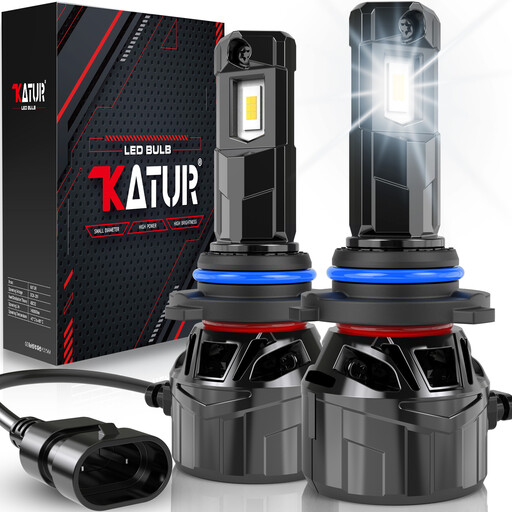
Why This Fits Their Persona: Suited to drivers of vehicles using HB4/9006 bulbs, including some pick-ups, trucks and vehicles with 12V or 24V systems.
The compact 1:1 format is designed for a small footprint, while the listing states 9–32V support and notes that some sensitive vehicles may need an additional decoder.
HB4/9006 fit, 6000K white light, integrated turbo fans and stated CANbus decoding.
We have compiled a complete, real-time list of products that fully satisfy these strict selection criteria and UK safety regulations.
Legality depends on the vehicle, headlamp housing, product approval and how the conversion affects glare and beam alignment. Check the manufacturer’s information and current UK requirements before use on public roads. A bulb that fits physically may still be unsuitable if it produces an incorrect beam or causes an MOT issue.
LEDs can use less power for a comparable stated output, but actual consumption varies by model. Check the listed wattage and the vehicle’s electrical requirements. High-wattage products may place greater demand on the vehicle’s wiring and charging system.
Listings commonly state operating lives of 50,000 or 60,000 hours, but real service life depends on heat, voltage, vibration, moisture and installation. Efficient cooling, adequate housing space and correct electrical compatibility are more useful indicators than a lifespan figure alone.