
24/7 Customer Support

Free returns

Same-day & Next-day Delivery

Quality Guaranteed

Unlock Your Welcome Offers: FREE Delivery | Up to 80% OFF | Free 30-day JoyPlus trial
Download the APP
By Joybuy Product Recommendation Officer
Replacing tired halogen lamps with LED headlight bulbs can change the colour, appearance and perceived brightness of your vehicle’s lighting. However, choosing by lumen figures alone can lead to poor fitment, scattered light or dashboard warnings. The right replacement must match your car’s bulb socket, physical space and electrical system.
Before buying, check the original bulb marking, vehicle handbook and headlamp position. An H7 LED bulb is not interchangeable with an H4, H11, 9005 or 9006 fitting, even if the product appears similar in photographs.
Listings may advertise very high lumen numbers, but output figures do not automatically indicate a useful beam on the road. Bulb shape, LED chip placement and the vehicle’s reflector or projector housing all affect light distribution.
Look for a 1:1 halogen replacement bulb with LED chips positioned similarly to the original filament. A focused beam can help reduce stray light, whereas an oversized bulb or poorly positioned chips may create dark areas or glare for other road users.
Plug and play LED bulbs usually connect to the original socket, but installation space varies between vehicles. Fans, external drivers and bulky bases may interfere with dust covers or the rear of the headlamp housing.
CANbus systems can also be sensitive to changes in electrical load. CANbus-ready LED bulbs may reduce flickering or warning messages, but no compatibility statement should be treated as universal. Some vehicles, particularly certain European models, may still need an additional decoder.
A claimed operating life of 50,000 or 60,000 hours is a product specification, not a promise of identical performance in every vehicle. Heat, enclosed housings, vibration and driving conditions can affect service life.
IP65, IP67 and IP68 ratings describe resistance under specified test conditions. They do not remove the need for a correctly fitted seal, intact dust cover or suitable ventilation.
Common options include:
Use the existing bulb marking or the vehicle handbook rather than relying only on a registration-plate lookup tool.
Many replacement lamps offer 6000K cool white headlights, while some use 6500K. These shades give a whiter appearance than traditional halogen lighting. Colour temperature does not, by itself, confirm brightness, beam quality or legal suitability.
For fog lamps, an LED replacement should still produce a controlled beam appropriate to the original fitting. Do not assume that a brighter-looking bulb is automatically more suitable in heavy rain or mist.
LED chips generate heat even though they are generally more efficient than halogen filaments. Cooling may come from a built-in fan, aluminium housing, heat sink or fanless body.
CSP LED chips are used in several compact designs because the chip layout can closely imitate a halogen filament position. Fan-cooled products may offer active heat removal but need enough clearance and may produce a small operating noise. Fanless bulbs avoid moving parts and can be useful where space is limited.
For UK use, also check the fitting instructions, headlamp alignment and the requirements that apply to your vehicle. A replacement lamp should not cause glare, and some LED retrofit bulbs may not be approved for every road-going application. If in doubt, consult a qualified garage and check current DVSA guidance.
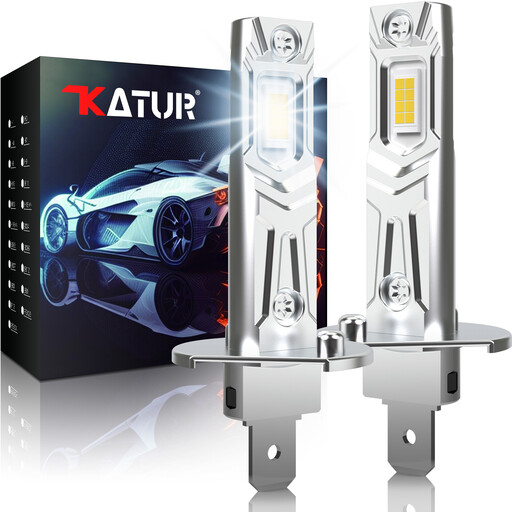
Why This Fits Their Persona: A compact option for DIY drivers upgrading an H1 fitting, particularly where rear housing space is restricted.
Its fanless, all-in-one design avoids an external driver and reduces moving-part concerns. Confirm clearance before ordering.
6000K colour temperature, 1:1 mini design, 80W per pair and an aluminium housing.
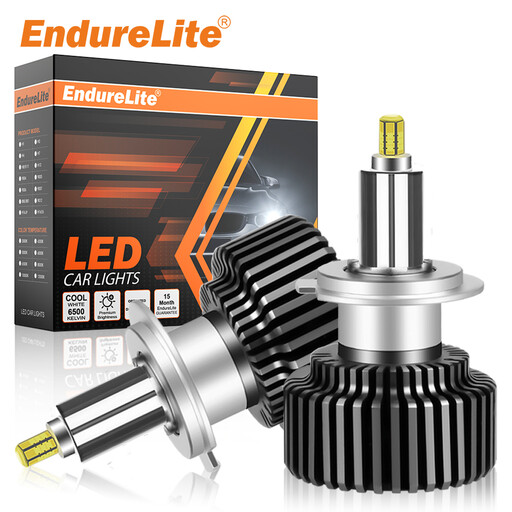
Why This Fits Their Persona: Suitable for households with more than one compatible vehicle or drivers seeking a multi-fitting product range.
The listing specifies 1:1 sizing, CSP chips, built-in CANbus-ready design and plug-and-play installation.
6000K cool white light, IP68 waterproof specification and a stated 50,000-hour operating life.
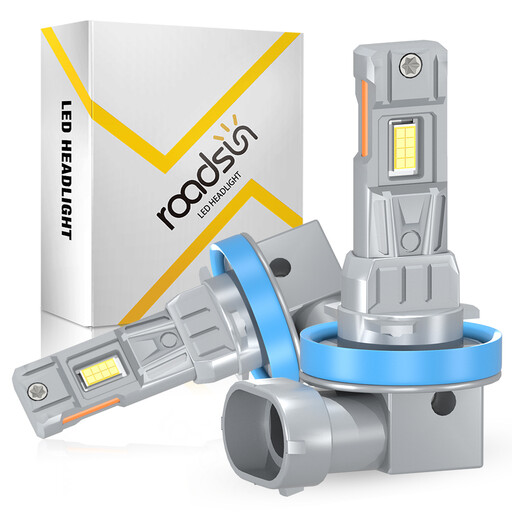
Why This Fits Their Persona: A practical match for frequent commuters and drivers seeking one bulb design for compatible headlight or fog light applications.
Its stated 1:1 design and three-minute installation approach address fitment and wiring complexity. Check vehicle-specific CANbus needs.
H8, H9 and H11 compatibility, IP67 specification, aluminium construction and a stated 70,000-hour lifespan.
We have compiled a complete, real-time list of products that fully satisfy these strict selection criteria and UK safety regulations.
Switch off the ignition and allow the original lamp to cool before removal. Wear gloves, avoid touching LED chips and make sure the bulb base is fully seated. Refit the dust cover securely to protect the housing from moisture.
LEDs generally switch on instantly and can use less electrical power than some halogen alternatives, but actual consumption depends on the bulb’s wattage and the vehicle’s charging system. Cooling fans may draw additional power and can eventually become a maintenance point. Check both lamps after installation and inspect the beam alignment; a garage adjustment may be worthwhile if the pattern is uneven.
Legality depends on the bulb, vehicle, headlamp unit and intended use. A retrofit LED may not be approved for every original halogen housing. Check current UK requirements, the product documentation and your vehicle’s handbook. The lamps must not produce excessive glare, and the vehicle must meet applicable roadworthiness requirements.
Many listings specify operating lives from 50,000 to 70,000 hours, but real-world service life depends on temperature, vibration, moisture and installation. Good heat management and a sealed housing can support reliable operation, but the stated figure should be viewed as a specification rather than a guarantee.
You may need a CANbus-ready design if your vehicle monitors bulb resistance and displays warnings or causes flickering after an LED conversion. CANbus-ready LED bulbs can help, although some vehicles still require a separate decoder. Test the lights and dashboard after installation before finalising the fitting.