
24/7 Customer Support

Free returns

Same-day & Next-day Delivery

Quality Guaranteed

Unlock Your Welcome Offers: FREE Delivery | Up to 80% OFF | Free 30-day JoyPlus trial
Download the APP
Replacing tired halogen or HID lighting can make night driving feel more comfortable, but choosing LED headlight bulbs for cars is not simply a matter of selecting the largest lumen figure. The wrong bulb size, poor chip alignment or inadequate cooling can lead to a poor beam pattern, dashboard warnings and wasted money.
This guide explains the practical checks UK motorists should make before buying car LED bulbs, followed by product recommendations matched to different vehicle needs.
Listings may advertise figures such as 20,000LM or 30,000LM per pair. These are useful specification points, but they do not guarantee a longer or wider usable beam. Housing design, reflector condition, LED chip placement and alignment all affect the light projected onto the road.
A bulb that is not positioned like the original filament or discharge source may create scattered light and glare for oncoming drivers. Look for 1:1 LED bulbs, ultra-thin chip spacing and stated beam-pattern considerations rather than choosing on brightness claims alone.
Plug-and-play LED headlights still need the correct socket and enough room inside the headlamp housing. An H7 bulb cannot replace an H4, H11 or HIR2/9012 bulb without the appropriate fitment. HID applications such as D2S also require a compatible HID headlight assembly; they are not a direct replacement for halogen systems.
Always check the owner’s manual, the marking on the original bulb or a reliable vehicle fitment reference before ordering.
LEDs use less energy than many halogen bulbs, but they still generate heat at the LED chips. Fan-cooled LED bulbs can move heat away quickly, while fanless LED bulbs avoid moving parts and operating noise but rely on their aluminium heat sink and available space.
Modern vehicles may also monitor bulb current. A replacement can work electrically yet trigger a bulb-out warning, flicker or radio interference. CANbus LED bulbs with an integrated driver can reduce these problems, although no compatibility statement should be treated as universal. Some sensitive vehicles may still need an additional decoder or resistor.
Common replacement types include H7 LED bulbs, H4 LED bulbs, H1 LED bulbs, H11 LED bulbs, H8/H9/H11 LED bulbs, 9005/9006 LED bulbs and HIR2 9012 LED bulbs. H4 bulbs usually combine high and low beam functions in one bulb, whereas H7 and H11 applications have different bases and electrical arrangements.
D2S LED bulbs are intended for headlamp assemblies originally designed for D2S HID bulbs. Confirm the assembly type before purchase and do not assume a D2S product is suitable for a halogen housing.
Many products use a cool white rating of 6000K or 6500K. A 6000K LED headlight bulb typically gives a clean white appearance, while 6500K may look slightly cooler or more bluish. Colour temperature is not the same as brightness, and a higher Kelvin figure does not automatically improve visibility in rain or fog.
For UK driving, the more important considerations are a controlled beam, correct headlamp aim and avoiding unnecessary glare. After installation, check the beam against a wall and have the headlamps adjusted if required.
Check whether the bulb uses a built-in fan, external driver or fanless aluminium body. A fan-cooled design may suit higher-output products, but the fan needs clearance and can eventually become noisy if contaminated. Fanless designs can be easier to package in tight housings, provided their heat sink has room to dissipate heat.
Also look for practical details such as IP65 or IP68 water resistance, a compact 1:1 body and compatibility with the original dust cover. Never force a bulb into place or leave the rear cover improperly sealed.
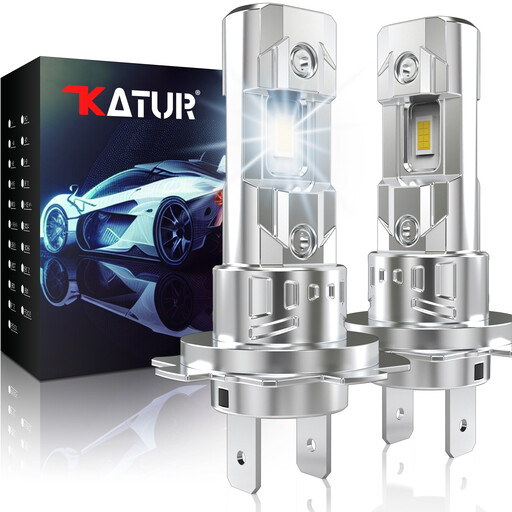
Why This Fits Their Persona: A compact option for motorists with H7 sockets who want a straightforward installation and no cooling-fan noise.
Its fanless design avoids reliance on a moving fan, while the 1:1 mini format is intended to fit the original H7 position.
6000K white output, aluminium body, waterproof construction and plug-and-play format.
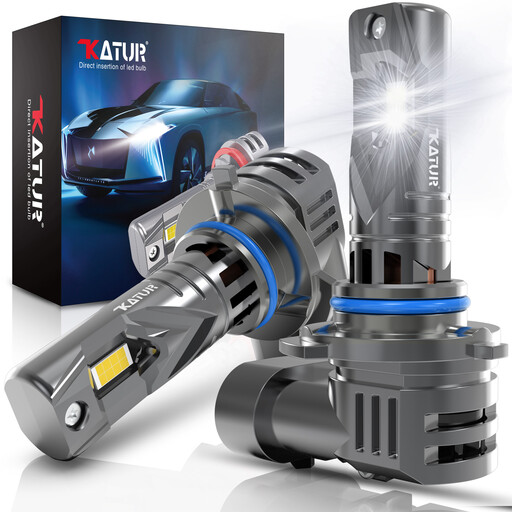
Why This Fits Their Persona: Suitable for drivers seeking a compact HIR2/9012 upgrade with active cooling and an integrated approach to installation.
The 1:1 mini design addresses space concerns, while chip alignment and a stated beam design help reduce the risk of uncontrolled scatter.
6000K colour temperature, 16,000RPM fan, IP65 water resistance and stated CANbus readiness.
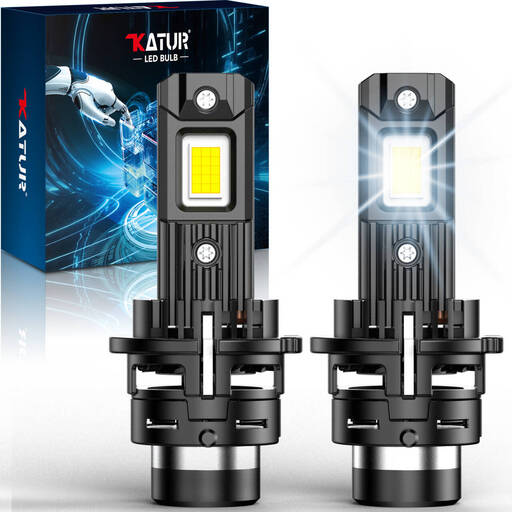
Why This Fits Their Persona: Designed for motorists replacing D2S HID bulbs in compatible headlamp assemblies and driving regularly after dark.
The listing specifically identifies it as a replacement for HID assemblies, helping avoid the common D2S-versus-halogen fitment mistake.
1:1 format, built-in driver, aluminium construction, cooling fan and a stated 60,000-hour operating life.
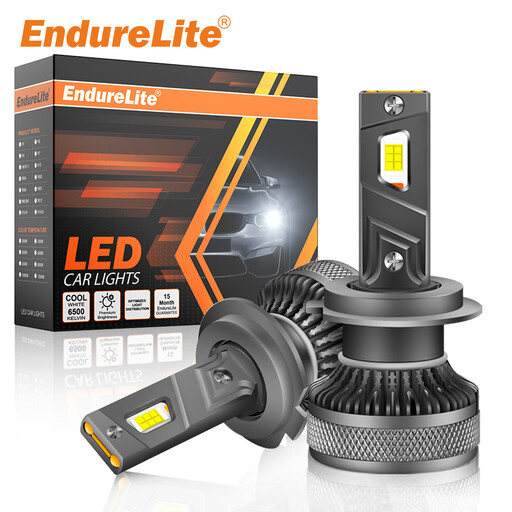
Why This Fits Their Persona: A practical match for DIY motorists with 9012/HIR2 headlights or fog lights who want direct fitting and onboard electronics support.
The stated stock-bulb sizing and built-in CANbus-ready driver address two frequent installation concerns: limited clearance and warning messages.
6000K white output, CSP chips, IP68 construction, 10,000RPM cooling fan and a stated 50,000-hour lifespan.
Before installation, switch off the vehicle, allow the old bulb to cool and avoid touching the LED lens. Confirm that the connector, retaining clip and dust cover are secure. If the replacement changes the beam shape or causes glare, stop using it until the headlamp is correctly checked and adjusted. For road use, also confirm that the product and vehicle combination meets applicable UK requirements; suitability can vary by vehicle and headlamp type.
We have compiled a complete, real-time list of products that fully satisfy these strict selection criteria and UK safety regulations.
Legality depends on the bulb, headlamp approval, vehicle and intended use. A retrofit LED may fit physically but still create an unsuitable beam or fail to meet requirements for road use. Check the product documentation, vehicle manual and current UK guidance, then confirm the beam pattern after fitting.
They can use less power than equivalent halogen bulbs, but the exact consumption depends on the product’s wattage and driver. Check the stated wattage rather than assuming every LED bulb has the same running cost. CANbus electronics may also affect the electrical load seen by the vehicle.
Listings may state operating lives from 50,000 to 60,000 hours. These figures are product specifications rather than a guarantee of service life in every vehicle. Heat, vibration, moisture, operating temperature and installation quality can all affect durability. Proper cooling and a correctly sealed headlamp housing remain important.