
24/7 Customer Support

Free returns

Same-day & Next-day Delivery

Quality Guaranteed

Unlock Your Welcome Offers: FREE Delivery | Up to 80% OFF | Free 30-day JoyPlus trial
Download the APP
Replacing standard halogen lamps with LED headlight bulbs for cars can offer a whiter appearance, quicker illumination and a different maintenance profile. However, shopping by lumen figures alone often leads to poor fitment, scattered beams or dashboard warnings.
Before buying car headlight replacement bulbs, check the original socket, available space and your vehicle’s lighting requirements. A quick plug-and-play installation is useful, but it does not remove the need for correct alignment or road-legal use.
Listings may quote very high lumen outputs or percentage improvements over halogen bulbs. These figures can be difficult to compare because sellers may measure a pair rather than one bulb or use different test conditions.
A carefully positioned LED chip and suitable beam pattern matter just as much. A bulb that produces scattered light can create glare for other road users without giving the driver useful road coverage. Look for a 1:1 halogen replacement bulb design, narrow chip placement and clear guidance on beam alignment.
A bulb marked H7, H4 or HB3/9005 must match the vehicle’s original socket, but socket compatibility is only one part of fitment. The rear of the bulb must also clear the dust cover and housing. Some cars use retaining clips, unusual connectors or limited space around the lamp.
Use the owner’s manual, the existing bulb marking or a reliable vehicle fitment guide before ordering. H1 LED bulbs, H4 LED headlight bulbs, H7 LED bulbs, H8 H9 H11 LED bulbs and HB3 9005 LED bulbs are not interchangeable.
LEDs consume energy differently from halogen bulbs and still produce heat around the chip and driver. Fan-cooled models need sufficient clearance and may create a small operating noise. Fanless designs remove a moving part but rely heavily on housing and heat-sink design.
Vehicles with bulb monitoring systems may also display an error message or cause flickering. CANbus-ready LED bulbs can reduce this risk, but “ready” does not guarantee compatibility with every model. Some sensitive European vehicles may still require a separate decoder.
Confirm the exact bulb code first. H4 bulbs normally combine high and low beam functions, while H1, H7 and HB3/9005 applications are commonly used for a single beam or lighting position, depending on the vehicle.
A 1:1 design can make installation easier and improve the chance that the original dust cover will fit. Nevertheless, compare the listed dimensions with your existing bulb, particularly where a cooling fan or external driver is included.
Many buyers choose 6000K cool white headlight bulbs for a crisp appearance. Some products use 6500K, which may look slightly cooler. Colour temperature describes the shade of light, not its actual road performance. A higher Kelvin number does not automatically mean greater visibility in rain or fog.
For fog lamps, check whether the product is intended for that position and whether the beam remains controlled. LED fog light bulbs should not be selected solely because they look whiter.
Aluminium housings, heat sinks and turbo fans are common ways to manage operating temperature. Product listings in this category may state lifespans between 50,000 and 70,000 hours, but real service life depends on temperature, voltage, usage and installation conditions.
IP65, IP67 and IP68 ratings refer to resistance to dust and water under specified test conditions; they do not mean a bulb is suitable for immersion or every engine-bay environment. Also check whether the driver is integrated or external, as this affects installation space.
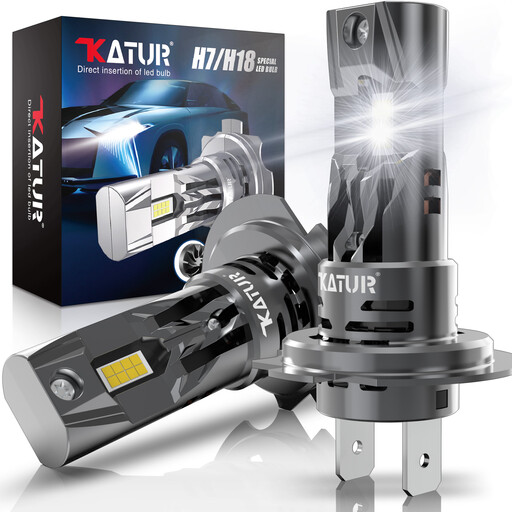
Why This Fits Their Persona: A straightforward option for drivers whose cars use H7 sockets and who want a 1:1 plug-and-play format without wiring changes.
Its listed 1:1 mini size helps address limited housing space. The seller also lists CANbus readiness, although vehicle-specific compatibility should still be checked.
6000K colour temperature, integrated cooling design and a two-bulb pack. The listing states IP65 protection and a stated lifespan of up to 60,000 hours.
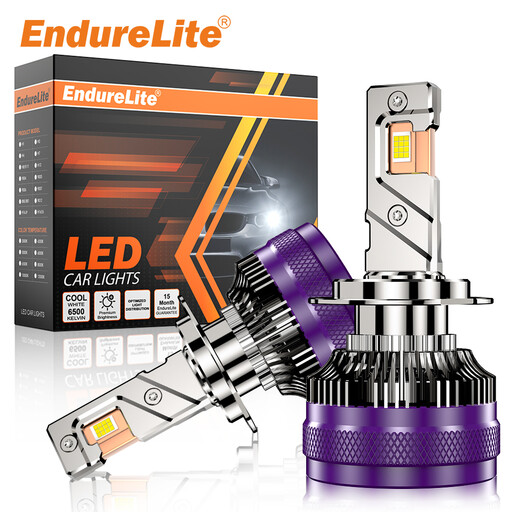
Why This Fits Their Persona: Suitable for owners of cars, SUVs or trucks using HB3/9005 bulbs who value an integrated design and a clearly stated cooling system.
The product information identifies a 1:1 shape, built-in driver and CANbus-ready design, helping reduce the need for extra wiring in many installations.
Aluminium housing, a listed 10,000 RPM fan, IP68 water protection and a stated 50,000-hour operating life.
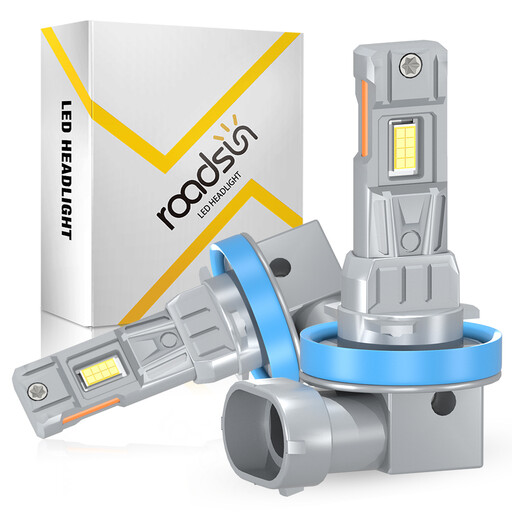
Why This Fits Their Persona: A practical match for drivers using H11, H9 or H8 sockets in cars, trucks and SUVs, including those selecting LED fog light bulbs.
Its listed 1:1 format is intended to preserve the original fitting position, while the IP67 rating and aluminium housing address moisture and heat-management considerations.
The listing specifies H8, H9 and H11 use, 1:1 dimensions, a built-in cooling system and a stated lifespan of more than 70,000 hours.
We have compiled a complete, real-time list of products that fully satisfy these strict selection criteria and UK safety regulations.
Before fitting, switch off the ignition and allow the old bulb to cool. Wear clean gloves, avoid touching LED chips and secure the bulb in the correct orientation. Refit the dust cover and test both sides for flickering, error messages and correct high- or low-beam operation.
After installation, check the beam aim on a level surface. A replacement bulb is not a substitute for correct headlamp alignment. UK drivers should also confirm that the conversion is suitable for their vehicle and lighting assembly, and that the finished installation meets applicable road-use and MOT requirements. If the beam cannot be aligned correctly, ask a qualified garage to inspect it.
Legality depends on the vehicle, lamp assembly, bulb type and installation. A bulb fitting the socket does not automatically make an LED retrofit suitable for every headlamp. Check current UK requirements, the vehicle handbook and MOT guidance, and make sure the beam pattern is correctly aligned.
Product listings commonly state between 50,000 and 70,000 hours. These are stated operating-life figures rather than a guarantee of service in every vehicle. Heat, voltage, vibration, fan condition and daily use can affect actual lifespan.
They can use a different wattage for a similar lighting application, but the exact electrical load depends on the product. Check the listed voltage and wattage, particularly for motorcycles, older cars and vehicles with bulb-monitoring systems. A CANbus-ready design may help, but it cannot guarantee error-free operation on every model.