
24/7 Customer Support

Free returns

Same-day & Next-day Delivery

Quality Guaranteed

Unlock Your Welcome Offers: FREE Delivery | Up to 80% OFF | Free 30-day JoyPlus trial
Download the APP
Replacing standard halogen or HID lighting can make a noticeable difference to the appearance and perceived brightness of a vehicle. However, choosing LED headlight bulbs for cars is not simply a matter of selecting the highest lumen figure on a product page. Socket type, beam pattern, electrical compatibility and UK road-use requirements all affect whether a bulb is suitable.
For UK drivers, the most common buying mistakes are purchasing the wrong fitting, assuming “plug and play” means every car is compatible and treating marketing brightness claims as a guarantee of better road illumination.
H7, H11, H8, H9, H4, HB3 and HIR2 9012 are not interchangeable simply because they look similar. A bulb may fit physically but still be unsuitable for the vehicle’s connector, reflector or projector housing.
Before ordering, check:
For example, H8 H9 H11 bulbs may share a similar family of fittings, but the correct application still depends on the vehicle and lamp assembly. Similarly, HB3 9005 LED bulbs should not be used in an H7 socket.
Listings often promote figures such as 20,000 or 30,000 lumens. These numbers may describe a pair, theoretical chip output or a maximum figure rather than the useful light reaching the road. An incorrectly positioned LED chip can create dark areas, scatter or glare, even when the nominal output looks impressive.
Look for a 1:1 bulb design, narrow chip placement and information about beam alignment. After fitting, check the beam against a wall and have the headlamp aim adjusted if required.
CANbus error-free LED bulbs include electronic components intended to reduce flickering, dashboard warnings or radio interference. Nevertheless, vehicle electrical systems vary, particularly on cars with sensitive monitoring systems.
A product described as “99% CANbus compatible” does not mean it is guaranteed to work without a decoder on every vehicle. Keep the original bulbs until the replacement has been installed and tested. If an error appears, an additional resistor or decoder may be required.
The fitting is the first non-negotiable specification. Common choices include:
D1S, D1R, D2S and D4S bulbs are intended for assemblies originally designed for HID lighting. They are not direct substitutes for halogen bulbs.
Many buyers choose 6000K or 6500K white headlight bulbs for a cooler white appearance. A higher Kelvin number does not automatically mean greater usable brightness. It describes colour appearance, with 6000K generally appearing cool white and 6500K tending towards a bluer white.
For fog lights, consider how the colour interacts with wet roads, rain and mist. A very cool white output may look modern, but beam control and correct aiming remain more important than colour alone.
LEDs produce heat around the chip and require heat management. A bulb may use:
Check that the replacement fits beneath the original dust cover and leaves enough room for a fan or heat sink. IP ratings such as IP67 or IP68 indicate resistance to dust and water under defined test conditions, but they do not remove the need for correct installation.
For UK use, also check whether the retrofit bulb and lamp assembly meet the relevant legal requirements for public roads. A bulb that physically fits may still require approval or may not be suitable for every headlamp design. Confirm the product documentation and local rules before use.
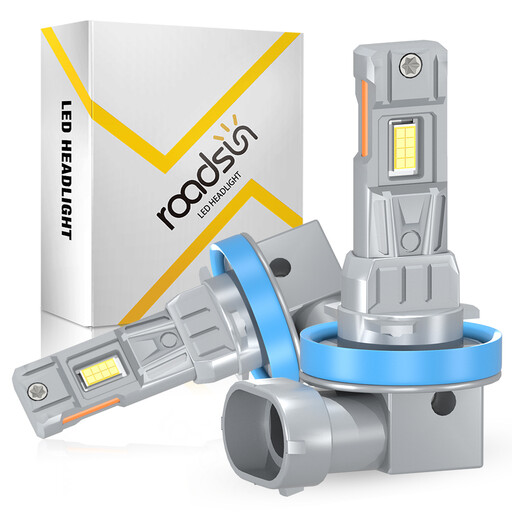
Why This Fits Their Persona: A straightforward option for drivers replacing H11, H9 or H8 halogen bulbs in a car, lorry or SUV, particularly when a direct installation is a priority.
Its listed 1:1 design is intended for the original H11, H9 and H8 sockets, helping buyers avoid incompatible adapters. Confirm the original fitting before ordering.
The listing specifies aluminium construction, IP67 protection and a claimed 70,000-hour operating life.
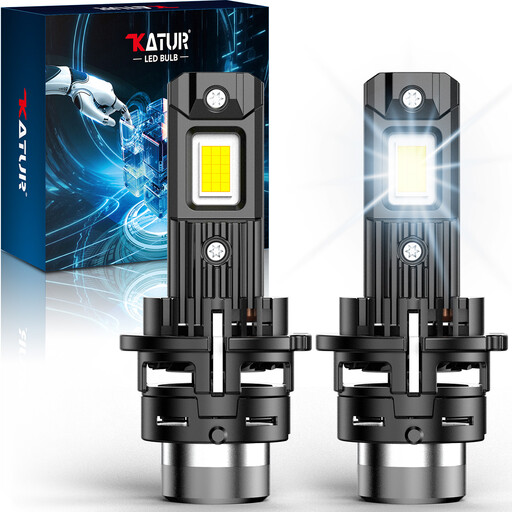
Why This Fits Their Persona: Designed for owners of vehicles with original D4S HID headlamp assemblies who want a cool-white replacement with integrated electronics.
The product information clearly states that it is for HID assemblies only, not halogen or factory LED units. That distinction prevents a costly mismatch.
It has a 6500K colour specification, built-in fan cooling and a 1:1 plug-and-play format according to the listing.
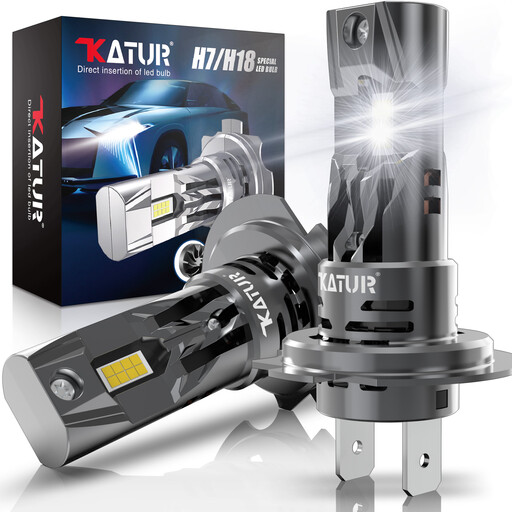
Why This Fits Their Persona: Suited to frequent commuters and drivers covering darker rural routes who have verified an H7 fitting and have enough space for active cooling.
The listing gives the fitting, voltage range and cooling arrangement rather than relying only on a brightness headline. Check dust-cover clearance before purchase.
The product details specify 6000K white light, a 1:1 mini format, built-in turbo fan and a CANbus-ready driver.
We have compiled a complete, real-time list of products that fully satisfy these strict selection criteria and UK safety regulations.
A plug-and-play headlight bulb should connect to the original socket without cutting wires, but installation still requires care:
Do not assume that a quick installation removes the need for compatibility checks. Some H7, H4 and H11 applications may need a separate decoder, while some sensitive vehicles may report an error despite a CANbus-ready design.
Legality depends on the bulb, vehicle, headlamp assembly and intended road use. A retrofit may not automatically meet the requirements of the original lamp. Check current UK road-use rules, product approval information and the vehicle’s lighting specifications before fitting. Correct beam aim is also important to avoid glare.
Product listings commonly state operating lives of 50,000 to 60,000 hours, although actual service life depends on heat, voltage, installation and use. A fan-cooled bulb also contains a moving component that requires sufficient ventilation. Keep the heat sink clear and retain purchase documentation for any stated warranty.
LEDs can use less electrical power for a comparable lighting application, but this varies by model. Check the listed wattage and vehicle compatibility rather than assuming every LED replacement reduces consumption. Interior T10 W5W LED bulbs, for example, are designed for different electrical and lighting requirements from headlamp bulbs.