
24/7 Customer Support

Free returns

Same-day & Next-day Delivery

Quality Guaranteed

Unlock Your Welcome Offers: FREE Delivery | Up to 80% OFF | Free 30-day JoyPlus trial
Download the APP
Replacing dim or failing headlamp bulbs can improve the appearance of your vehicle and may provide a clearer view of the road. However, choosing LED headlight bulbs is not simply a matter of selecting the highest lumen figure. The bulb must match the vehicle’s fitting, headlamp housing, electrical system and available installation space.
This guide explains the key checks for UK drivers replacing factory HID, Xenon or halogen bulbs, with practical recommendations for different vehicle needs.
D1S, D1R, D2S, D2R, D3S, D3R, D4S and D4R are not interchangeable descriptions. The letter identifies the type of headlamp application, while the number relates to the base and electrical specification. A D2S LED bulb, for example, is intended for a D2S socket and projector-style HID system; it is not automatically suitable for a D2R reflector housing.
HIR2 and 9012 generally refer to the same fitting, but you should still confirm the marking on the original bulb, the vehicle handbook or a trusted parts catalogue before ordering.
Large lumen numbers can be attractive, but they do not by themselves confirm a useful beam pattern. Poorly positioned LED chips may create dark areas, excessive foreground light or glare for approaching drivers. Look for a 1:1 LED bulb design, compact chip placement and clear instructions about alignment.
A brighter-looking bulb is not necessarily more suitable if the beam is scattered. After installation, the headlamps should be checked and adjusted if necessary.
CANbus LED bulbs include an electronic driver intended to reduce dashboard warnings, flickering or compatibility problems. Nevertheless, vehicle electrical systems vary. Some cars may still need an additional decoder, resistor or wiring adjustment. Product listings commonly state compatibility percentages, but these should be treated as product information rather than a guarantee for every UK vehicle.
Start by identifying whether your car uses halogen, HID/Xenon or an existing LED assembly. Several products in this category are HID replacement bulbs only and cannot be fitted to a halogen reflector or a sealed LED headlamp unit.
Common compatible codes include:
The S and R versions should not be assumed to be interchangeable because the headlamp housing determines how light is controlled.
6000K LED headlight bulbs usually produce a cool white appearance, while 6500K LED headlight bulbs appear slightly cooler and more blue-white. The higher figure does not automatically mean stronger illumination. For many drivers, 6000K offers a balanced white appearance without moving as far towards a blue tint.
Check the stated colour temperature alongside the beam design and output information. Colour temperature describes light appearance, not brightness.
LED chips produce heat around their base, so thermal management is important. Many modern products use a cooling fan headlight bulb, aluminium housing, copper heat pipes or finned heat sinks. Fan speed figures, such as 10,000RPM or 16,000RPM, describe the fan specification but do not independently confirm long-term performance.
Also check:
Before installation, switch off the lights, allow the original bulbs to cool and follow the vehicle and product instructions. Disconnecting the battery may be appropriate for some installations, but consult the vehicle handbook first.
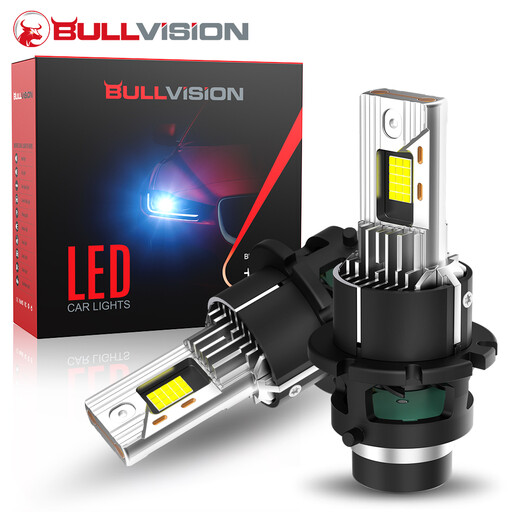
Why This Fits Their Persona: A practical option for drivers with a compatible D2S or D2R HID housing who want a 6000K white appearance and a two-bulb replacement pack.
Its listing specifies a 1:1 design, cooling fan and CANbus-ready driver rather than relying only on a brightness claim.
6000K colour temperature, CSP chips, integrated fan and 50,000-hour stated operating life.
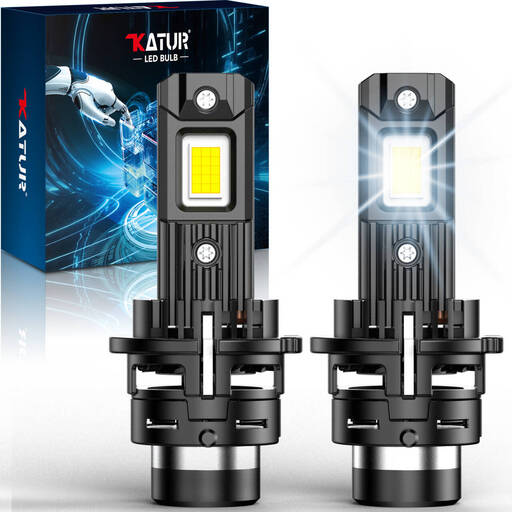
Why This Fits Their Persona: Suitable for D2S HID owners seeking a cooler white appearance, compact fit and direct replacement format.
The listing identifies it as an HID-only replacement and specifies a 1:1 plug-and-play design, helping prevent an unsuitable halogen purchase.
6500K white output, 16,000RPM fan, aluminium construction and stated 60,000-hour lifespan.
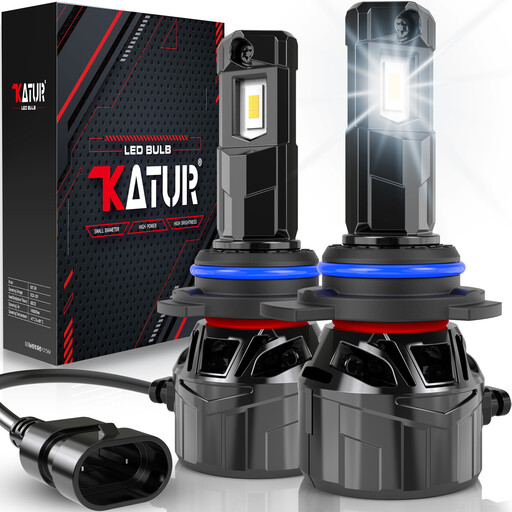
Why This Fits Their Persona: Designed for frequent night drivers and DIY owners whose vehicles use the HIR2/9012 halogen fitting.
Its mini 1:1 body is specified for restricted socket spaces, while the built-in CANbus system is intended to reduce warning and flicker issues.
120W per pair, 30,000-lumen stated pair output, 16,000RPM turbo fans and 9–32V support.
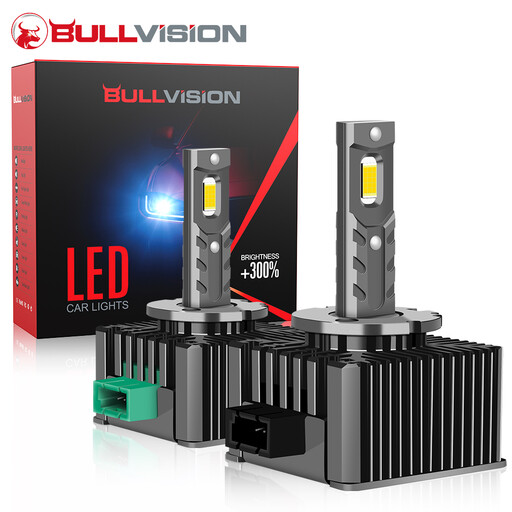
Why This Fits Their Persona: Useful for shoppers who have confirmed one of the listed HID fittings but want a broader multi-fit product specification.
The listed fitting range is clearly stated, reducing the risk of confusing D-series codes, but the exact vehicle socket must still be checked.
6000K white output, 1:1 design, cooling fan, IP68 water resistance and two bulbs in the pack.
We have compiled a complete, real-time list of products that fully satisfy these strict selection criteria and UK safety regulations.
A plug-and-play design can simplify fitting, but it does not remove the need to check the vehicle. Some LED retrofits may not be suitable for every headlamp approval, reflector or projector arrangement. Check the bulb’s documentation, your vehicle handbook and current UK requirements before use on public roads.
After installation:
LED headlight bulbs may have lower electrical consumption than some HID systems, but the actual saving depends on wattage, driving hours and the vehicle’s original ballast or control system. Compare the stated input power rather than relying on a general LED assumption.
Product listings in this category commonly state 50,000 or 60,000 hours. These are manufacturer or seller specifications, not a guaranteed lifespan in every vehicle. Heat, vibration, moisture, fan wear and installation quality can affect service life.
Many are described as plug-and-play, but the process varies by vehicle. Some HID systems use an external ballast, while others have limited access behind the headlamp. If the fitting is tight, the wiring is unfamiliar or the beam cannot be aligned correctly, a qualified automotive technician should complete the installation.