
24/7 Customer Support

Free returns

Same-day & Next-day Delivery

Quality Guaranteed

Unlock Your Welcome Offers: FREE Delivery | Up to 80% OFF | Free 30-day JoyPlus trial
Download the APP
Replacing tired halogen lighting can make night driving feel clearer, but buying LED headlight bulbs based on a large lumen number alone can lead to poor beam control, fitting problems or dashboard errors. UK drivers also need to consider the original socket, headlamp housing, beam pattern and whether the conversion is suitable for their vehicle.
This guide explains the specifications that matter, common marketing traps and which options may suit different driving needs.
Listings may promote figures such as 20,000LM or 30,000LM per pair. These figures describe stated light output, but they do not automatically confirm useful illumination on the road. The position and size of the LED chips, reflector design and beam alignment all affect where the light goes.
A bulb with a 1:1 halogen replacement design aims to position its LED chips similarly to the original filament. This can help preserve the intended beam shape, although results still depend on the vehicle’s headlamp housing.
An H11 bulb is not interchangeable with an H7, H4, H1, 9005 or 9006 bulb simply because the products look similar. Check the old bulb, vehicle handbook or manufacturer fitment information before ordering. Some vehicles also require a separate adaptor, retaining clip or CANbus decoder.
Even products described as CANbus-ready LED bulbs may not eliminate warning lights or flickering on every European vehicle. Vehicle electronics vary, so retain the original bulbs until the replacement has been checked.
LED chips produce heat at their base. Fan-cooled LED bulbs can move heat away quickly but need enough clearance behind the dust cover and may create operating noise. Fanless LED bulbs are quieter and often easier to fit in confined housings, but their aluminium body must dissipate heat effectively.
A claimed lifespan of 50,000 or 60,000 hours is a product specification, not a guarantee of real-world service life in every temperature, vibration or installation condition.
Start with the exact bulb code. Common choices include:
The same vehicle may use different bulb types for dipped beam, main beam and fog lights. Confirm the position as well as the code.
Many products provide 6000K cool white headlight bulbs, while others are listed at 6500K. Cool white light can look crisp and provide strong contrast against road markings, but colour temperature is not the same as brightness or beam quality. In heavy rain, mist or snow, excessive blue content may not be as comfortable as a warmer colour.
Choose a colour that suits your preference while prioritising correct beam control and road visibility.
Look for a clear description of chip placement, beam direction and compatibility with the original reflector. CSP chip LED bulbs are often designed in a compact format, while a fan-cooled LED bulb may offer active heat removal through a high-speed fan. A fanless design may be preferable where space or noise is a concern.
For UK weather, an aluminium housing with a stated IP65, IP67 or IP68 waterproof rating can provide useful protection against dust and water ingress. The rating applies under specified test conditions, so it does not remove the need for careful installation and an intact dust cover.
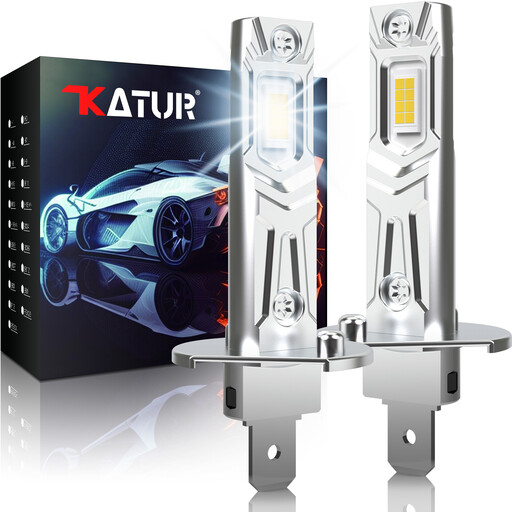
Why This Fits Their Persona: A practical option for DIY motorists replacing H1 halogen bulbs, particularly where a compact, quiet fitting is preferred for regular commuting.
Its listing specifies a fanless, 1:1 mini design rather than relying only on a brightness figure. Check that your H1 housing has suitable clearance before installation.
6000K white output, integrated design, plug-and-play installation and stated waterproof construction.
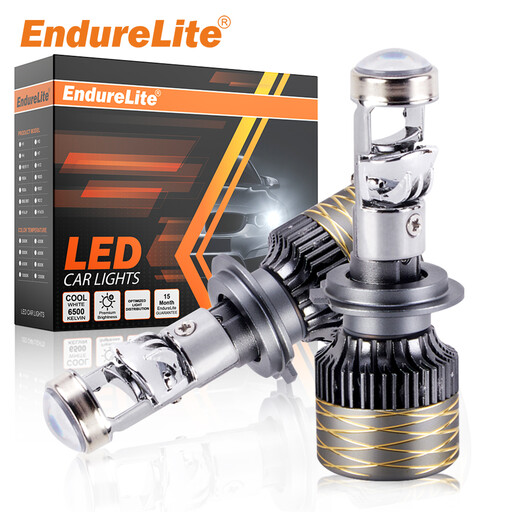
Why This Fits Their Persona: Suitable for drivers who want a defined feature set for compatible H8, H9 or H11 headlights and regularly drive on dark rural roads.
The listing identifies CSP chips, a 1:1 beam design, an integrated cooling fan and CANbus-ready electronics, giving more useful information than a lumen claim alone.
Stated IP68 protection, 6000K colour temperature, active cooling and a claimed 50,000-hour operating life.
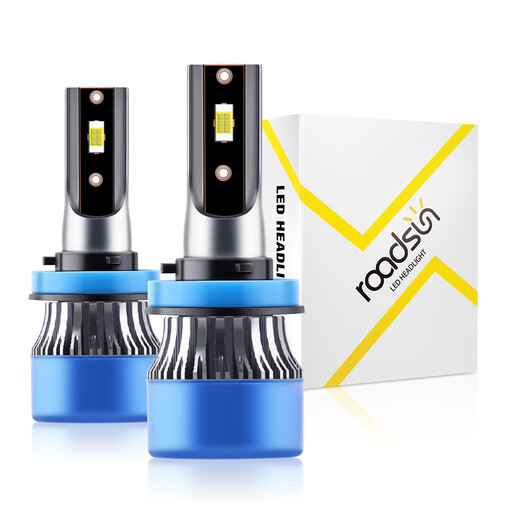
Why This Fits Their Persona: Designed for owners of cars, SUVs or pick-ups using H8, H9 or H11 fog-light sockets, including drivers who frequently face wet, dark or rural conditions.
The listing gives the socket group, 1:1 size and operating-temperature range, helping buyers assess fit instead of selecting solely on the advertised brightness percentage.
6000K output, aluminium alloy housing, plug-and-play fitting and a stated lifespan of up to 50,000 hours.
Before driving, check that the beam is correctly aligned and does not dazzle other road users. LED retrofits may not be suitable for every headlamp assembly, so consult the vehicle handbook and check current UK roadworthiness and MOT requirements.
We have compiled a complete, real-time list of products that fully satisfy these strict selection criteria and UK safety regulations.
They may use less electrical power for a comparable lighting application, but the exact saving depends on wattage, usage and the vehicle’s charging system. Purchase price, installation and any required CANbus accessories should also be included in the overall cost.
Product listings commonly state operating lives ranging from 50,000 to 70,000 hours. Treat these as stated specifications rather than guaranteed ownership periods. Heat, moisture, vibration, voltage and installation quality can affect service life.
Not always. Some CANbus-ready LED bulbs include an integrated driver intended to reduce flickering or dashboard errors. However, sensitive vehicles may still need an additional decoder. Check the product notes and test the bulbs before discarding the original pair.