
24/7 Customer Support

Free returns

Same-day & Next-day Delivery

Quality Guaranteed

Unlock Your Welcome Offers: FREE Delivery | Up to 80% OFF | Free 30-day JoyPlus trial
Download the APP
Upgrading your car's standard halogen lights to modern LED headlight bulbs is one of the most impactful changes you can make. The appeal is clear: a significant increase in night-time visibility, a longer lifespan than traditional bulbs and a crisp, modern look. However, the market is flooded with options, and it's easy to fall into common traps that lead to wasted money, installation frustration and even potential MOT issues.
As the Joybuy Product Recommendation Officer, my role is to help you navigate the marketing clutter. Before you add any bulbs to your basket, let's look at the three most common pitfalls UK drivers encounter and how to sidestep them.
To make a smart purchase, focus on the core technical details, not just the marketing headlines. Here are the three non-negotiable factors to check.
The fitment code (e.g., H7, H4, H11) tells you the type of base and electrical connection. An H7 LED bulb is typically for a single-beam headlight (separate high and low beams), while an H4 LED headlight bulb is a dual-filament type that handles both functions in one.
However, the code doesn't guarantee physical size. Always look for models described as 1:1 mini size or those that explicitly show a size comparison to a standard halogen. This is the most important factor for a true plug and play headlights installation without needing to modify your car's housing.
If your car was made in the last 15 years, it likely has a CANbus system. A quality LED bulb should have a built-in driver or resistor designed to communicate with this system. Look for terms like "CANbus Ready" or "Built-in Decoder". Be aware that some highly sensitive systems, often found in German car brands, may still require an additional, external CANbus decoder for a completely error-free experience. Some product descriptions will state this, which is a sign of an honest manufacturer.
Instead of a generic list, we've matched specific bulbs to different types of UK drivers. This helps you find a product that aligns with your vehicle, your driving habits and your budget.
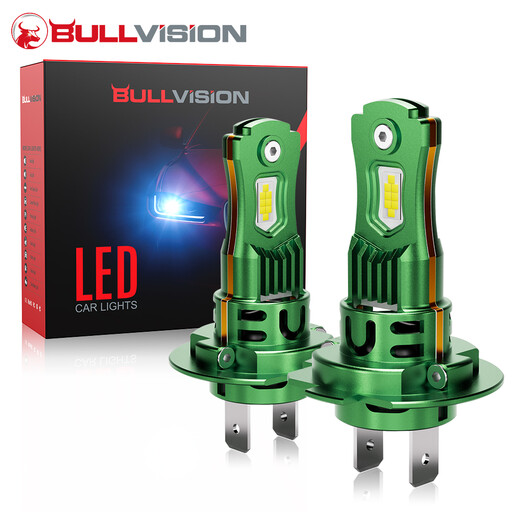
Why This Fits Their Persona: Ideal for the driver doing the school run or daily commute who wants a straightforward, reliable and affordable improvement in visibility. The H7 fitment is one of the most common in UK family cars.
Its 1:1 size design directly counters the "universal fit" pitfall, making it a genuine plug-and-play option for most H7 housings without modification.
Features an active cooling fan to manage heat effectively, addressing the overheating issue. The built-in driver aims for broad CANbus compatibility.
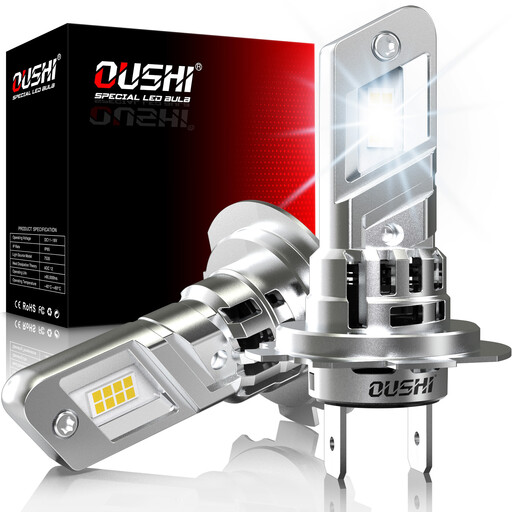
Why This Fits Their Persona: For the driver who prioritises maximum illumination on dark B-roads and motorways. The high lumen output and focus on performance are key selling points for this user.
It tackles the CANbus pitfall head-on by advertising a "latest generation CANBUS system" with enhanced compatibility for European vehicles, which are often the most sensitive.
The combination of a high-speed turbo fan and an aviation aluminium housing directly addresses the overheating risk associated with high-output bulbs, ensuring longevity.
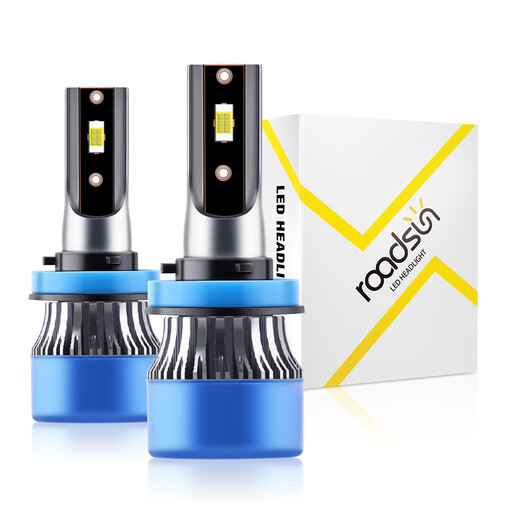
Why This Fits Their Persona: Perfect for the hands-on owner looking to upgrade their **H11 fog light bulbs** for better performance in poor weather. The multi-fitment design (H11/H9/H8) offers welcome flexibility.
The 1:1 size is crucial for fog light housings, which are often more compact than main headlight units. This avoids the common installation problem of the bulb being too large to fit.
It is specifically designed for the harsh environment of a fog light, with a durable aluminium housing and a wide operating temperature range for all-weather reliability.
We have compiled a complete, real-time list of products that fully satisfy these strict selection criteria and UK safety regulations.
This is an important consideration. According to current UK regulations, a vehicle's headlamp unit must only be fitted with the light source type it was designed for. This means that fitting LED bulbs into a headlight unit originally designed for halogen bulbs is technically not compliant for road use and may result in an MOT failure. It is essential to check the latest DVSA guidelines before fitting them to a road-going vehicle.
It depends on your vehicle. Many bulbs advertised as plug and play headlights are designed with a 1:1 mini size that fits directly into the factory socket without any extra parts. However, some car manufacturers use unique retaining clips to hold the bulb in place, which may require a specific adapter. It is always a good practice to inspect your car's headlight housing and bulb clip before you buy.
The difference lies in the cooling method.