
24/7 Customer Support

Free returns

Same-day & Next-day Delivery

Quality Guaranteed

Unlock Your Welcome Offers: FREE Delivery | Up to 80% OFF | Free 30-day JoyPlus trial
Download the APP
Upgrading your car's standard halogen lights to modern LED headlight bulbs can feel like a significant improvement. The promise of brighter roads, improved visibility and a crisp, modern aesthetic is appealing for any UK driver. However, the market is flooded with options, and it's easy to fall into common traps that lead to wasted money, poor performance or even an MOT failure.
As the Joybuy Product Recommendation Officer, my role is to help you navigate these choices. Let's cut through the marketing clutter and focus on what truly matters, starting with the three most common pitfalls to avoid.
To ensure you get a reliable and effective upgrade, focus on these core parameters. They are the difference between a worthwhile investment and a purchase you'll regret.
Your car's headlights have a specific bulb fitment. This is denoted by a code, such as H7 LED bulb, H4 car bulbs, 9005 HB3 LED or H11 fog light bulbs. You can find this code in your vehicle's owner's manual or by checking the existing bulb.
Beyond the fitment code, look for bulbs designed with a 1:1 mini size compared to the original halogen. This is crucial because the headlight housing is engineered to reflect light from a filament in a very specific position. A halogen replacement LED that mimics this size and position is more likely to produce a clean, focused beam pattern, ensuring light goes where it's needed and preventing glare that could fail an MOT.
If your car was made in the last 15 years, it likely has a Controller Area Network (CANbus). As mentioned, this system can cause issues with low-power LEDs. To avoid this, look for bulbs explicitly labelled as CANbus error free or "CANbus ready". These have built-in circuitry to communicate correctly with your car's computer. Be aware that some particularly sensitive vehicles, often from German manufacturers, may still require an additional external decoder for flawless operation.
The colour of the light is measured in Kelvin (K). Standard halogens are typically around 3200K, giving off a yellowish light. A 6000K cool white bulb produces a crisp, modern white light that is popular for its clarity and aesthetic.
Finally, inspect the cooling system. Bright car bulbs generate significant heat that must be dissipated. Look for models with either a high-RPM cooling fan or a substantial, finned body made from aviation-grade aluminium. An effective cooling system is the single most important factor in achieving the long lifespans of 50,000 hours or more that many manufacturers claim.
Instead of a one-size-fits-all approach, we've matched some promising options to different types of UK drivers.
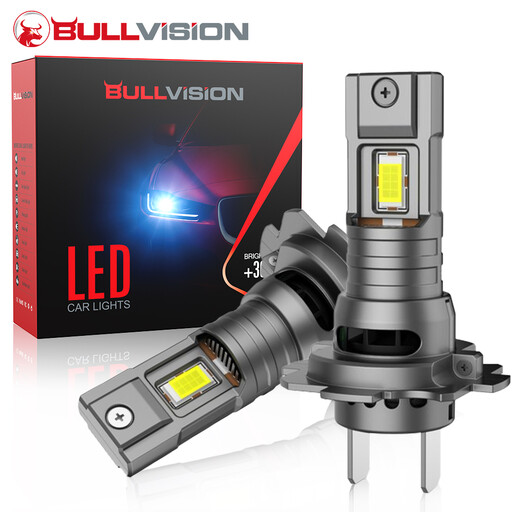
Why This Fits Their Persona: This user wants a noticeable improvement over stock halogens without complex installation. They value a simple, effective solution for their daily commute or family car.
Its 1:1 mini size is designed to replicate the original halogen, helping to avoid the "blinding brightness" trap by maintaining a proper beam pattern. The built-in driver and CANbus-ready design directly address the "universal fit" fallacy for many vehicles.
Features a simple plug and play installation and an integrated 10,000 RPM cooling fan to manage heat, addressing the key concerns of a first-time upgrader.
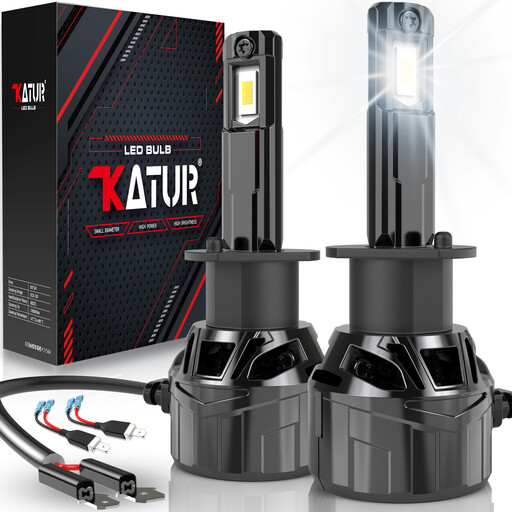
Why This Fits Their Persona: This driver frequently travels on unlit B-roads or motorways at night. They prioritise maximum safe illumination and long-term durability from their lighting system.
It directly counters the "overlooked lifespan killer" trap with a detailed description of its cooling system, including a 16,000 RPM turbo fan, copper heat tube and hollow-carved heat sink. This focus on thermal management is key for sustained high performance.
Offers a high power output combined with a robust cooling solution designed for longevity. The 6000K xenon white colour provides excellent clarity for spotting hazards from a distance.
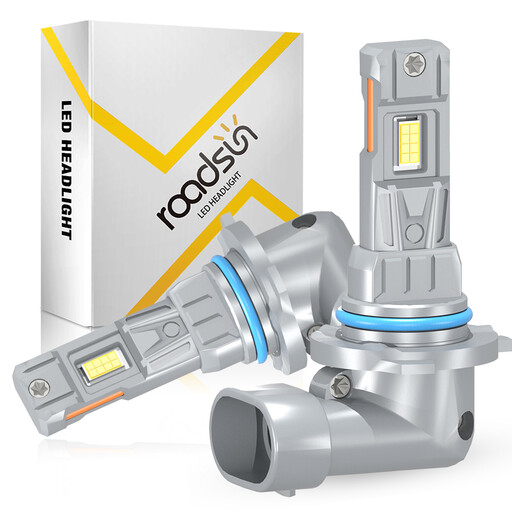
Why This Fits Their Persona: This car owner is primarily motivated by achieving a clean, high-end look for their vehicle. The 6000K cool white light is their main goal and they need a bulb that fits perfectly without modification.
The emphasis on a "Real 1:1 Mini Size" ensures it fits seamlessly into the factory housing. This helps maintain the original beam pattern, delivering the desired aesthetic without creating unsafe glare for other drivers.
Delivers the sought-after 6000K cool white light in a package designed for a perfect, direct fit. The all-weather reliability and long stated lifespan are significant additional benefits.
We have compiled a complete, real-time list of products that fully satisfy these strict selection criteria and UK safety regulations.
Yes, but with important conditions. For an MOT test, the headlight unit must be suitable for an LED source and the bulb must produce a safe and correct beam pattern that does not dazzle other road users. Since 2021, retrofitting LED bulbs into a headlamp unit originally designed for halogen bulbs can be a reason for an MOT failure. Therefore, it is vital to choose high-quality halogen replacement LED bulbs that accurately replicate the original beam pattern to maximise your chances of compliance.
It depends on your vehicle. Many modern cars, especially from European brands like VW, BMW and Mercedes-Benz, use a CANbus system that can detect the lower power draw of an LED and trigger an error. While many CANbus error free bulbs are designed to prevent this, some highly sensitive systems may still require an additional decoder to eliminate dashboard warnings or flickering completely.
Manufacturers often claim lifespans of 30,000 to 60,000 hours. The LED chip itself is incredibly durable, but the bulb's true longevity depends almost entirely on its cooling system. A bulb with an efficient high-speed fan and a well-designed aluminium heat sink will effectively manage heat, preventing performance degradation and allowing it to last for years. A poorly cooled bulb will fail much sooner.