
24/7 Customer Support

Free returns

Same-day & Next-day Delivery

Quality Guaranteed

Unlock Your Welcome Offers: FREE Delivery | Up to 80% OFF | Free 30-day JoyPlus trial
Download the APP
Driving at night or in poor weather conditions with standard halogen bulbs can often feel like a compromise. The dim, yellowish light can reduce visibility, making it harder to spot hazards on the road. If you're looking for a straightforward way to improve your night-time driving experience, upgrading to LED headlight bulbs is a popular and effective solution.
This guide is designed to help you navigate the options. We'll cover the key features to look for when choosing a set of bulbs and provide some practical recommendations to help you find a reliable and bright lighting upgrade for your car, SUV or even powersports vehicle.
Choosing the right bulbs involves more than just picking the brightest option. Here are a few key points to keep in mind to ensure you get a compatible and effective upgrade.
The first step is to identify the correct bulb type for your vehicle. Headlight bulbs come in various fitments, such as H7 LED bulb or H11 headlight upgrade. Using the wrong type simply won't work. You can find this information in your vehicle's owner's manual or by checking the markings on the base of your existing halogen bulbs. Ensuring you have the correct fitment is essential for a successful installation.
Many drivers are put off by the thought of complex wiring or modifications. This is where bright plug and play headlights come in. Look for models advertised with a 1:1 mini size LED bulb design. This means the LED bulb is the same size and shape as the original halogen bulb it's replacing, allowing it to fit directly into the headlight housing and connect to the factory socket without extra adapters or external drivers. This makes the upgrade a simple DIY task that can often be completed in minutes.
Modern vehicles often use a Controller Area Network (Canbus) system to monitor the vehicle's functions, including the headlights. Because LED bulbs draw less power than halogens, this can sometimes trigger a "bulb out" warning light on the dashboard. To avoid this, many LED kits are designed as Canbus error free LED bulbs, with built-in circuitry to communicate correctly with the vehicle's computer. While these work for the vast majority of cars, some highly sensitive systems may still require an additional decoder.
Here are a few of our recommended LED headlight bulbs, selected for their performance, ease of installation and user-focused features.
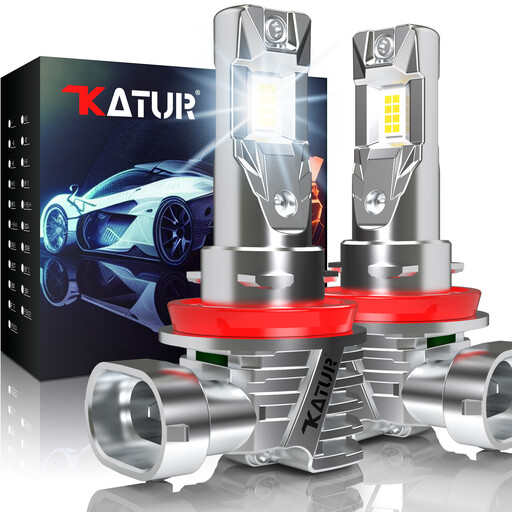
Why It Stands Out: The main appeal of this H11 headlight upgrade is its fanless design. By using an aviation-grade aluminium body for heat dissipation, it operates silently and eliminates the risk of fan failure, a common point of concern with some LED bulbs. Its compact, all-in-one design makes it a true plug and play solution, ideal for vehicles with tight spaces behind the dust cap.
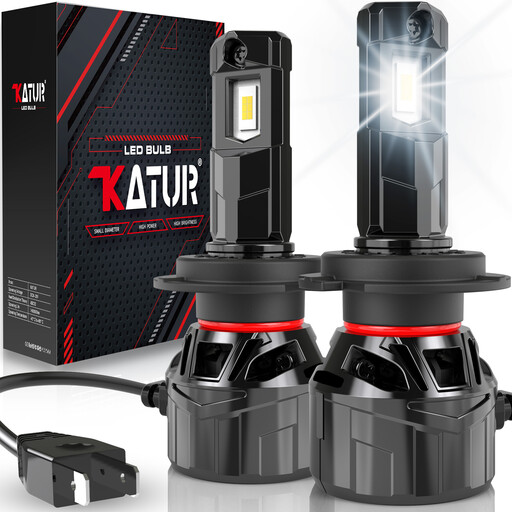
Why It Stands Out: For those prioritising maximum brightness and thermal management, this H7 LED bulb from KATUR is a strong contender. It features a powerful 16,000 RPM turbo fan and a copper heat pipe to actively cool the LED chips. This efficient cooling allows the bulbs to sustain a high light output, illuminating the road further ahead. The built-in Canbus error free LED system is designed for compatibility with most vehicles.
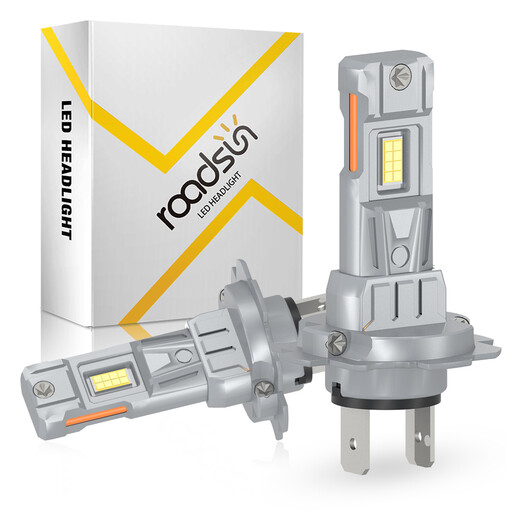
Why It Stands Out: The Roadsun H7 bulbs are all about simplicity and versatility. They feature a true 1:1 mini size that perfectly matches the original halogen bulb, meaning no adapters are needed for installation. According to the manufacturer, they deliver a significant brightness increase with a 6000K cool white light. Their durable, all-weather construction also makes them a great option for use as car fog lights or as an accessory for powersports vehicles like motorcycles and ATVs.
While these recommendations cover some of the most popular needs, every vehicle is different. If you're looking for a different fitment type or specific features, there are many other choices available.
Explore our full range of LED car headlights to find the perfect match for your vehicle.
The regulations regarding aftermarket LED headlight bulbs in the UK can be complex. As of our last update, fitting LED bulbs into a headlight unit originally designed for halogen bulbs is generally not considered compliant for an MOT test. However, a key factor for safe use on the road is the beam pattern. High-quality LED bulbs are designed to replicate the beam pattern of a halogen bulb precisely, preventing glare that can dazzle oncoming drivers. We always recommend you check the latest DVSA guidelines and ensure your headlights are correctly aligned after installation.
The 'K' stands for Kelvin, which is a measure of light's colour temperature. Standard halogen bulbs are typically around 3200K, producing a warm, yellowish light. 6000K car bulbs produce a cool, crisp white light that is very close to natural daylight. Many drivers find this colour improves contrast and clarity, making it easier to see road markings, signs and potential hazards at night.
This depends on your vehicle and the LED kit you choose. Many modern kits, especially those with a 1:1 mini size LED bulb design, are made for a direct fit without any adapters. However, some car models use specific clips or holders to secure the bulb, which may require a corresponding adapter. It is always a good practice to check your vehicle's requirements before purchasing.