
24/7 Customer Support

Free returns

Same-day & Next-day Delivery

Quality Guaranteed

Unlock Your Welcome Offers: FREE Delivery | Up to 80% OFF | Free 30-day JoyPlus trial
Download the APP
Driving on poorly lit roads after dark can be a stressful experience. If you find yourself straining to see the road ahead, your vehicle's standard halogen headlights might be the culprit. An upgrade to modern LED headlight bulbs can transform your night-time driving, offering significantly improved visibility, a longer lifespan and a cleaner, more contemporary look.
However, the market is filled with options, and choosing the right set can feel overwhelming. This guide is designed to cut through the clutter, providing practical advice to help you find a reliable car headlight upgrade. We will walk you through key considerations and highlight a few standout options that balance performance with ease of use.
Before you purchase, a few key factors will ensure you get the right product for your vehicle and a safe, effective result.
The most critical step is identifying the correct bulb type for your car. Headlight bulbs are not one-size-fits-all; they come in specific fitments like H7, H11, H4 and 9005. Using the wrong type will mean it simply won't fit or function correctly. You can find this information in your vehicle's owner's manual or by inspecting the base of the existing bulb you wish to replace.
A quality LED bulb should replicate the beam pattern of the original halogen bulb it replaces. This is essential for safety. A well-defined beam pattern illuminates the road and verges clearly without scattering light upwards, which can dazzle oncoming drivers. Many modern plug and play headlights are designed 1:1 with the original bulb's dimensions to help achieve this precise focus.
Brightness is measured in lumens (LM), and a higher number generally means more light output. Colour temperature, measured in Kelvin (K), determines the colour of the light. Most drivers prefer 6000K cool white car bulbs as they produce a crisp, white light similar to daylight, which can improve contrast and reduce eye fatigue compared to the yellowish glow of halogens.
Here are a few recommendations that stand out for their features and user-friendly design.
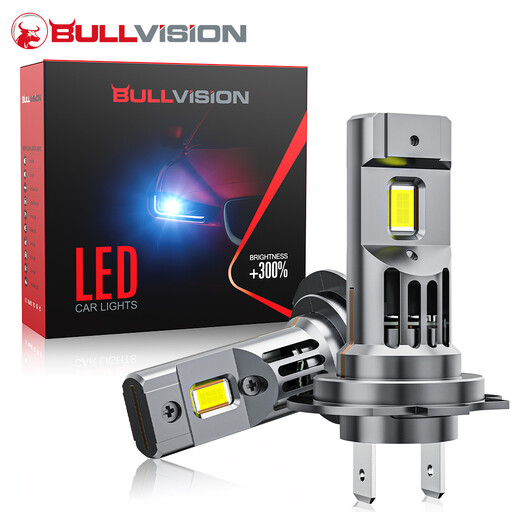
Why It Stands Out: This set from Bullvision is geared towards those seeking a substantial increase in brightness. With a stated output of 20,000 lumens per pair and a 6000K cool white colour, these bulbs are designed to provide a powerful and clear field of vision. The construction uses aircraft-grade aluminium, which aids in heat dissipation and contributes to a longer operational life.
Pros:
Who is it for? Drivers who frequently travel on unlit country lanes or motorways at night and are looking for one of the most bright car lights available to maximise their visibility.
Note: The manufacturer advises that an additional CANbus decoder is required for use on Volkswagen, Mercedes-Benz, BMW and similar vehicles to prevent dashboard errors.
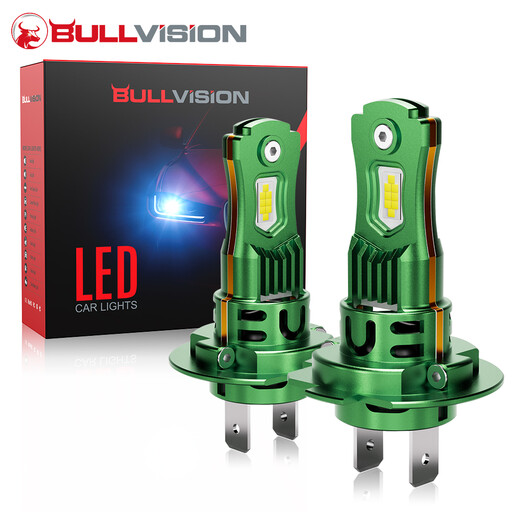
Why It Stands Out: The main advantage of this H7 LED bulb is its 1:1 design, which means it has the same dimensions as a standard H7 halogen bulb. This is a crucial feature for ensuring a perfect fit within the headlight housing and, more importantly, for maintaining the correct beam pattern without needing adapters or modifications.
Pros:
Who is it for? Car owners with H7 fittings who prioritise an easy, hassle-free installation and want to ensure their new bulbs produce a safe and correctly focused beam of light.
Note: As with the model above, the manufacturer states a CANbus decoder may be necessary for certain European vehicle makes to ensure full compatibility.
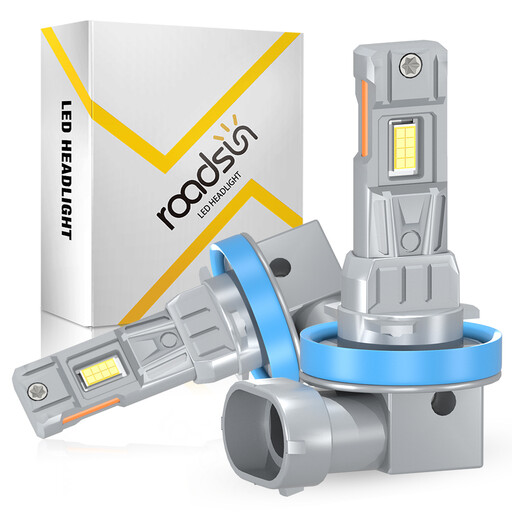
Why It Stands Out: This H11 LED headlight from Roadsun is designed for maximum impact with minimal fuss. The brand highlights a significant brightness increase over halogen bulbs and a "3-minute quick installation" thanks to its 1:1 replacement design. Its compatibility with H11, H9 and H8 sockets makes it a versatile choice for many cars, trucks and SUVs, suitable for both headlights and fog lights.
Pros:
Who is it for? DIY enthusiasts and everyday drivers looking for a very bright and incredibly simple upgrade for their H11, H9 or H8 headlights or fog lights.
While these selections cover some of the most common needs, every vehicle and driver is different. If you're looking for a different fitment or exploring other lighting solutions for your car, you can find more choices in our broader collection.
Browse our full range of 12 volt lights to find the perfect match for your vehicle.
The regulations around aftermarket lighting can be complex. As of recent DVSA guidance, retrofitting LED bulbs into a headlight unit designed for halogen bulbs may not pass an MOT test on vehicles first used on or after 1 April 1986. It is always recommended to choose bulbs that produce a correct, non-dazzling beam pattern and to check the latest government guidelines. Many drivers use them without issue, but it's important to be aware of the official stance.
Many modern vehicles, particularly European makes like Volkswagen, BMW, Audi and Mercedes-Benz, use a CANbus system to monitor the vehicle's electrical components. Because LED bulbs draw less power than halogens, the system can mistakenly think a bulb has failed, leading to a dashboard warning light or flickering. A CANbus decoder resolves this by signalling to the system that the bulb is functioning correctly. Check your vehicle's specifications or consult a forum for your specific model.
For most vehicles, installation is straightforward. The majority of modern LED bulbs are designed as "plug and play," meaning you can simply remove the old bulb and insert the new one into the same socket. The main challenges are usually accessing the back of the headlight housing, which can be tight on some car models and ensuring you don't touch the LED chips with your bare hands.