
24/7 Customer Support

Free returns

Same-day & Next-day Delivery

Quality Guaranteed

Unlock Your Welcome Offers: FREE Delivery | Up to 80% OFF | Free 30-day JoyPlus trial
Download the APP
Upgrading your car's standard halogen bulbs to modern LED headlight bulbs can significantly improve night-time visibility and safety. However, the market is filled with options that promise incredible brightness but often fall short in crucial areas. Many UK drivers find themselves with bulbs that trigger dashboard errors, produce a poor beam pattern or fail prematurely.
As the Joybuy Product Recommendation Officer, my role is to help you navigate these choices. This guide cuts through the clutter, focusing on the practical details that ensure your car headlight upgrade is a success. We will look at the common pitfalls to avoid and the key specifications to check before you buy.
Before jumping into a purchase, be aware of these frequent issues that can turn a simple upgrade into a frustrating and costly mistake.
To ensure you get a reliable and effective upgrade, focus on these three non-negotiable factors.
This is the first and most critical check. Headlight bulbs are not one-size-fits-all. Common types include H7 LED headlight bulbs for single-beam applications and H4 LED bulbs which handle both high and low beams in one unit. You must confirm the correct fitment for your vehicle's make and model in your owner's manual.
Equally important is the physical size of the bulb. Many high-power LEDs have large fans or heat sinks that may not fit inside the headlight housing or allow the dust cover to be re-sealed. Look for bulbs advertised with a "1:1 design" or "mini size," as these are specifically engineered to match the dimensions of the original halogen bulb, making for a true plug and play headlights installation.
The Controller Area Network (CANbus) is your car's central nervous system. It monitors components like light bulbs to ensure they are functioning correctly. Since LEDs draw less power than halogens, the CANbus system can mistakenly interpret this as a burnt-out bulb, triggering an error.
A quality LED bulb will have an integrated driver and CANbus decoder designed to communicate properly with the vehicle's computer. While many claim "99% compatibility," if you own a newer vehicle from a brand like BMW, Audi or Volkswagen, it is wise to choose a bulb that specifically highlights its advanced, error-free CANbus compatibility.
For safety and legal compliance in the UK, an LED upgrade must replicate the precise beam pattern of the original halogen bulb. This is achieved through careful positioning of the LED chips to match the location of the halogen filament. A correct pattern provides a sharp cut-off line for the low beam, illuminating the road and verges without dazzling other road users.
The colour of the light is measured in Kelvin (K). Standard halogens are around 3200K (warm yellow), while 6000K cool white headlights are a popular choice for LED upgrades. This colour temperature provides a crisp, modern look and is widely considered to offer excellent clarity for night driving. Anything much higher (e.g., 8000K+) can appear overly blue and may attract unwanted attention or cause issues during an MOT inspection.
Based on these essential criteria, here are a few options from our catalogue, matched to different types of UK drivers.
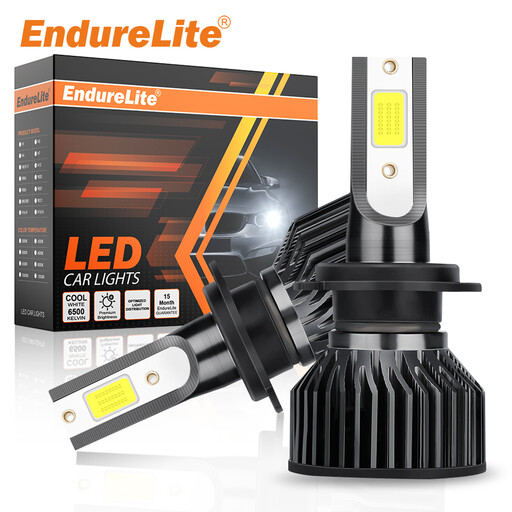
Why This Fits Their Persona: Ideal for drivers of popular UK cars like the Ford Fiesta or Vauxhall Corsa that use H7 bulbs. They need a straightforward, reliable upgrade for daily driving on motorways and unlit B-roads, prioritising safety and longevity over extreme performance.
Its design focuses on simulating the original halogen beam pattern, which helps prevent the glare and MOT issues associated with poorly focused bulbs. The integrated fan provides active cooling to counter premature dimming.
A balanced option offering a significant brightness increase, a simple plug-and-play installation and a built-in CANbus driver for wide compatibility with common UK vehicles.
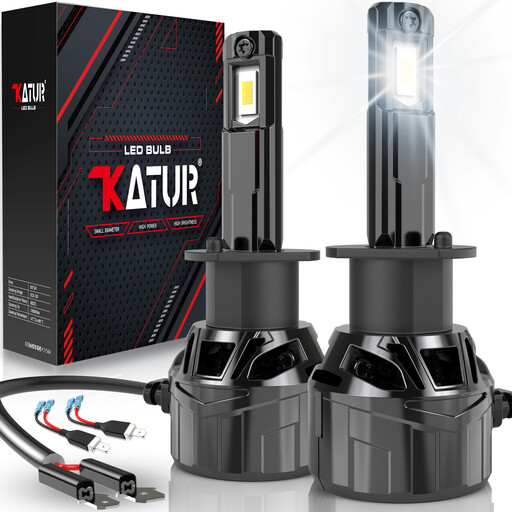
Why This Fits Their Persona: This user is a car enthusiast who wants the maximum possible illumination for their vehicle. They are comfortable with DIY projects and value high-output specifications and robust thermal management for sustained performance.
It directly addresses the overheating pitfall with a high-speed 16,000 RPM turbo fan and copper tube construction, designed to handle the heat from its high-power chips and maintain brightness over time.
Features a very high lumen output for intense brightness. The 1:1 mini size ensures it can be installed without modifying the headlight housing, a key benefit for a clean DIY fit.
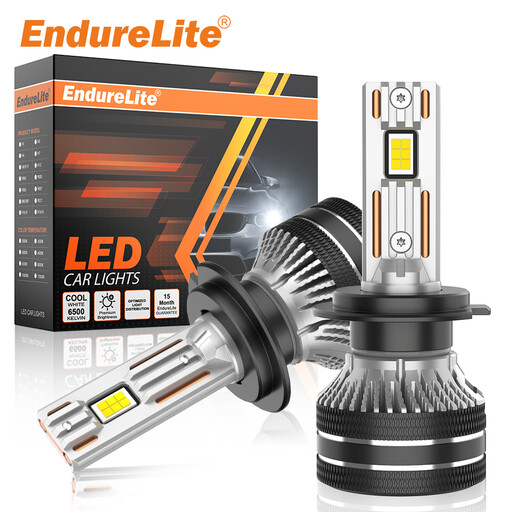
Why This Fits Their Persona: This driver owns a newer vehicle with a sensitive onboard computer. Their primary concern is avoiding dashboard error codes, flickering or other electronic issues while still achieving a significant lighting upgrade.
It directly tackles the "CANbus ready" myth by featuring an intelligent driver specifically designed to prevent errors. The "No Flicker" in its name signals a focus on electronic stability for sensitive systems.
Provides peace of mind for owners of modern cars. The plug-and-play design means no complex wiring or external decoders are needed for the vast majority of vehicles.
We have compiled a complete, real-time list of products that fully satisfy these strict selection criteria and UK safety regulations.
As of 2026, the regulations state that any headlight conversion must maintain a safe and legal beam pattern, not cause glare and be of an appropriate colour. While fitting aftermarket LED bulbs into a headlight unit designed for halogens is technically not type-approved for road use, it is a widespread modification. An MOT test will focus on the practical outcome: if the beam pattern is correct, the colour is appropriate (white or yellow) and it does not dazzle other drivers, it will likely pass. Always check the latest DVSA guidelines.
For most vehicles, it is a simple process. Bulbs designed as plug and play headlights are intended to be a direct swap for the old halogen bulb, with no wiring modifications needed. The process usually involves opening the headlight dust cover, twisting and removing the old bulb and inserting the new LED bulb. The main difficulty can be tight access space in the engine bay on some car models. Always ensure the vehicle is off and the old bulbs have cooled before handling them.
Yes, a colour temperature of 6000K is well within the acceptable range for headlights in the UK. The regulations specify the light must be predominantly white or yellow. A 6000K bulb produces a crisp, modern white light that is perfectly acceptable. Issues arise only with bulbs that are distinctly blue (typically 8000K and above), which would be a reason for failure.