
24/7 Customer Support

Free returns

Same-day & Next-day Delivery

Quality Guaranteed

Unlock Your Welcome Offers: FREE Delivery | Up to 80% OFF | Free 30-day JoyPlus trial
Download the APP
Upgrading your car's lighting to LED seems like a straightforward way to improve visibility and modernise your vehicle. The promise of brighter, crisper light is appealing, especially on dark British country lanes. However, the market is flooded with options, and many drivers find themselves disappointed with bulbs that fail quickly, cause dashboard errors or create a dangerous, illegal beam pattern.
As the Joybuy Product Recommendation Officer, my role is to help you navigate these choices. Before you spend your money, let's look at the common pitfalls and what really matters when selecting the right LED headlight bulbs.
Many shoppers are caught out by marketing claims that don't hold up in the real world. Here are the three most common issues we see:
To ensure you get a safe, reliable and effective upgrade, focus on these three technical specifications.
This is the most critical check. Your vehicle's headlight housing is designed for a specific bulb type. Common fitments include the H7 LED bulb, often used for single-beam headlights, and the H11 LED bulb, frequently found in fog lights and some main beams. Other types like H1, H4 and 9005 are also prevalent.
The Controller Area Network (CANbus) is your car's internal communication system. It checks that all electronic components, including your car light bulbs, are functioning correctly. Because LEDs use much less power than halogens, the CANbus system can mistakenly think a bulb has failed, triggering an error.
The colour of the light is measured in Kelvin (K). While you can find bulbs in various colours, a 6000K cool white or 6500K pure white is a popular choice. This colour temperature is close to natural daylight, which can reduce eye strain and make it easier to spot hazards.
Based on these practical criteria, we've matched some options to different types of UK drivers.
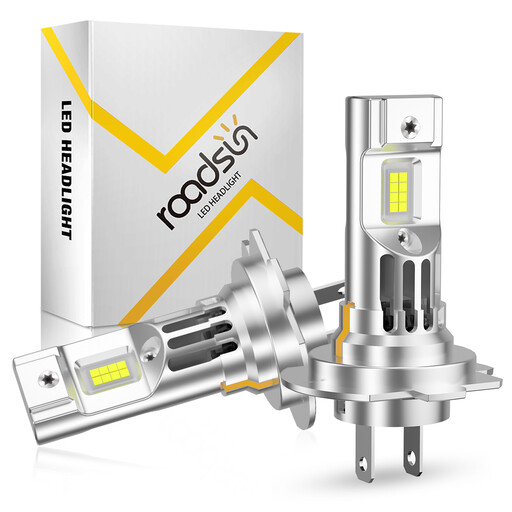
Why This Fits Their Persona: This driver needs a reliable, no-fuss upgrade for their daily commute. They value simplicity and a noticeable improvement in visibility without the complexity of extra adapters or wiring.
Its design focuses on a true plug-and-play installation without needing extra adapters, directly addressing the false "universal fit" promise. The integrated fan provides active cooling to avoid premature failure.
Features a 6500K cool white light for clear visibility and a built-in high-speed fan for heat dissipation, promoting a longer operational life.

Why This Fits Their Persona: This user drives a newer vehicle, likely a European brand, and their primary concern is avoiding dashboard errors. They want a powerful, modern light source that integrates seamlessly with their car's sensitive electronics.
It directly tackles the CANbus problem by incorporating an advanced system designed for high compatibility (claimed 98%), making it a more reliable choice for vehicles prone to electronic errors.
Features a 1:1 mini size for easy installation and a high-speed turbo fan for cooling. Its main advantage is the enhanced CANbus system for wider vehicle compatibility.
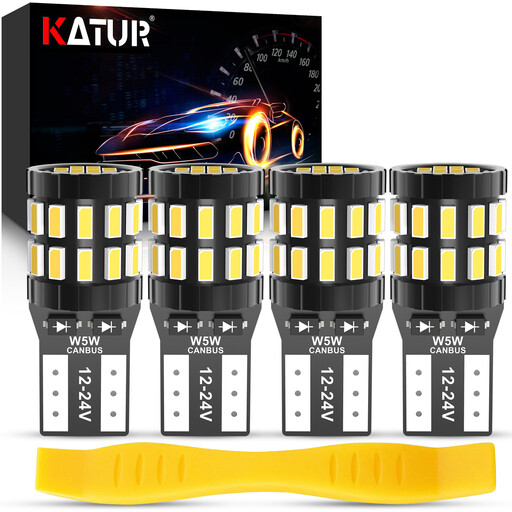
Why This Fits Their Persona: This person isn't just stopping at headlights. They want a consistent, modern look across their entire vehicle, including interior map lights, courtesy lights and number plate lights. They need a reliable **T10 W5W LED** replacement.
These smaller bulbs are also often not CANbus compatible. This model is specifically designed to be Canbus error-free, preventing flickering or errors when used as number plate or interior lights in modern cars.
Offers a 360-degree lighting angle for even illumination in small housings and is built with an aluminium body for better heat dissipation than all-plastic alternatives.
The benefits of LED technology—energy efficiency, long life and bright light—are just as useful at home. If you're looking to enhance your garden, patio, or balcony for gatherings or simply to create a welcoming ambience, LED outdoor string lights are an excellent choice.
Unlike fragile, power-hungry incandescent options, modern LED string lights offer shatterproof bulbs and weather-resistant construction, making them a durable and safe option for year-round use in the UK's variable climate. Models like the Vivreal G40 Decorative String Lights provide a warm, inviting glow and often include features like dimmability and the ability to connect multiple strands to cover larger areas.
We have compiled a complete, real-time list of products that fully satisfy these strict selection criteria and UK safety regulations.
The legality of aftermarket LED headlight bulbs is a grey area and subject to change. As of late 2026, for a bulb to be road legal, it must be E-marked and fitted to a headlamp unit designed for it. The MOT inspection guidance states that a halogen headlamp unit should be fitted with a halogen bulb. An LED conversion may result in an MOT failure if it creates an incorrect beam pattern that can dazzle other road users. Always choose bulbs designed to replicate the original beam pattern and check the latest DVSA guidelines before fitting.
A good rule of thumb is that most vehicles manufactured from 2005 onwards, especially from European brands (like Audi, BMW, Volkswagen, Peugeot, etc.), will have a CANbus system. If your car has a system that alerts you to a failed bulb on the dashboard, you will almost certainly need a CANbus error free LED bulb or an additional decoder to prevent issues.
Manufacturers often claim lifespans of 30,000 to 60,000 hours. While the LED chips themselves can last this long, the real-world lifespan of the entire bulb assembly is determined by its cooling system. A bulb with a robust fan and/or a large, well-designed aluminium heat sink is far more likely to last for several years. Cheaper, poorly cooled bulbs may fail in under a year due to heat damage.