
24/7 Customer Support

Free returns

Same-day & Next-day Delivery

Quality Guaranteed

Unlock Your Welcome Offers: FREE Delivery | Up to 80% OFF | Free 30-day JoyPlus trial
Download the APP
Replacing tired halogen lights can make night driving feel clearer, but choosing LED headlight bulbs is not simply a matter of selecting the highest lumen figure. UK drivers also need to consider bulb size, beam pattern, dashboard compatibility and whether the conversion is suitable for their headlamp unit.
Large output figures may look persuasive, but they do not automatically mean a better beam. Excessive or poorly positioned light can create glare, dark patches or an unfocused beam that is uncomfortable for oncoming drivers.
A bulb with a 1:1 halogen filament position is designed to place its light source more closely to the original position. However, the result still depends on the vehicle’s reflector or projector housing and correct alignment.
Bulb bases and electrical systems vary between cars, vans, SUVs and motorcycles. A product listed as universal may still be unsuitable if your vehicle uses a different socket, has limited space behind the dust cover or requires an external decoder.
Always check your vehicle handbook, the original bulb marking or the existing bulb before ordering. Common types include H4 LED headlight bulbs, H7 LED bulbs, 9005/HB3, H8/H9/H11, 9006/HB4 and H15.
CANbus LED bulbs can reduce flickering and dashboard bulb warnings on many vehicles, but no built-in system can guarantee compatibility with every model. Some sensitive vehicles may still need a separate decoder or resistor, and radio interference can vary by installation.
A “plug and play car bulb” should mean that it connects to the original socket without additional wiring. It does not remove the need to check clearance, polarity, beam alignment or vehicle-specific requirements.
The bulb code must match the socket. For example:
Check whether you need a pair or a single replacement. An LED bulbs pack of 2 is useful when replacing both sides together, helping maintain similar colour and output.
Most products in this selection use 6000K cool white headlight bulbs, while some use 6500K. Cool white light can appear more neutral than a yellow halogen bulb, but colour temperature is not the same as measured road illumination.
Look for a narrow LED chip arrangement, a stated filament-position design and a product that suits your reflector or projector. After installation, check the cutoff and beam height. If the beam is scattered or points too high, the bulbs may be unsuitable for that headlamp housing.
LEDs produce heat around the chip and driver. Fan-cooled bulbs may dissipate heat quickly but need sufficient space behind the headlamp and can introduce moving parts. Fanless designs are quieter and may suit tighter housings, but their aluminium body must have adequate airflow.
An IP67 or IP68 rating indicates a stated level of protection against dust and water under defined test conditions. It is a useful feature for wet UK roads, but the headlamp’s original seal, dust cap and installation quality remain important.
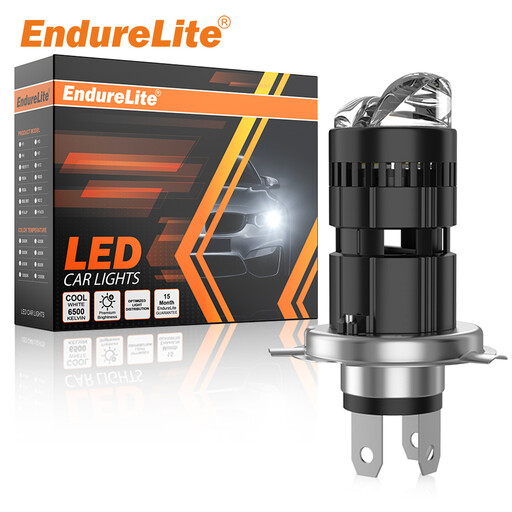
Why This Fits Their Persona: A straightforward option for DIY motorists whose vehicle uses an H4 socket and who want a pack of one without adding an external driver.
Its stated 1:1 stock-bulb size and CANbus-ready design address fitment and warning-light concerns, though vehicle checking remains necessary.
H4 high and low beam function, 6000K cool white colour, aluminium housing and stated IP68 protection.
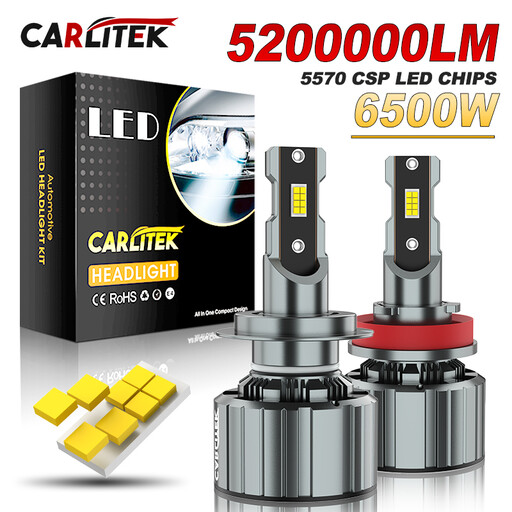
Why This Fits Their Persona: Suitable for drivers seeking a compact replacement for a compatible 9005 application, particularly where wet-weather protection and integrated cooling are priorities.
The product specifies a 1:1 filament-position design and built-in CANbus technology rather than relying only on a high output claim.
Pack of 2, 6000K colour, built-in fan, stated IP68 waterproof rating and 12V specification.
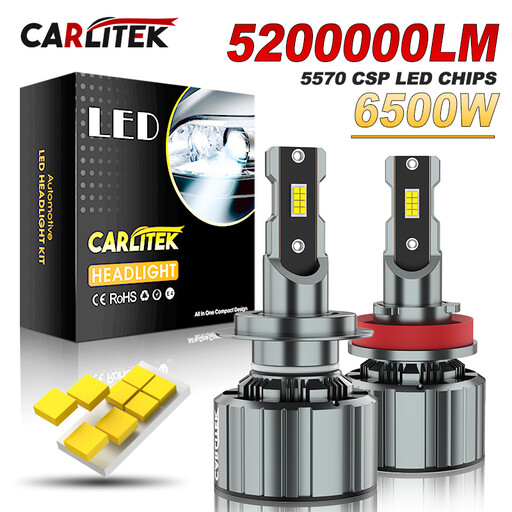
Why This Fits Their Persona: A practical match for compatible cars, vans and SUVs using H8, H9 or H11 fittings, including drivers regularly facing rain, fog and cold conditions.
Its stated IP68 protection and built-in CANbus are relevant to weather exposure and flickering concerns, while the correct socket remains essential.
Pack of 2, 6000K cool white output, aluminium body, built-in fan and stated 50,000-hour operating life.
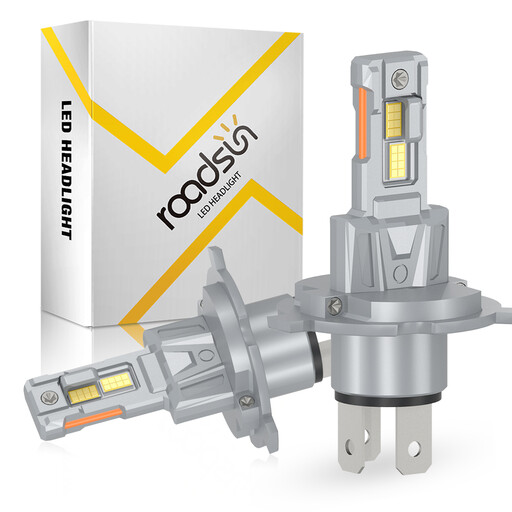
Why This Fits Their Persona: Its fanless construction suits drivers who prefer quiet operation or have limited space behind the dust cover, including some off-road vehicle owners.
The fanless design avoids dependence on a moving cooling fan, while its stated IP67 rating addresses dust and water exposure.
H4/9003/HB2 high and low beam operation, 6000K colour, fanless aluminium construction and stated IP67 protection.
Before fitting, switch off the lights, allow the old bulb to cool and wear gloves. Avoid touching the LED chip or lens. Confirm that the sealing ring is correctly positioned and that the rear housing still closes securely.
After fitting, test low beam, high beam and any daytime running-light function. Check for flickering, dashboard warnings and unusual radio interference. Most importantly, inspect the beam pattern and adjust the headlamp aim if necessary.
UK roadworthiness and lighting requirements can depend on the vehicle, headlamp approval and the type of LED conversion. A bulb that physically fits is not automatically suitable for road use. Check the manufacturer’s compatibility information and relevant UK requirements before driving on public roads.
Legality depends on the vehicle, headlamp unit, bulb approval and installation. Some LED conversions may not be suitable for use in a particular headlamp or may affect the required beam pattern. Check current UK vehicle lighting requirements and your vehicle documentation before purchase.
Listings often state operating lives such as 30,000 to 70,000 hours, but real service life depends on heat, voltage, vibration, weather sealing and usage. Treat these figures as product specifications rather than a guarantee of ownership length.
They can use a different amount of power for a comparable lighting application, but the exact figure varies by bulb. Check the stated wattage and your vehicle’s electrical requirements. A built-in CANbus system may also draw or simulate load to prevent warning messages, so lower rated wattage does not always mean lower total system consumption.