
24/7 Customer Support

Free returns

Same-day & Next-day Delivery

Quality Guaranteed

Unlock Your Welcome Offers: FREE Delivery | Up to 80% OFF | Free 30-day JoyPlus trial
Download the APP
By Joybuy Product Recommendation OfficerPublished on 28 August 2026
Upgrading your car's lighting is one of the most practical improvements you can make, enhancing both visibility and the look of your vehicle. However, the market for LED headlight bulbs is filled with confusing claims and technical jargon. Many UK drivers find themselves disappointed with bulbs that fail to deliver on their promises, cause electrical faults or create a dangerous glare for others.
As a Product Recommendation Officer, my role is to help you navigate this landscape. Before you spend your money, let's look at the common pitfalls to avoid and what really matters when choosing your next set of car light bulbs in the UK.
To make a sound choice, focus on these three non-negotiable parameters. Getting these right ensures performance, compatibility and longevity.
Before anything else, you must identify the correct fitment code for your vehicle. This code (e.g., H7, H4, H11, D2S) ensures the bulb will physically fit into your headlight housing. You can find this information in your vehicle's owner's manual, by inspecting the existing bulb or using an online bulb finder tool. An H4 LED bulb, for instance, typically serves as both the main and dipped beam in a single unit, whereas an H7 LED bulb is a single-filament bulb, meaning your car will have separate bulbs for main and dipped beams.
As mentioned, the Controller Area Network (CANbus) in many modern cars will report an error if it detects the lower power draw of an LED bulb. To avoid this, look for bulbs specifically advertised as CANbus error free. These have built-in resistors or circuitry to communicate correctly with your car's computer, preventing dashboard warnings and ensuring stable operation. This is especially important for brands like Volkswagen, BMW, Audi and Mercedes-Benz.
A quality LED bulb is engineered to replicate the filament position of its halogen counterpart. This creates a sharp, focused beam pattern that illuminates the road and verges without causing glare. For colour, most drivers prefer 6500K cool white car bulbs. This colour temperature is close to natural daylight, improving clarity and reducing eye strain during night driving. It provides a modern look while remaining highly functional for seeing road markings and potential hazards.
Based on these practical criteria, here are some recommendations matched to different driver needs.
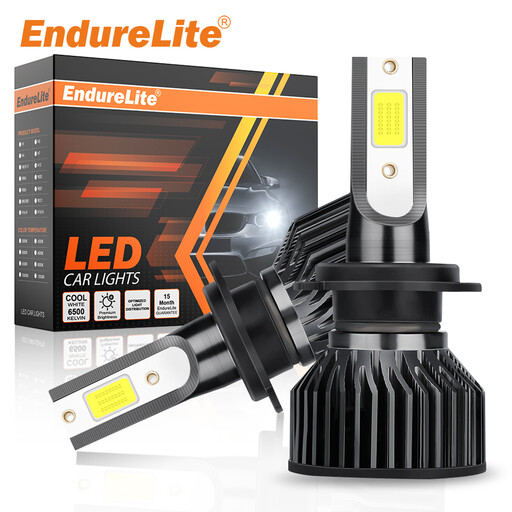
Why This Fits Their Persona: Ideal for the UK driver seeking a straightforward and noticeable improvement over dim factory halogens without a hefty price tag. It's a practical choice for common family cars and daily commuters.
It features a 1:1 design that mimics the original bulb for a proper beam pattern, avoiding the "glare bomb" effect. The built-in fan addresses the overheating pitfall, aiming for a long operational life.
A true plug and play headlight design and integrated CANbus-ready driver make it compatible with a claimed 99% of vehicles, simplifying installation for DIY enthusiasts.
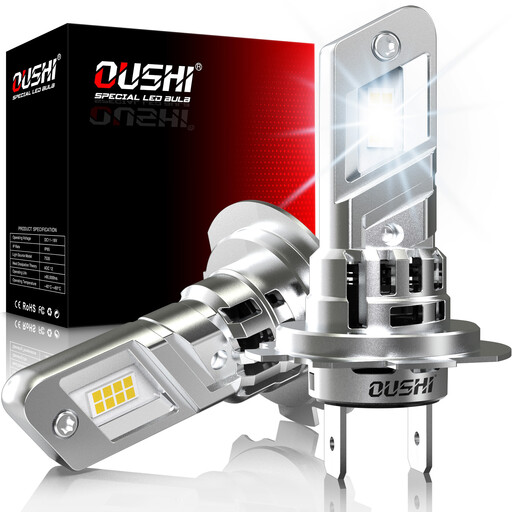
Why This Fits Their Persona: For the driver who prioritises maximum visibility and has a modern vehicle. This user wants a significant jump in performance for driving on unlit B-roads and motorways.
It directly tackles the CANbus pitfall by incorporating an advanced system designed for high compatibility with European cars. The high-speed turbo fan provides active cooling to sustain its high light output.
According to the brand, these bulbs offer a very high light output (up to 30,000 lumens per pair) for a wider and farther lighting range. The 6500K xenon white colour provides exceptional clarity.
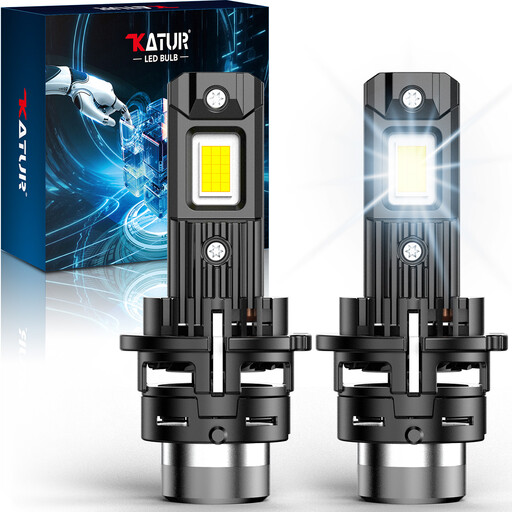
Why This Fits Their Persona: This is for the owner of a vehicle equipped with factory Xenon HID headlights (like D1S, D2S, D4S) who wants to switch to LED for instant-on brightness and potentially longer life, without the warm-up time of HIDs.
These are specific HID replacement LED bulbs, not generic halogen replacements. The 1:1 design ensures they fit directly into the HID assembly without modification, avoiding compatibility issues.
The brand claims a 0.01-second start-up time, eliminating the warm-up delay common with HID bulbs. They are also designed to be CANbus error-free for a seamless transition from Xenon to LED.
We have compiled a complete, real-time list of products that fully satisfy these strict selection criteria and UK safety regulations.
The legality of aftermarket LED headlight bulbs in the UK is a complex area. For a vehicle to pass its MOT, the headlight beam pattern must be correct, avoid dazzling other road users and the colour must be suitable. While many high-quality LED bulbs are designed to produce a compliant beam pattern, the official guidance from the Department for Transport (DfT) states that headlight bulbs should be replaced with ones of a similar technology. We advise you to check the latest DVSA and MOT inspection manuals and consider using them for off-road purposes if you are unsure.
If your car was manufactured in the last 10-15 years, especially if it's a German or other European brand, there is a high probability you will need CANbus error free LED bulbs. Many kits have this technology built-in. If a product description notes that a separate decoder may be required for certain sensitive vehicles, it is a good idea to check forums for your specific car model to see what other owners have experienced.