
24/7 Customer Support

Free returns

Same-day & Next-day Delivery

Quality Guaranteed

Unlock Your Welcome Offers: FREE Delivery | Up to 80% OFF | Free 30-day JoyPlus trial
Download the APP
Upgrading your car's headlights from standard halogens to modern LEDs can feel like a significant step up in safety and style. The promise of brighter, clearer light for night-time driving is appealing. However, the market is flooded with options and many drivers find themselves caught out by a few common pitfalls, leading to wasted money and frustration.
As the Joybuy Product Recommendation Officer, my role is to help you navigate these choices. Let's look at the frequent issues UK drivers face and how to select a set of LED headlight bulbs that genuinely delivers on its promises.
To avoid these issues, focus on a few core specifications. Getting these right ensures your upgrade is safe, legal and long-lasting.
The single most important factor is the beam pattern. A quality LED bulb should precisely replicate the light distribution of the halogen bulb it replaces. This creates a sharp cut-off line on dipped beam, illuminating the road and verge without dazzling other drivers. This is critical for passing an MOT. Look for bulbs described as having a 1:1 design or perfect beam pattern.
You must also select the correct fitment for your vehicle. Common types include H7 LED bulbs for single-beam applications and H4 LED headlight bulbs, which handle both high and low beams in one unit. Check your vehicle's handbook to confirm the type you need.
Most modern vehicles use a Controller Area Network (CANbus) to monitor the car's systems. Standard halogen bulbs have a specific electrical resistance; low-power LEDs can make the system think a bulb has failed, resulting in a dashboard error. To prevent this, choose bulbs that are explicitly labelled as CANbus error free or CANbus ready. These have built-in resistors or circuitry to communicate correctly with your car's computer, preventing flickering and warning lights on the majority of vehicles.
The colour of the light is measured in Kelvin (K). Standard halogens are typically around 3200K, giving a yellowish light. Most drivers upgrading to LED seek 6000K car bulbs, which produce a crisp, modern cool white light similar to daylight. This can improve the visibility of road signs and markings.
For these bright car headlights to last, they need effective cooling. Look for models with an active cooling system, such as a built-in fan and construction from materials like aviation-grade aluminium. This combination dissipates heat efficiently, protecting the LED chips and ensuring a stable, long-term performance. This is also a key feature for reliable LED fog lights.
Based on these practical criteria, we've matched a few options to different types of UK drivers.
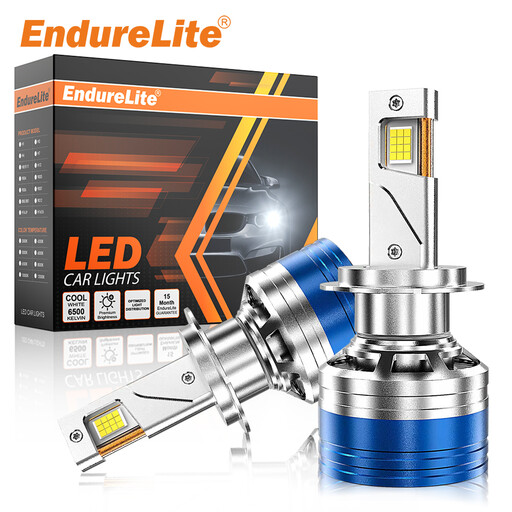
Why This Fits Their Persona: Ideal for the driver doing daily runs to work or the shops. They need a reliable, no-fuss upgrade that improves visibility on familiar roads without requiring complex modifications or a large budget.
Its 1:1 design and plug-and-play nature directly address the "simple fit" trap, making it a straightforward halogen replacement. The built-in CANbus compatibility is designed to prevent dashboard errors on most common UK vehicles.
Features a focused beam pattern to avoid glare and includes an active cooling fan to maintain performance and longevity, countering the common failure points of cheaper bulbs.
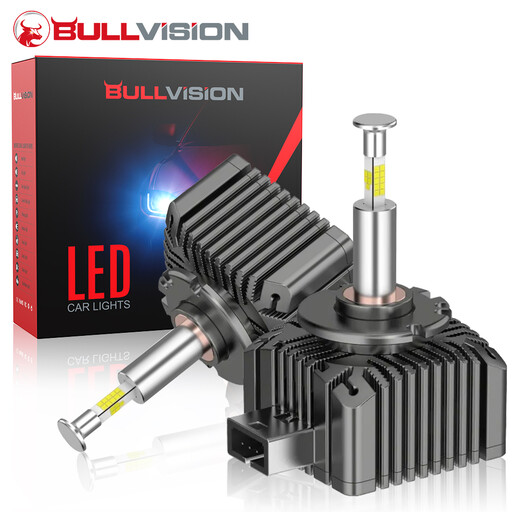
Why This Fits Their Persona: This driver is a car enthusiast who values high-performance components. They want a significant upgrade in illumination for spirited drives on B-roads and look for robust build quality and thermal management.
It sidesteps the "overstated lifespan" trap by incorporating a powerful 10,000 RPM fan and an aluminium alloy shell. This active cooling system is designed to manage the heat from its higher output, ensuring a more reliable service life.
The combination of high power output and 1:1 beam pattern technology aims to provide a wider and longer-range illumination without creating dark spots, directly countering the "blinding brightness" issue by focusing the light where it's needed.
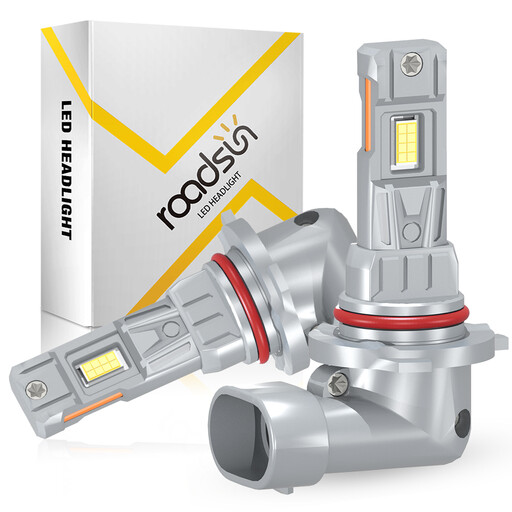
Why This Fits Their Persona: This person frequently drives in challenging British weather, including rain, fog and on unlit rural roads. For them, reliability and consistent performance in adverse conditions are just as important as brightness.
This bulb's description highlights its suitability for fog lights and its strong light penetration. Its waterproof, dustproof and shockproof construction ensures it remains reliable, avoiding failures caused by exposure to the elements.
The 1:1 mini size ensures it fits correctly within factory housings and dust covers, maintaining the headlight's original weather-resistant seal. This is a crucial detail for long-term reliability in the damp UK climate.
We have compiled a complete, real-time list of products that fully satisfy these strict selection criteria and UK safety regulations.
Yes, they can be. For a vehicle to be road legal and pass its MOT, the headlight unit must produce a compliant beam pattern with a clear cut-off that does not cause glare. When choosing an LED halogen replacement bulb, it is important to select one that is designed to replicate the original beam pattern accurately. Always ensure your headlights are correctly aligned after installation.
It depends on the vehicle. Many bulbs advertised as CANbus ready are designed to work with around 99% of vehicles without issue. However, some cars, particularly from European manufacturers like BMW, Audi and Mercedes-Benz, have highly sensitive electrical systems that may still detect a fault. In these cases, a separate CANbus decoder may be required to resolve any flickering or dashboard errors.
For most models that are a 1:1 halogen replacement, the installation is a simple 'plug-and-play' process. It typically involves accessing the back of the headlight unit, twisting and removing the old bulb and inserting the new LED bulb in its place. No special tools or wiring changes are needed. For safety, always ensure the vehicle is off and the old bulbs have had time to cool down before you begin.