
24/7 Customer Support

Free returns

Same-day & Next-day Delivery

Quality Guaranteed

Unlock Your Welcome Offers: FREE Delivery | Up to 80% OFF | Free 30-day JoyPlus trial
Download the APP
Driving on poorly lit British roads with standard halogen headlights can feel like navigating by candlelight. It’s a common frustration for many UK drivers, leading them to consider an upgrade to modern LED headlight bulbs. The promise is tempting: brighter, clearer light for improved safety and a sleek, contemporary look.
However, the market is flooded with options, and it's easy to make a costly mistake. Many drivers find their new bulbs either fail prematurely, trigger dashboard warning lights or create a dangerous glare for oncoming traffic. As a Joybuy Product Recommendation Officer, my role is to help you see through the marketing jargon. Here are the common pitfalls to avoid and the key factors to consider before you make a purchase.
Before you add any bulbs to your basket, be aware of these frequent issues that can turn a simple upgrade into a headache.
To ensure your upgrade is a success, focus on these three non-negotiable technical aspects.
The most critical factor is choosing a bulb that physically and optically matches your car's original halogen bulb.
If your car was made in the last 15 years, it likely has a CANbus system. To avoid electronic gremlins, you need a bulb designed to work with it.
A bulb's longevity is directly tied to its ability to stay cool.
A well-engineered cooling system, whether active or passive, is a hallmark of a quality bulb that will deliver a long service life.
To help you choose, we've matched some options to common UK driver profiles. These selections are based on their ability to address the pitfalls and meet the core parameters discussed above.
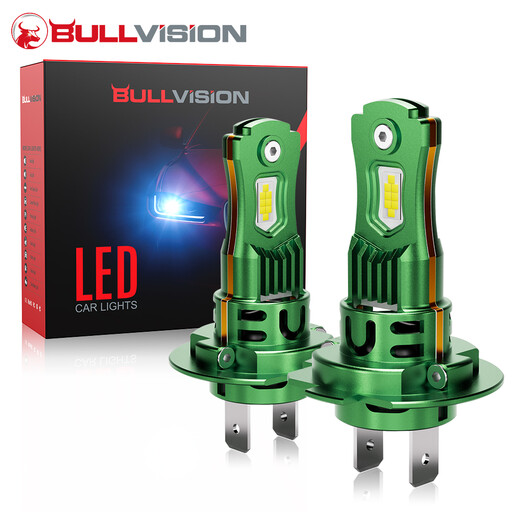
Why This Fits Their Persona: Ideal for the driver who wants a straightforward, noticeable improvement over stock halogens for their daily drives to work or the shops. The focus is on easy installation and reliability without needing to be the absolute brightest on the market.
Its 1:1 mini design directly mimics the original halogen bulb, helping to ensure a correct beam pattern that avoids dazzling other drivers. It's a true plug and play headlight bulb that requires no extra adapters.
Features an integrated design with no external driver, making for a very simple installation. The built-in fan provides active cooling to maintain performance and longevity.
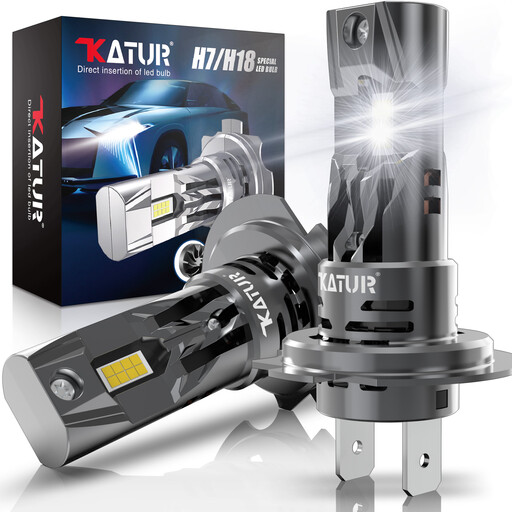
Why This Fits Their Persona: For the DIY enthusiast who drives on unlit country lanes and wants a significant upgrade in visibility. They value high output, a crisp xenon white headlight look and robust construction for long-term performance.
This bulb addresses the cooling pitfall with a powerful 16,000 RPM turbo fan and an aviation aluminium body, designed to effectively manage the heat from its high-output chips and prevent premature failure.
It uses an external driver, which helps with heat management and longevity. The ultra-thin chip spacing is engineered to produce a sharp, focused beam pattern for superior illumination.

Why This Fits Their Persona: This driver owns a VW, BMW, Audi or another vehicle with a sensitive computer system. Their main priority is an error-free installation that won't cause dashboard warnings or flickering, making it a reliable H4 LED upgrade or H7 replacement.
It directly tackles the CANbus compatibility pitfall. The description highlights that its latest generation CANbus system is better suited for European vehicles with sophisticated onboard computers, reducing the risk of errors.
Offers a combination of high brightness, a 1:1 mini size for easy fitting and an advanced CANbus system, providing a comprehensive solution for owners of modern, electronically sensitive cars.
We have compiled a complete, real-time list of products that fully satisfy these strict selection criteria and UK safety regulations.
As of 2026, the legality of aftermarket LED headlight bulbs in the UK hinges on their performance once installed. To be road legal, the bulb must not dazzle other drivers. This means it must produce a clean, correct beam pattern that is compliant with MOT standards. The colour must also be white or yellow. Choosing a high-quality bulb with a 1:1 design that replicates the original halogen filament is the most reliable way to ensure compliance. Always check the latest DVSA guidelines for the most current information.
This is a common concern, especially for newer vehicles. Many modern cars use a CANbus system that monitors the electrical circuits. Since LEDs use less power, the car might interpret this as a fault and display a "bulb out" warning. To prevent this, you should specifically look for CANbus LED bulbs or models described as "error-free," which contain built-in electronics to work correctly with your car's computer.
While manufacturers often quote very long lifespans (e.g., 50,000 hours), the actual service life depends almost entirely on the quality of the bulb's cooling system. An LED that overheats will degrade quickly. A bulb with a robust cooling system—whether a high-speed fan or a well-designed passive heatsink made from quality materials like aluminium—will maintain its brightness and last significantly longer.