
24/7 Customer Support

Free returns

Same-day & Next-day Delivery

Quality Guaranteed

Unlock Your Welcome Offers: FREE Delivery | Up to 80% OFF | Free 30-day JoyPlus trial
Download the APP
Replacing standard halogen lamps with LED headlight bulbs can give a cleaner light colour, lower energy consumption and a modern appearance. However, buying the wrong socket or an unsuitable beam design can create poor illumination, dashboard warnings or an MOT problem.
This guide explains what to check before buying, including H7 LED headlight bulbs, H4 LED bulbs, H11 LED bulbs, H1 LED bulbs, 9005 HB3 LED bulbs and 9006 HB4 LED bulbs.
A listing may mention several vehicle types, but LED bulbs are usually universal only within a particular socket family. An H7 bulb will not replace an H4, H11 or 9006 bulb simply because the vehicle is compatible with LED technology.
Check the existing bulb marking, owner’s manual or a reliable vehicle parts catalogue before ordering. Also confirm whether the bulb is used for dipped beam, main beam, daytime running light or fog lights.
Large lumen numbers are common in product titles, but figures may refer to a pair, theoretical output or maximum output rather than measured light on the road. A higher number does not automatically mean a better beam.
Pay closer attention to:
A well-positioned LED chip can be more useful than an exaggerated headline brightness claim.
Some vehicles monitor bulb resistance and may display a warning after an LED conversion. CANbus LED bulbs can reduce the likelihood of error messages, flickering or radio interference, but they do not guarantee compatibility with every model.
Certain sensitive vehicles may still require a decoder. Before fitting, check the manufacturer’s instructions and your vehicle handbook. For UK road use, the headlamp must produce the correct beam, colour and aim, and the conversion must not dazzle other road users. After installation, check alignment and confirm that the vehicle remains suitable for its intended road use and MOT requirements.
The socket is the first non-negotiable specification. Common options include:
The same bulb type may serve different functions across vehicle models, so confirm the application rather than relying on the socket name alone.
Many replacement bulbs use 6000K cool white headlights, while some use around 6500K. Cool white light can create a crisp appearance, but colour temperature is not the same as brightness. Very blue-looking light may offer less comfortable visibility in rain, mist or dirty conditions.
For a balanced upgrade, look for a neutral or cool-white product with a clearly stated colour temperature and a beam pattern designed to replicate the original lamp.
LED chips produce heat at the rear of the bulb. Aluminium housings, heat sinks and cooling fans help manage this, while IP-rated sealing can provide protection against moisture and dust. A fan may improve heat removal but can introduce a small operating noise and requires adequate clearance behind the headlamp.
Plug and play LED bulbs are convenient when they match the original size and connector. Before installation:
The following options are selected for different buying priorities rather than treated as interchangeable products.
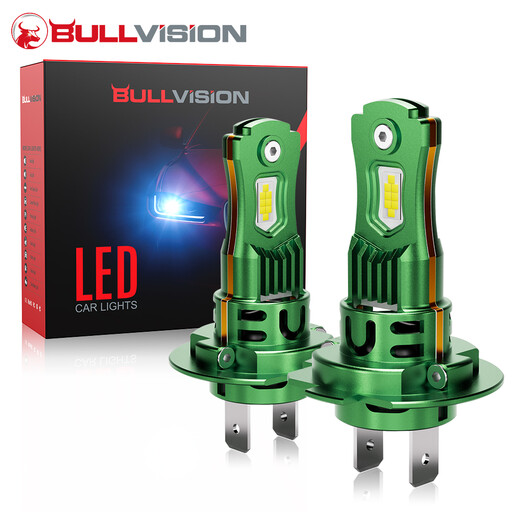
Why This Fits Their Persona: A straightforward option for drivers replacing standard H7 bulbs at home, provided the vehicle handbook confirms the socket and application.
The listing specifies a 1:1 size, 6000K colour, plug-and-play design and CANbus-ready operation. Sensitive vehicles may still need an additional decoder.
Pack of two, 6000K cool white output and integrated cooling fan with aluminium housing.
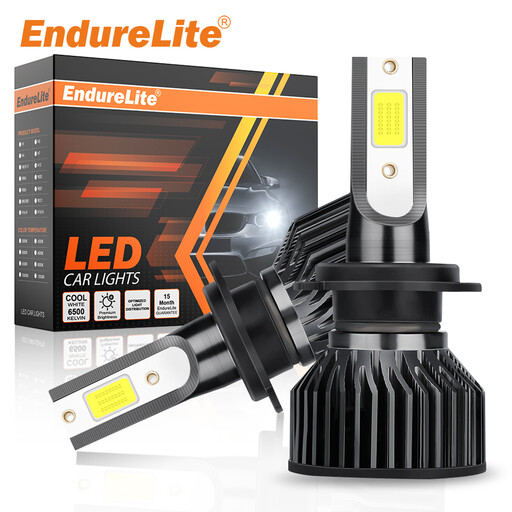
Why This Fits Their Persona: Suitable for shoppers comparing several common socket formats and wanting a pair with built-in cooling and compatibility features.
The product information lists a 1:1 beam design, IP68 waterproof construction and CANbus-ready intelligent driver. Confirm the exact socket before purchase.
Pack of two, 6000K colour temperature and stated 50,000-hour operating life.
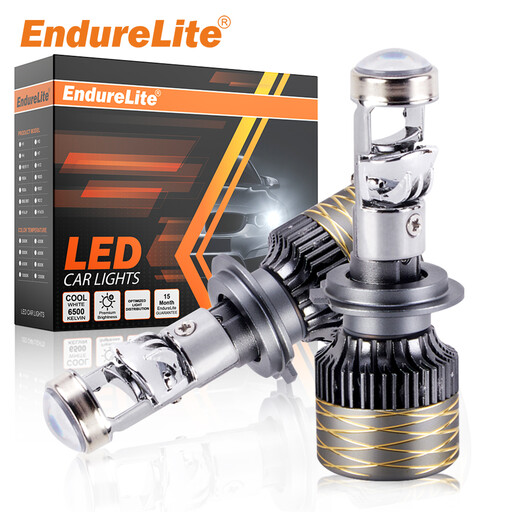
Why This Fits Their Persona: A practical match for frequent night drivers, SUV owners and motorists seeking H8, H9 or H11 headlight or fog light replacements.
Its listed design combines a cooling fan, aluminium body, waterproof construction and stated CANbus readiness, addressing heat and dashboard-warning concerns.
Pack of two, 6000K cool white light and compatibility across H8, H9 and H11 socket listings.
We have compiled a complete, real-time list of products that fully satisfy these strict selection criteria and UK safety regulations.
LEDs generally use less electrical power than equivalent halogen bulbs, but the actual saving depends on wattage, driving time and the vehicle’s charging system. Cooling fans also consume a small amount of power.
Never install a bulb solely because it promises a long lifespan. Figures such as 50,000 or 60,000 hours are product-listed operating-life estimates, not a guarantee of service under every UK temperature, vibration or moisture condition. Keep the headlamp sealed and replace bulbs in pairs when colour or output becomes noticeably uneven.
Legality depends on the vehicle, lamp unit, bulb approval and how the conversion affects beam performance. The installation must not create glare or an incorrect beam pattern. Check current UK road-use guidance, the vehicle handbook and MOT requirements before fitting.
Not always. A vehicle with a sensitive bulb-monitoring system may show an error even when the product is described as CANbus-ready. If warnings or flickering appear, check the fitting instructions and whether an additional decoder is approved for that vehicle.
Manufacturers often publish operating-life estimates, commonly between 30,000 and 70,000 hours. Actual service life depends on heat management, electrical stability, vibration, moisture and installation quality. Cooling design and a properly fitted dust cover are therefore as important as the stated lifespan.