
24/7 Customer Support

Free returns

Same-day & Next-day Delivery

Quality Guaranteed

Unlock Your Welcome Offers: FREE Delivery | Up to 80% OFF | Free 30-day JoyPlus trial
Download the APP
Upgrading your car's standard halogen bulbs to modern LED headlight bulbs can feel like a night-and-day difference. It promises brighter, clearer roads and a longer lifespan. However, the market is flooded with options, and it's easy to fall into common traps that lead to wasted money, poor performance and even potential MOT issues.
As a Joybuy Product Recommendation Officer, my role is to help you see through the marketing clutter. Before you add anything to your basket, let's look at the three most common pitfalls UK drivers face when choosing an LED headlight upgrade.
To make a smart purchase, focus on the specifications that directly impact performance and longevity. Here are the non-negotiable factors to check.
Before looking at any other feature, you must identify your car's correct bulb fitment. This is a code like H7, H4 or H11. Using the wrong fitment means the bulb simply will not install in your headlight housing.
You can find this code in your vehicle's owner's manual, by inspecting the base of the old bulb you are replacing or by using an online vehicle bulb finder. Getting this right is the essential first step. An H7 LED bulb is not interchangeable with an H4 LED headlight, as they have different bases and functions (H4 often combines high and low beam).
A quality LED bulb is designed to replicate the precise beam pattern of the halogen bulb it replaces. This creates a sharp horizontal cut-off line, illuminating the road and verge without blinding other road users. Look for descriptions that mention a "1:1 beam pattern" or "anti-glare design."
For colour, most drivers prefer 6000K cool white headlights. This temperature provides a crisp, modern look and excellent clarity without straying into the blue spectrum, which can attract unwanted attention and may not be road legal.
For most DIY-inclined owners, plug and play headlight bulbs are the ideal solution. These are designed to be a direct replacement for your old bulbs, with no need for cutting wires or complex modifications.
Furthermore, to avoid dashboard errors, always look for bulbs advertised as CANbus ready or "error-free." While these work for the vast majority of vehicles, be aware that some sensitive systems (often found in German marques) may still require an additional decoder. A 9006 CANbus ready bulb, for example, is specifically designed to communicate correctly with the car's computer.
Instead of a generic list, we've matched some options to the drivers who will benefit most from them.
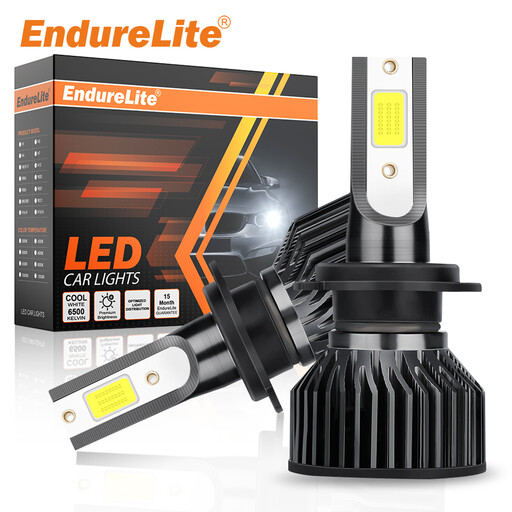
Why This Fits Their Persona: This is a solid, all-round choice for someone wanting a noticeable and reliable upgrade from halogen without over-specifying. It's ideal for popular UK hatchbacks and family cars used for daily commuting and school runs.
It is designed to replicate the original beam pattern, avoiding the "glare" trap. It's also built with a CANbus-ready driver to prevent common dashboard errors.
Features a simple plug-and-play design for easy DIY installation and an active cooling fan to maintain performance and longevity.
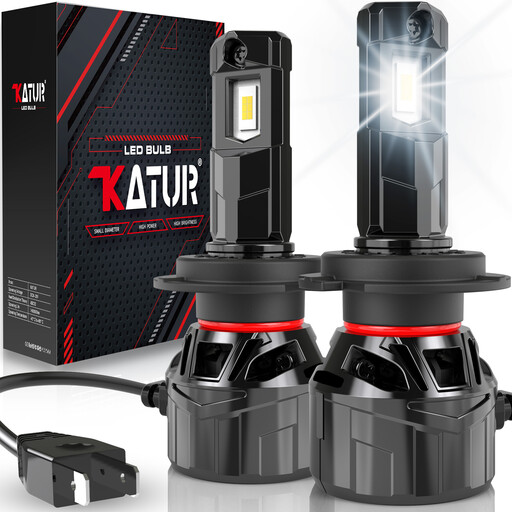
Why This Fits Their Persona: For the driver who prioritises component quality and thermal management for sustained performance. This is a great fit for enthusiasts or those who do a lot of night-time driving on unlit B-roads and want maximum reliable output.
It directly addresses the cooling pitfall with a high-speed 16,000 RPM turbo fan and an aviation-grade aluminium body to effectively dissipate heat and prevent premature failure.
The 1:1 mini size design ensures it fits into tight factory housings without modification. Its high-efficiency chips provide very bright car headlights without sacrificing the beam pattern.
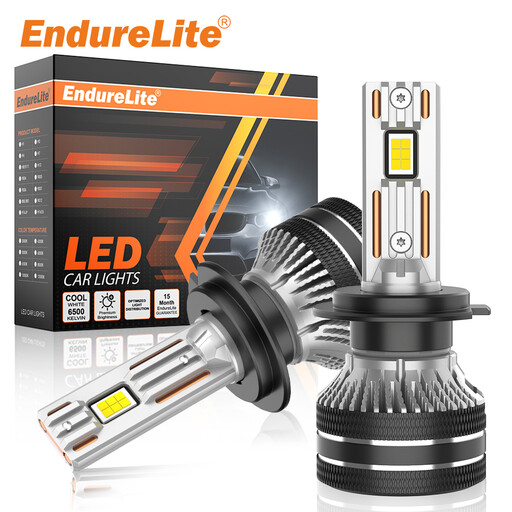
Why This Fits Their Persona: This is for the car owner who has already done their research and knows they need a specific 9006 LED upgrade. They value a direct, error-free replacement for their vehicle's specific requirements.
This bulb is explicitly marketed as a 9006 CANbus ready model, directly addressing the compatibility pitfall for vehicles that use this fitment and system.
Offers a focused solution with IP68 waterproof car lights construction, ensuring durability against the elements and a straightforward installation process for the confident DIYer.
We have compiled a complete, real-time list of products that fully satisfy these strict selection criteria and UK safety regulations.
This is a key consideration. According to the latest DVSA guidance for MOT testers, retrofitting LED bulbs into a headlight unit originally designed for halogen bulbs is technically a reason for failure. However, enforcement can vary. The most critical factor for passing is the beam pattern. If the bulb produces the correct pattern with a sharp cut-off and does not cause glare, it is less likely to be failed. We always recommend you check the most current government guidelines and, if possible, retain your old halogen bulbs to swap back for the MOT if needed.
Not always. Most modern LED bulbs are advertised as "CANbus ready" and have built-in components to prevent errors in about 99% of vehicles. However, some cars, particularly from brands like Volkswagen, Audi, BMW and Mercedes-Benz, have highly sensitive monitoring systems that may still detect the lower power draw of an LED and trigger a warning. In these rare cases, a separate, plug-in CANbus decoder may be required.
For most vehicles, the process is very straightforward and similar to changing a standard bulb. It typically involves opening the bonnet, removing a dust cover from the back of the headlight unit, unplugging the old bulb and swapping in the new one. However, always ensure the car is off and the old bulbs have had time to cool down, as they can get very hot. It's also wise to wear gloves to avoid touching the new LED chips with your bare hands. If access to your car's bulbs is particularly difficult, consulting a local garage is a good option.