
24/7 Customer Support

Free returns

Same-day & Next-day Delivery

Quality Guaranteed

Unlock Your Welcome Offers: FREE Delivery | Up to 80% OFF | Free 30-day JoyPlus trial
Download the APP
Upgrading your car's standard halogen bulbs to a modern set of LED headlight bulbs can significantly improve night-time visibility and give your vehicle a contemporary look. However, the market is filled with confusing specifications and exaggerated claims. Many UK drivers find themselves with bulbs that are either illegal, incompatible or fail within months. This guide cuts through the clutter, helping you identify the key factors for a successful upgrade.
Before you add any bulbs to your basket, be aware of these common traps that lead to wasted money and potential MOT failures.
To make an informed choice, focus on these three critical specifications. Getting these right is the foundation of a safe and effective lighting upgrade.
Your vehicle's headlight housing is designed for a specific bulb type. This is identified by a code, such as H7, H4 or H11. You cannot fit an H4 bulb into an H7 socket.
Always check your vehicle's handbook or inspect the existing bulb to confirm the correct fitment before purchasing. This is the most fundamental step.
A quality LED bulb should replicate the exact beam pattern of the halogen it replaces. This ensures the light is focused on the road and has a sharp cut-off line for the dipped beam, preventing glare for other road users. Look for bulbs that specify a "1:1 beam pattern" or use advanced optics to achieve this.
Colour temperature, measured in Kelvin (K), determines the colour of the light. Standard halogens are around 3200K (warm yellow). 6000K cool white headlight bulbs are a popular choice for an upgrade, offering a crisp, modern white light that is close to natural daylight. Avoid bulbs over 6500K, as they can appear blue and may attract unwanted attention or fail an MOT.
For the DIY enthusiast, a plug and play LED headlights design is ideal. This means the bulb connects directly to your car's existing wiring harness with no cutting or modifications required.
Also, check for durability ratings. A rating like IP68 indicates the bulb is highly resistant to dust and is a waterproof car bulb, capable of withstanding submersion. This is particularly important for bulbs exposed to the elements, ensuring reliability through harsh British winters.
We have filtered the options based on the crucial parameters above, matching them to common UK driver profiles.
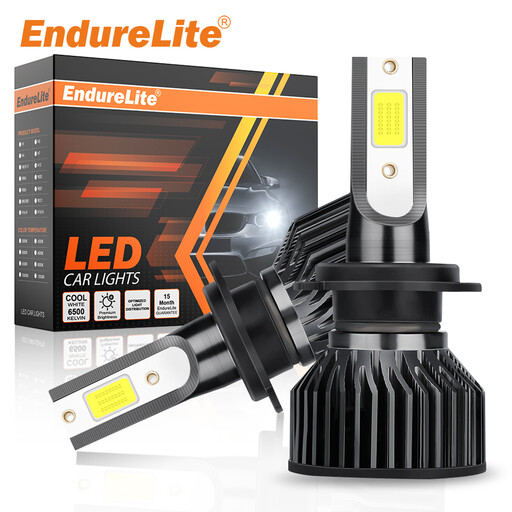
Why This Fits Their Persona: This kit is a straightforward, reliable upgrade for daily driving on motorways and B-roads. It offers a significant improvement in visibility over stock halogens without being overly aggressive, making it a great all-rounder for the average UK car.
It is designed to be CANbus ready for high vehicle compatibility, directly addressing the risk of dashboard errors and flickering in many modern cars.
Features a simple plug and play design for easy DIY installation and an active fan cooling system for improved longevity.
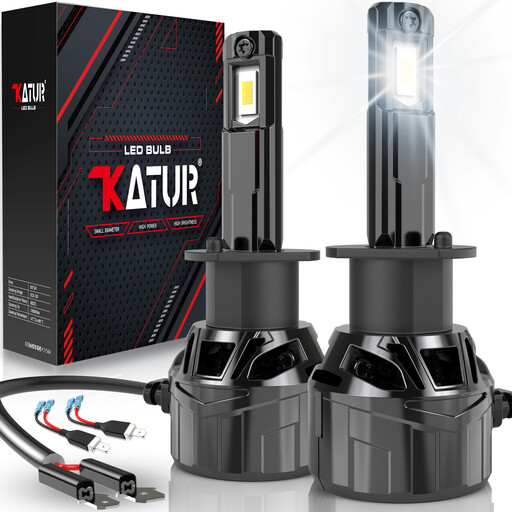
Why This Fits Their Persona: For the driver who demands high output for spirited drives on unlit country roads. This bulb provides intense illumination while focusing on the features needed to sustain that performance over time.
It directly counters the heat dissipation pitfall with a high-speed 16,000 RPM turbo fan and a copper tube design, built to manage the heat from its high-power output and prevent premature failure.
Offers a very high lumen output for maximum road coverage and features a compact 1:1 mini size, simplifying installation even in tight headlight housings.
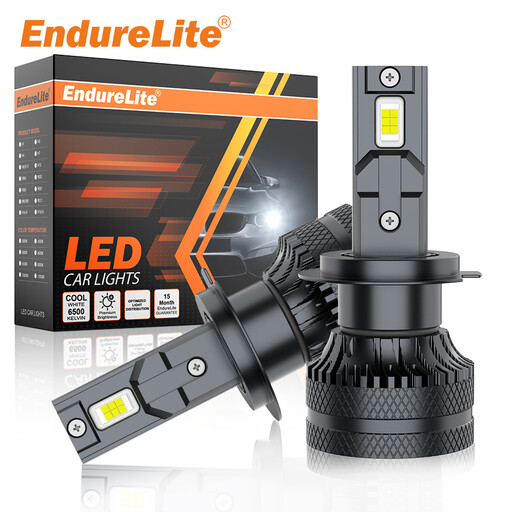
Why This Fits Their Persona: Specifically for upgrading fog lights, this bulb is for drivers who frequently encounter fog, heavy rain and poor visibility conditions. The focus is on durability and a controlled beam to cut through weather, not just for cosmetic looks.
It avoids the "one-size-fits-all" approach by being marketed for a specific use. Its design prioritises a focused beam pattern to minimise reflective glare in fog, a common issue with generic, overly bright car headlights used in fog lamps.
Features an IP68 waterproof rating and an efficient cooling system, ensuring it remains reliable and functional when exposed to road spray and harsh weather.
We have compiled a complete, real-time list of products that fully satisfy these strict selection criteria and UK safety regulations.
As of 2026, the rules for using LED bulbs in a headlight unit originally designed for halogens require careful attention. For a vehicle to pass its MOT, the headlight must produce a clear and correct beam pattern that does not cause dazzle to other road users. It is essential to choose a high-quality kit that accurately replicates the original halogen beam pattern. Regulations can change, so always check the latest DVSA guidelines.
While many modern kits are advertised as CANbus ready, some vehicles, particularly from German manufacturers, have highly sensitive monitoring systems. In these cases, you may still encounter a dashboard error. If this happens, a separate CANbus decoder or resistor can usually be added to resolve the issue. It is often helpful to check online forums for your specific car model to see what other owners have experienced.
For most cars, installing a plug and play LED kit is a simple DIY job that is no more difficult than changing a standard bulb. The process typically involves removing the dust cover, unclipping the old bulb and inserting the new LED bulb. However, always ensure the vehicle is off and the old bulbs have cooled down. It is also advisable to wear gloves to avoid touching the LED chips. If you are not confident, a professional mechanic can perform the installation quickly.