
24/7 Customer Support

Free returns

Same-day & Next-day Delivery

Quality Guaranteed

Unlock Your Welcome Offers: FREE Delivery | Up to 80% OFF | Free 30-day JoyPlus trial
Download the APP
Replacing dim or ageing car lights can improve the clarity of night-time driving, but choosing LED headlight bulbs is not simply a matter of selecting the highest lumen figure. The wrong fitting, poor beam alignment or incompatible electronics can leave you with wasted money, dashboard warnings and light scattered into oncoming traffic.
As the Joybuy Product Recommendation Officer, I focus on practical specifications rather than headline claims. Here are the checks that matter before buying replacement car bulbs.
Listings may advertise extremely large lumen numbers or percentage improvements over halogen. These figures can be useful for comparison, but they do not automatically indicate a well-controlled beam. The chip position, reflector or projector design and bulb alignment all affect how light reaches the road.
A poorly matched bulb may create dark patches or glare, even when the stated output appears impressive. Look for a 1:1 bulb design, a narrow LED chip arrangement and an adjustable collar where appropriate.
Plug and play means the electrical connection may be straightforward; it does not mean every vehicle will accept the bulb without checks. Common fittings include H4, H7, H8, H9, H11, H15, HIR2/9012 and HB3/9005. HID vehicles may use D1S, D1R, D3S, D3R or D4S.
Check the original bulb marking, owner’s handbook and available space behind the dust cover. A halogen-replacement LED bulb is not a direct replacement for an HID or factory full LED headlight assembly unless the product specifically states that it is.
CANbus LED bulbs include an electronic driver intended to reduce flickering, radio interference or dashboard error messages. However, vehicle electronics vary considerably. A listing stating compatibility with most systems is not a guarantee for every UK car, SUV, truck or motorcycle.
Some sensitive vehicles may need a decoder or resistor module. Check the bulb on both sides before fully refitting the covers, and investigate any warning light or flicker rather than ignoring it.
The fitting is non-negotiable. An H7 LED bulb cannot be used in an H4 socket, while an HIR2/9012 bulb is not suitable for H11 or H13 applications. D-series bulbs are designed for particular HID assemblies, so confirm whether your vehicle has a ballast-supported HID headlight before ordering.
For vehicle-specific upgrades, such as LED headlight assemblies for Porsche or BMW models, confirm the chassis generation, original headlight type, mounting points and connector arrangement. An assembly may be described as plug and play but still require beam alignment or professional fitting.
Many buyers prefer 6000K or 6500K white LED bulbs because the light appears cooler and more daylight-like than traditional halogen. Colour temperature does not, by itself, determine road illumination. A properly formed beam is more important than a very blue appearance.
After installation, check the dipped-beam cut-off against a wall and adjust the lamps if necessary. UK drivers should also confirm that a retrofit is suitable for use on public roads and does not compromise the vehicle’s lighting compliance or MOT requirements.
LED chips produce heat at the rear of the bulb. Cooling may be provided by an aluminium heat sink, copper components, a built-in fan or a fanless housing. Fan-based designs can offer active cooling but need room inside the lamp housing; fanless designs are quieter and have fewer moving parts but still require suitable clearance.
Also check whether the original dust cap can be refitted. Moisture and dust protection ratings such as IP65, IP67 or IP68 describe enclosure resistance under specified conditions, not a guarantee that every installation will remain sealed.
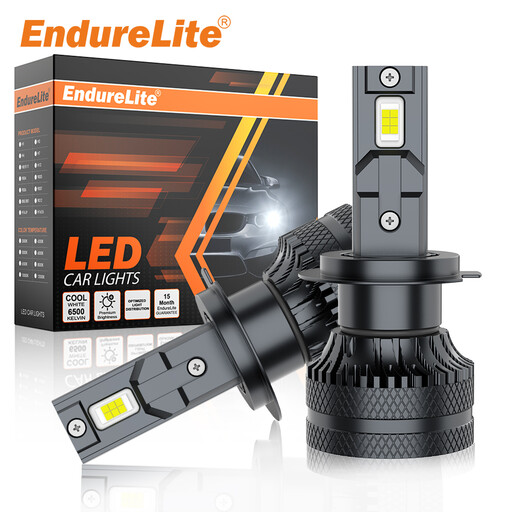
Why This Fits Their Persona: A straightforward option for UK drivers whose cars, vans or motorcycles use the common H4/9003/HB2 fitting and need combined main- and dipped-beam operation.
Its stated 1:1 design and adjustable base address the risk of a poorly positioned LED chip. Fitment still needs to be confirmed from the original bulb.
6000K colour temperature, integrated main/dipped beam and built-in cooling fan. Sold as a pair.
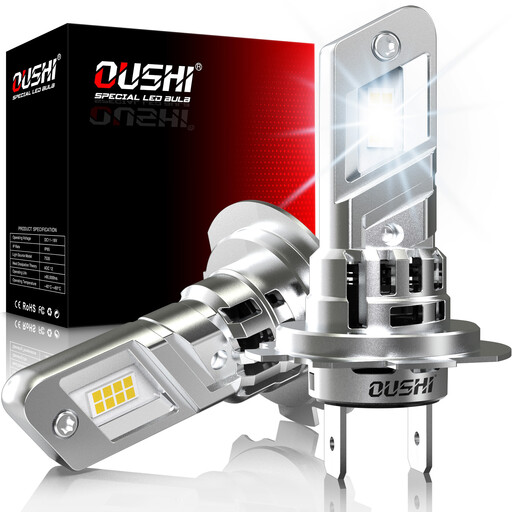
Why This Fits Their Persona: Suitable for drivers seeking a compact H7 LED headlight bulb with a cool white appearance and direct installation into a compatible factory socket.
The mini 1:1 format helps address tight housing space, while the listing identifies CANbus support and notes that some sensitive vehicles may need a decoder.
6500K output, built-in turbo fan and no external driver or wiring modification stated.
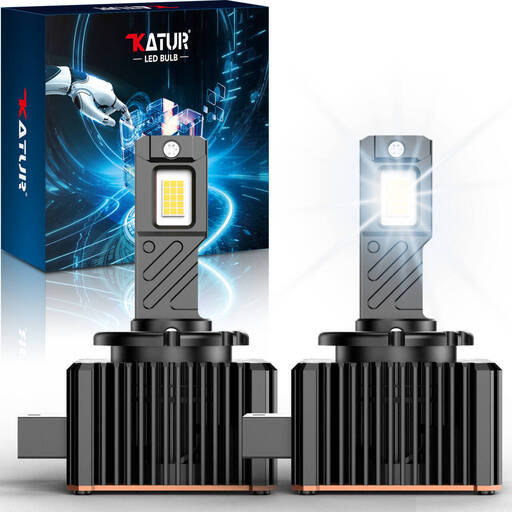
Why This Fits Their Persona: Designed for drivers replacing compatible D3S or D3R HID bulbs who want a white output and rapid start-up without changing the complete headlight assembly.
The listing clearly states that it is for HID assemblies only, preventing a common halogen-versus-HID compatibility mistake.
6500K white output, aluminium construction, cooling fan and integrated driver are listed features.
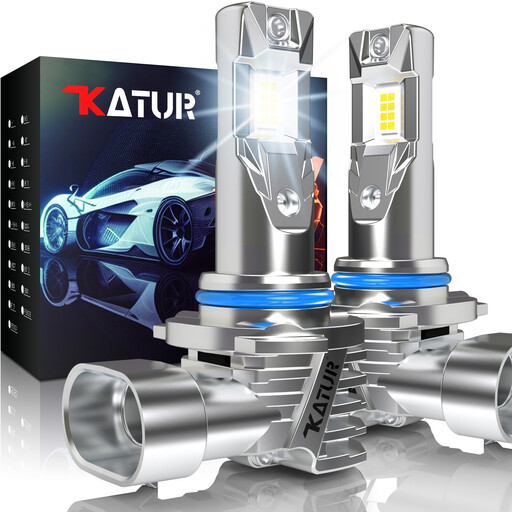
Why This Fits Their Persona: A fanless option for vehicles using the HIR2/9012 socket where rear clearance and quiet operation are priorities.
Its fanless construction removes fan noise and one moving component, while the instructions specifically call for checking heat-sink clearance.
6000K white light, 1:1 mini halogen-style body and stated 12V compatibility.
For complete replacements rather than bulbs, browse headlight bulbs to compare LED headlight assemblies, full LED headlights and LED fog light bulbs.
We have compiled a complete, real-time list of products that fully satisfy these strict selection criteria and UK safety regulations.
Legality depends on the bulb, headlamp assembly, vehicle and applicable road-use requirements. A retrofit must produce a suitable beam without dazzling other road users. Check the product information, vehicle guidance and current UK requirements before use on public roads.
Product listings commonly state service-life figures ranging from 50,000 to 60,000 hours, but actual life depends on heat, voltage, vibration, moisture and operating conditions. Good ventilation and correct installation are important.
They may use a different power level from the original bulb and can reduce the frequency of replacement, but savings vary by vehicle and product. Compare the stated wattage, cooling design, purchase price and expected service conditions rather than relying on lifespan claims alone.