
24/7 Customer Support

Free returns

Same-day & Next-day Delivery

Quality Guaranteed

Unlock Your Welcome Offers: FREE Delivery | Up to 80% OFF | Free 30-day JoyPlus trial
Download the APP
Upgrading your car’s headlights from dim, yellow halogens to crisp, bright LED headlight bulbs can feel like switching from night to day. It’s one of the most impactful changes you can make for night-time driving safety and visibility. However, the market is flooded with options, and it’s easy to fall into common traps that lead to wasted money, poor performance and even potential MOT issues.
As a Joybuy Product Recommendation Officer, my role is to help you navigate the choices and identify what truly matters. Before you buy, let’s look at the pitfalls to avoid.
To ensure you get a reliable and effective upgrade, focus on these key technical specifications.
Your vehicle requires a specific bulb fitment, such as an H7 LED bulb, H4 LED headlight or 9006 HB4 LED. This code is non-negotiable and can be found in your vehicle’s handbook or by checking the existing bulb.
Beyond the fitment code, look for bulbs described as 1:1 mini size. This means the LED bulb’s dimensions closely match the original halogen bulb it's replacing. This design is crucial for two reasons:
The colour of the light is measured in Kelvin (K). Standard halogen bulbs are typically around 3200K, producing a yellowish light. Most bright car headlights in the LED category are rated at 6000K cool white. This crisp, white light is similar to natural daylight, which can help improve contrast and make it easier to spot hazards on dark roads.
Brightness is measured in lumens, but higher numbers don't always mean better real-world performance. A well-designed bulb with a precise beam pattern will be far more effective than an overly bright bulb that scatters light everywhere. Focus on bulbs that deliver a controlled, focused beam for maximum usable light.
For any car made after the mid-2000s, checking for CANbus compatibility is essential. Look for bulbs that are explicitly "CANbus ready" or "error-free" to avoid dashboard warnings. For some sensitive vehicle systems, particularly from German manufacturers, an additional decoder may still be required, and reputable sellers will often mention this.
Finally, examine the cooling system. A quality bulb will feature a robust cooling mechanism, such as an aviation-grade aluminium body, a built-in high-speed fan or copper heat pipes. This is a clear indicator of a bulb built for longevity and sustained performance.
We've filtered the options based on the criteria above to match different driver needs.
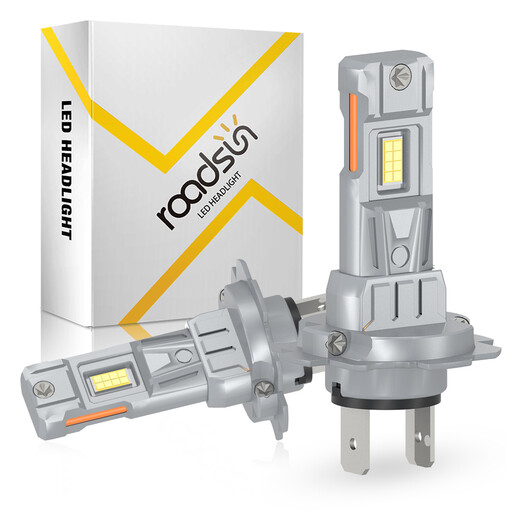
Why This Fits Their Persona: Perfect for the UK driver who wants a quick, effective upgrade with zero complications. If you're a DIY enthusiast who values a straightforward, 10-minute job, this is an ideal choice.
Its "Real 1:1 Mini Size" design directly counters the "Universal Fit" pitfall. It fits into factory housings without needing extra adapters or modifications, ensuring the dust cover seals correctly and the beam pattern is accurate.
True plug-and-play installation with no adapters needed. The 6000K cool white light provides a significant visibility boost for headlights or as an LED fog light bulb.
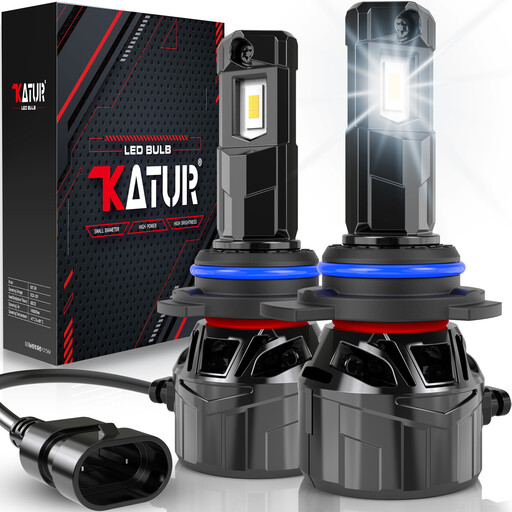
Why This Fits Their Persona: For the driver who frequently travels on unlit motorways or winding country lanes. If maximum road illumination and long-term reliability are your top priorities, this high-output option is a strong contender.
It directly addresses the heat dissipation pitfall with a powerful 16,000RPM turbo fan and a copper/aluminium construction. This robust cooling system is designed to maintain brightness and ensure a long operational life.
Features high-power output for exceptional brightness and an advanced cooling system for durability. The built-in CANbus system offers wide compatibility with most vehicles.
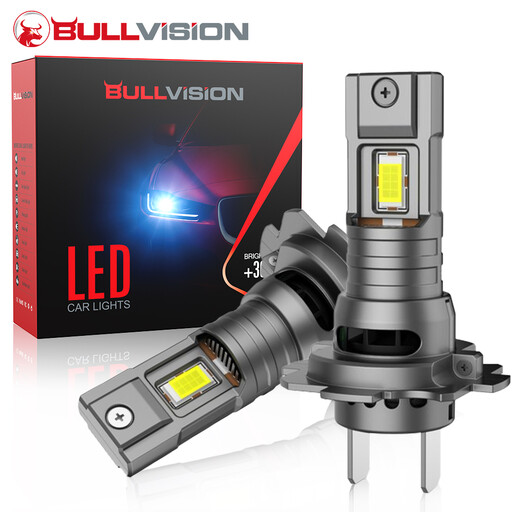
Why This Fits Their Persona: A great choice offering value for money for the daily driver looking for a noticeable safety improvement over stock halogens. It provides a modern look and much-improved visibility for commuting without a premium price tag.
This bulb includes a built-in fan and an intelligent driver, addressing both the heat and CANbus pitfalls common in affordable options. The 1:1 size also helps ensure a proper beam pattern, avoiding glare issues.
Offers a substantial brightness increase and a focused beam pattern in a popular H7 fitment. The CANbus-ready design provides wide compatibility for a straightforward upgrade.
We have compiled a complete, real-time list of products that fully satisfy these strict selection criteria and UK safety regulations.
The legality of aftermarket LED bulbs is a nuanced topic. For a bulb to be road legal, it must be E-marked and fitted to a headlight unit that is type-approved for that specific bulb, ensuring it produces a correct, MOT-compliant beam pattern. Many 1:1 replacement bulbs are designed to replicate the halogen beam pattern precisely to meet these standards. However, regulations can evolve, so it is always advisable to check the latest guidance from the DVSA and retain your original halogen bulbs for MOT test purposes if required.
If your car was manufactured after 2005, there is a high probability it uses a CANbus system. European brands like Volkswagen, BMW, Audi and Mercedes are particularly sensitive. While many LED bulbs are advertised as "CANbus ready," some highly sensitive vehicle computers may still detect the lower power draw and show an error. In these cases, a separate, plug-in CANbus decoder may be necessary to resolve any flickering or dashboard warnings.
Think of it as the colour of light, not the brightness. A standard halogen bulb is around 3200K, which is a warm, yellowish colour. A 6000K cool white car bulb produces a crisp, pure white light, very similar to natural daylight. This colour temperature helps to improve contrast, making road markings, signs and potential hazards appear clearer and more defined during night-time driving.