
24/7 Customer Support

Free returns

Same-day & Next-day Delivery

Quality Guaranteed

Unlock Your Welcome Offers: FREE Delivery | Up to 80% OFF | Free 30-day JoyPlus trial
Download the APP
Upgrading your car's standard halogen headlights to modern LEDs is one of the most impactful changes you can make for both safety and style. The promise of brighter, clearer light is appealing, but the market is filled with options that can lead to disappointment, wasted money and even MOT issues.
As the Joybuy Product Recommendation Officer, my role is to help you see through the marketing clutter. Before you make a purchase, it's crucial to understand the common pitfalls that many UK drivers fall into.
To ensure your car headlight upgrade is a success, focus on these three core parameters instead of just marketing claims.
The single most important factor for an H4 LED bulb is its ability to replicate the beam pattern of the original halogen bulb it replaces. H4 bulbs, also known as 9003 LED bulbs, are high low beam LED bulbs, meaning they contain two filaments for dipped and main beams. A well-engineered LED equivalent will have its light-emitting chips placed precisely to mimic these filament locations.
This ensures a sharp, clean cut-off line on the low beam, illuminating the road ahead without blinding other road users. A correct beam pattern is not just a matter of courtesy; it is a critical safety feature and a key point of inspection during an MOT test.
Colour temperature, measured in Kelvin (K), determines the colour of the light. Standard halogens are typically a warm yellow, around 3200K. For a modern, crisp look that improves visibility, most drivers seek out 6000K cool white headlights. This colour temperature is close to natural daylight, making road signs and hazards appear clearer and more defined at night. Bulbs advertised above 6500K can start to look overly blue, which may attract unwanted attention and can be less effective in rain or fog.
The Controller Area Network (CANbus) is the internal computer system that monitors your vehicle's functions. Because LEDs use significantly less power than halogens, your car's CANbus system can mistakenly interpret the low power draw as a burnt-out bulb, triggering a warning light on your dashboard. A CANbus ready headlight bulb has integrated circuitry (resistors or a micro-driver) to communicate correctly with the vehicle's computer, preventing these errors. This is particularly important for many European cars manufactured in the last 10-15 years.
Based on these practical criteria, here are a few H4 LED headlight bulbs suited to different types of UK drivers.
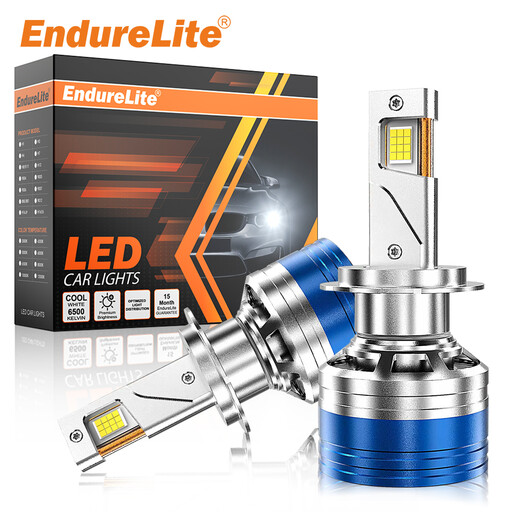
Why This Fits Their Persona: Ideal for a first-time LED upgrader who wants a noticeable improvement over halogen without the complexity. This bulb is designed as a straightforward, all-in-one replacement that prioritises reliability and ease of installation for everyday driving on UK roads.
It is built to be CANbus ready for high vehicle compatibility, directly addressing the "plug and play" pitfall of electronic errors. The design also focuses on simulating the original beam pattern to avoid glare.
Features an integrated cooling fan within its aluminium alloy shell to actively manage heat, supporting a longer operational life. The 6000K cool white colour provides a modern look and clear visibility.
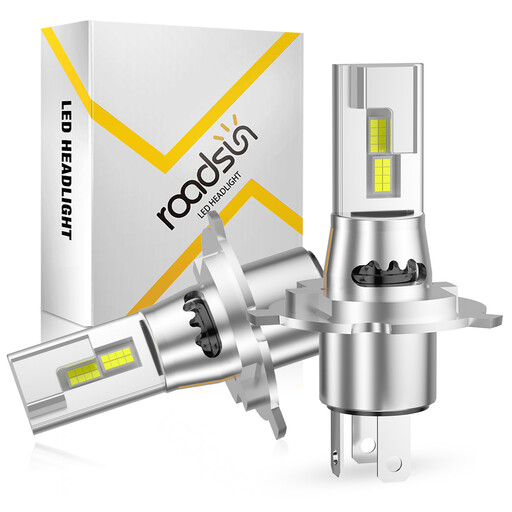
Why This Fits Their Persona: For the driver who wants a significant performance increase and is comfortable with their vehicle. This bulb offers a substantial boost in brightness and a slightly cooler 6500K white light, appealing to those seeking maximum road illumination for country lanes or motorway driving.
It tackles the lifespan gamble head-on with a high-speed 16,000RPM cooling fan. This aggressive cooling is designed to maintain performance and prevent premature dimming, even with its high power output.
The main advantage is its high light output combined with a robust cooling system. It also features an IP68 waterproof rating, ensuring reliability in all British weather conditions.
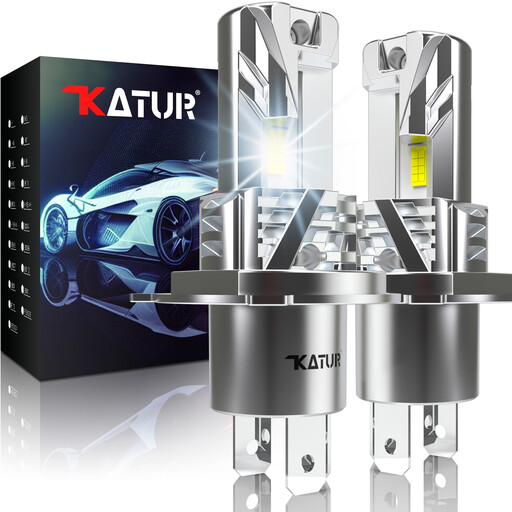
Why This Fits Their Persona: Perfect for owners of vehicles with tight headlight housings where a bulky, fan-cooled bulb simply won't fit. Its 1:1 mini size and fanless design ensure it can be installed easily and the original dust cap can be refitted, maintaining the factory seal.
It solves the physical "plug and play" problem by being identical in size to a halogen bulb. The fanless design also eliminates a potential point of failure and any associated noise, offering a different solution to the lifespan pitfall.
The key advantage is its compact, fanless construction. It relies on its 6063 aircraft-grade aluminium body for passive heat dissipation, making for a silent and reliable operation in confined spaces.
We have compiled a complete, real-time list of products that fully satisfy these strict selection criteria and UK safety regulations.
As of 2026, the legality of aftermarket LED bulbs for MOT purposes in the UK hinges on performance. The bulb must produce a correct beam pattern with a clear cut-off, not cause dazzle to other road users and be suitable for the headlamp unit. High-quality H4 LED bulbs designed to precisely mimic a halogen's filament position are more likely to comply. After installation, it is always recommended to have the headlight alignment checked at a professional garage.
This depends on your vehicle. Modern cars, especially those from European manufacturers like BMW, Audi, Volkswagen and Mercedes-Benz, often have sensitive computer systems. If you install LED bulbs and notice a dashboard warning light, flickering or interference with your radio, you will likely need an additional CANbus decoder to resolve the issue. Many bulbs are now sold as "CANbus ready," which reduces this risk for a majority of vehicles.
While packaging often advertises lifespans of 50,000 hours or more, the real-world longevity of an H4 LED bulb is determined by its heat management system. Bulbs with effective cooling—either a high-speed fan or a well-designed fanless heat sink made from quality materials—will maintain their brightness and last significantly longer. A bulb with poor cooling will lose brightness and fail much sooner, regardless of the advertised rating.