
24/7 Customer Support

Free returns

Same-day & Next-day Delivery

Quality Guaranteed

Unlock Your Welcome Offers: FREE Delivery | Up to 80% OFF | Free 30-day JoyPlus trial
Download the APP
Upgrading your car's standard halogen lights to modern LED headlight bulbs is one of the most popular modifications for UK drivers. The promise of brighter, clearer light and a crisp, modern look is appealing. However, the market is filled with confusing specifications and bold claims, making it easy to choose a set that underperforms or fails prematurely.
As a Joybuy Product Recommendation Officer, my role is to help you navigate this landscape. We will look past the marketing hype and focus on the practical details that determine a good car headlight upgrade. Before you spend your money, be aware of these common purchasing pitfalls.
To ensure you get a reliable and effective set of bright car bulbs, focus on these core parameters rather than just the headline power figures.
The single most important factor for a safe and effective headlight is the beam pattern. LED bulbs should be designed to mimic the precise filament position of the halogen bulb they are replacing.
Look for bulbs described as having a 1:1 mini size or a design that matches the original halogen. This ensures the LED chips sit exactly where the halogen filament would be inside the headlight's reflector or projector housing. The result is a clean, focused beam with a sharp cut-off, illuminating the road and verges without causing dangerous glare for other road users. Whether you need an H4 LED for a combined high/low beam or a single-beam H7 LED, a 1:1 design is non-negotiable for proper performance.
Most vehicles sold in the UK over the last 15-20 years use a Controller Area Network (CANbus) system to monitor the car's electronics. A standard halogen bulb has a specific electrical resistance; when you replace it with a low-power LED, the CANbus system can misinterpret this as a fault, assuming the bulb has blown.
This triggers a dashboard warning light or, in some cases, causes the lights to flicker or switch off. To avoid this, you need a CANbus error free LED bulb. These have built-in resistors or an intelligent driver to communicate correctly with the vehicle's computer. While many kits claim 98% or 99% compatibility, be aware that some sensitive systems, particularly on certain European models, may still require an additional decoder.
An LED's lifespan is directly linked to how well it manages heat. There are two main types of cooling:
A robust cooling system is the key to achieving the long lifespans of 50,000 hours or more that many LED bulbs promise.
Based on these practical criteria, we have matched a few options to different types of UK drivers.
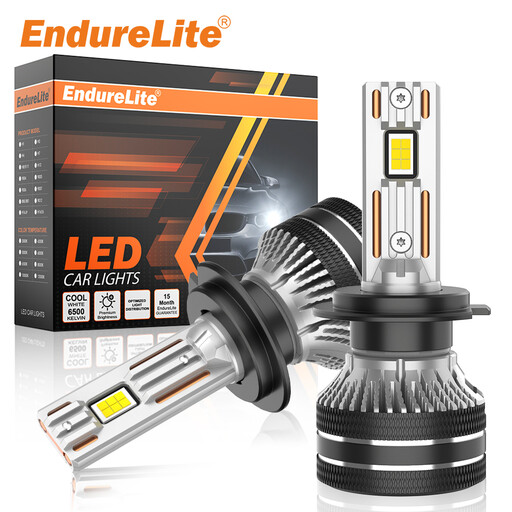
Why This Fits Their Persona: This user wants a noticeable improvement in visibility for their daily commute or family car without a significant financial outlay. They value a straightforward installation process and reliable performance over maximum possible brightness.
It avoids the "plug and play" fallacy by featuring a 1:1 design that is the same size as the stock bulb, making it a genuine direct replacement that fits easily into the housing without modification.
Features a built-in 10,000 RPM cooling fan and an IP68 waterproof rating, providing a good balance of performance and durability for the price point.
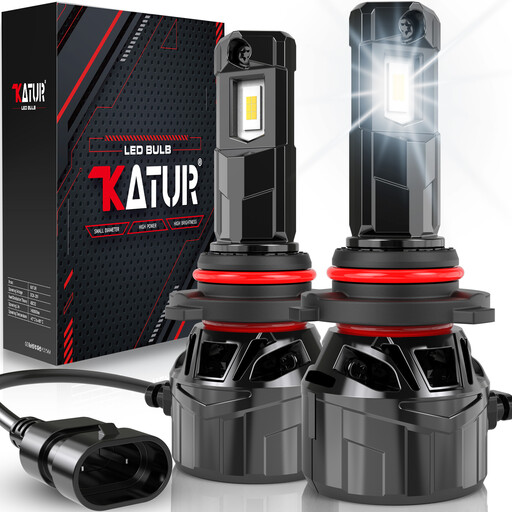
Why This Fits Their Persona: This driver frequently travels on unlit B-roads or motorways at night. For them, maximum illumination distance and width are primary safety concerns. They are willing to invest in a higher-specification bulb for superior performance and longevity.
It directly counters the heat trap with a powerful 16,000 RPM fan, a copper heat tube and a hollow-carved aluminium body. This robust cooling system is designed to sustain high output without premature failure.
The combination of high power (120W per pair) and a 6000K xenon white colour provides intense, far-reaching light. The advanced cooling supports a claimed lifespan of up to 60,000 hours.
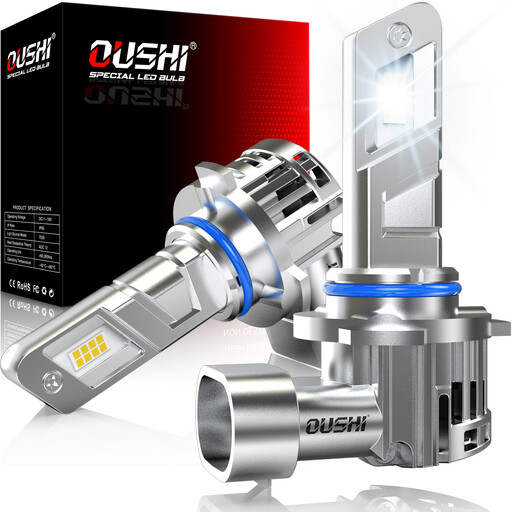
Why This Fits Their Persona: This person drives a newer vehicle, possibly a German brand with a sensitive computer system. Their main priority is a flicker-free, error-free installation that integrates seamlessly with their car's electronics, avoiding any dashboard warnings.
This bulb is specifically designed to address the CANbus pitfall. It incorporates what the manufacturer describes as the "latest generation CANBUS system" for enhanced compatibility with sophisticated vehicle systems.
The focus on high electronic compatibility reduces the risk of errors on modern cars. It also maintains a 1:1 mini size for a true plug-and-play installation without needing extra adapters.
We have compiled a complete, real-time list of products that fully satisfy these strict selection criteria and UK safety regulations.
This is a critical point for UK drivers. According to current Department for Transport guidelines, fitting aftermarket LED bulbs into a headlight unit that was originally designed and type-approved for halogen bulbs is not considered road legal. For a vehicle to pass its MOT test, the headlights must be E-marked to certify they are a matched pair of a lamp and a light source. Therefore, these types of LED upgrade bulbs are generally intended for off-road or show use only. Always check the latest DVSA and MOT inspection manuals for the most current regulations.
While bulbs marketed as CANbus error free LED are designed to work with the vast majority of vehicles without issue, no solution is 100% universal. A small percentage of cars with highly sensitive computer systems may still detect a fault. In these rare cases, an additional CANbus decoder or resistor, which is usually a simple plug-in component, may be required to resolve the error.
For most vehicles, the installation is straightforward and similar to changing a standard bulb. You simply unclip the old bulb, remove it, insert the new LED bulb and reconnect the plug. The main challenges can be tight access behind the headlight unit or difficulty replacing the original dust cap. This is why choosing a bulb with a compact, 1:1 body size is so advantageous, as it minimises the chance of fitment problems.