
24/7 Customer Support

Free returns

Same-day & Next-day Delivery

Quality Guaranteed

Unlock Your Welcome Offers: FREE Delivery | Up to 80% OFF | Free 30-day JoyPlus trial
Download the APP
Upgrading your car's headlights from dim, yellow halogens to crisp, bright LED bulbs seems like a straightforward decision. It promises better visibility, improved safety and a modern look. However, the market is flooded with options, and many UK drivers find themselves caught out by misleading claims and technical jargon. Before you make a purchase, it's crucial to understand the common pitfalls that can lead to wasted money, dashboard warning lights or even an MOT failure.
As a Joybuy Product Recommendation Officer, my role is to help you navigate these choices by highlighting what truly matters. Let's look past the marketing hype and focus on the practical details that ensure you get a reliable and effective upgrade.
CANbus error free bulb can trick the system into thinking a bulb has failed, triggering a persistent and annoying warning light on your dashboard.To ensure you're making a sound investment, focus on these three non-negotiable specifications.
plug and play headlight upgrade. This means the LED bulb is designed to be a 1:1 replacement for your old halogen bulb, with no need for extra wiring, adapters or external driver boxes. This makes installation a simple DIY job for most car owners and ensures the dust cap can be refitted correctly, protecting the headlight housing from moisture.We've selected a few options from our catalogue that address the common pitfalls and match different driver needs.
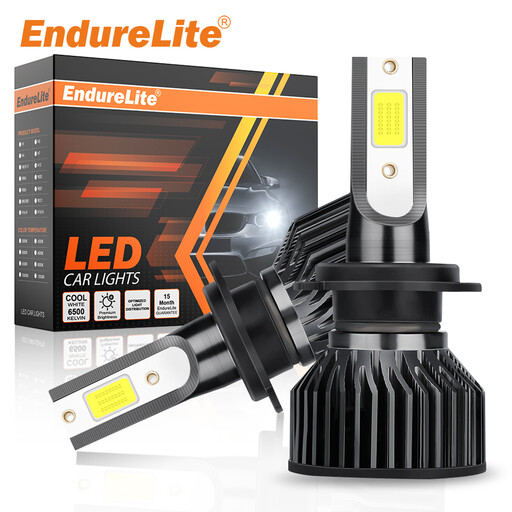
Why This Fits Their Persona: This is a great all-round choice for UK drivers seeking a noticeable and reliable improvement over stock halogen bulbs. It offers a significant boost in brightness and a modern 6000K colour without being overly complex to install.
It is designed to offer a "perfect beam pattern," which helps prevent dazzling oncoming traffic. The built-in CANbus-ready driver also addresses the dashboard error trap for a high percentage of vehicles.
Features a true plug-and-play design and an active cooling fan built into its aluminium alloy body to maintain performance and longevity.

Why This Fits Their Persona: This bulb is a strong candidate for owners of modern European cars who are rightly concerned about CANbus errors. It's built with a focus on high compatibility for vehicles with sensitive onboard computer systems.
It incorporates what the manufacturer describes as the "latest generation CANBUS system," specifically designed to prevent the dashboard error warnings and flickering that can affect these vehicles.
A 1:1 mini size for a true plug-and-play installation, combined with a high-speed turbo fan for efficient cooling and a crisp 6500K light output.
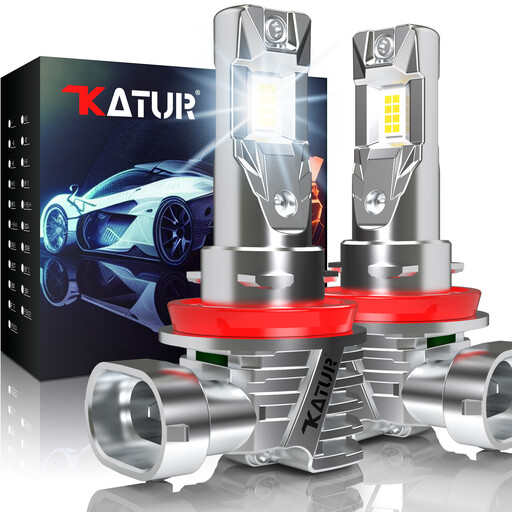
Why This Fits Their Persona: This bulb is ideal for car owners who have limited space inside their headlight housing. Its fanless, compact design means it can fit where bulkier, fan-cooled bulbs cannot, making it a great problem-solver.
It avoids the cooling system trap by using a fanless design with an aircraft-grade aluminium body for passive heat dissipation. This eliminates the noise and potential failure point of a mechanical fan.
The 1:1 integrated mini design makes it a true plug-and-play solution for tight spaces. It's also suitable for use as bright car bulbs in fog light applications.
We have compiled a complete, real-time list of products that fully satisfy these strict selection criteria and UK safety regulations.
1. Are LED headlight bulbs legal for road use in the UK? As of 2026, the rules for MOT testing state that headlights must be a matched pair, emit the correct colour and have a beam pattern that does not dazzle other road users. While aftermarket LED bulbs are widely available, fitting them to a vehicle not originally equipped with them can be a grey area. The key to passing an MOT is ensuring the bulb creates a clean, sharp cut-off line identical to the original halogen. It is always advisable to check the latest DVSA guidelines and have your headlight aim checked professionally after installation.
2. How long do LED headlight bulbs actually last? Many products advertise lifespans of 50,000 hours or more. While this is theoretically possible in perfect laboratory conditions, real-world lifespan is determined by the effectiveness of the cooling system and how often you drive at night. A well-engineered bulb with an active fan or a substantial passive heat sink will last significantly longer than a poorly cooled one. Even so, a quality LED bulb should outlast a halogen bulb many times over, making them a cost-effective choice in the long run.
3. Can I install a plug and play headlight upgrade myself? For most vehicles and true plug-and-play kits, yes. The process is usually as simple as changing a standard bulb. You'll need to access the back of your headlight housing (check your car's manual), disconnect the old bulb and fit the new one. It's good practice to wear gloves, as the oils from your skin can damage the bulb and old halogen bulbs can be very hot. If the bulb requires an external driver or adapter or if access is particularly difficult, you may prefer to consult a professional.