
24/7 Customer Support

Free returns

Same-day & Next-day Delivery

Quality Guaranteed

Unlock Your Welcome Offers: FREE Delivery | Up to 80% OFF | Free 30-day JoyPlus trial
Download the APP
Replacing dim or ageing car lights can improve the clarity of night-time driving, but choosing LED headlight bulbs is not simply a matter of selecting the highest lumen number. The bulb must match the vehicle’s socket, headlamp housing, electrical system and beam design.
This guide from the Joybuy Product Recommendation Officer focuses on the details that help UK motorists avoid unsuitable purchases, unnecessary warning lights and poor beam patterns.
A D2S bulb is not interchangeable with a D3S, D4S or 9012/HIR2 bulb. Even similar-looking products may use different bases, locating tabs, voltage systems or headlight housings.
Before ordering, check:
D1S LED bulbs, D1R LED bulbs, D2S LED bulbs and D2R LED bulbs are designed for different factory HID applications. The same applies to D3S/D3R LED bulbs and D4S/D4R LED bulbs. A 9012 bulb is also commonly listed as an HIR2 LED bulb, but this does not make it compatible with a D-series HID socket.
Large brightness figures in product listings may describe theoretical output, pair output or a manufacturer’s maximum figure. They do not automatically confirm better illumination on a UK road.
A usable headlight depends on:
A poorly positioned high-output bulb can create glare for oncoming drivers while leaving dark patches ahead. Look for 1:1 LED headlight bulbs, narrow chip spacing and clear installation instructions rather than relying only on claims such as “high-brightness car headlights”.
LED chips produce heat at the rear of the bulb. Compact heat sinks, aluminium housings and LED bulbs with cooling fans can help manage this, but a fan also introduces a moving component and may create a faint operating noise.
Some vehicles monitor bulb current and may display an error message, flicker or switch the light off. CANbus error-free LED bulbs are designed to reduce these issues, but “99% compatibility” is not a guarantee for every UK vehicle. A decoder, resistor or additional wiring may still be required.
Confirm the exact bulb code first. Common searches include HID replacement bulbs, Xenon replacement bulbs, D1S/R, D2S/R, D3S/R, D4S/R and 9012 HIR2 LED bulbs.
The “S” and “R” suffixes generally relate to the original HID housing design:
Do not assume a dual-labelled D2S/R or D3S/R bulb will produce the same result in every housing. Check the seller’s fitment information and compare the base, retaining tabs and bulb length with the original.
6000K LED headlight bulbs usually produce a cool white appearance, while 6500K LED headlight bulbs appear slightly cooler and may have a blue-white tone. Colour temperature is not the same as brightness.
For regular UK driving, prioritise a clean beam and adequate contrast in rain over an extremely blue appearance. Very cool light can appear harsh in wet conditions, and the final colour can also be affected by the headlamp lens and projector.
Look for an integrated aluminium body, heat sink or fan, and check whether the rear of the bulb will fit beneath the factory dust cover. Some products advertise IP65 or IP68 water resistance, but the complete headlamp assembly must still remain properly sealed.
A genuine plug and play car bulb should connect without cutting factory wiring. However, HID systems may use an external ballast or igniter. Product instructions should be checked carefully before assuming that the original ballast can remain in place.
After installation, check both dipped and main beam operation, confirm the beam cut-off and have the headlamps aligned if the pattern has changed. Headlamp conversions must comply with UK road-use requirements, and the vehicle owner remains responsible for avoiding glare and maintaining a legal, correctly aimed beam. Check current DVSA guidance and your insurer’s requirements where appropriate.
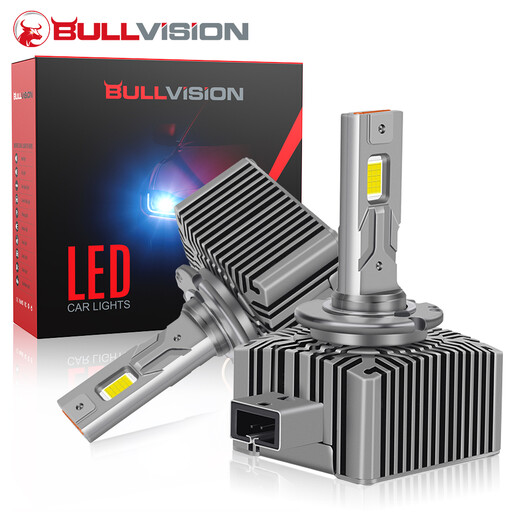
Why This Fits Their Persona: A practical option for drivers replacing factory D3S or D3R Xenon bulbs who want a straightforward two-bulb replacement for regular commuting and night-time A-road use.
Its listing specifies a 1:1 design, integrated driver and cooling fan, helping address beam-position and heat-management concerns. Confirm whether your vehicle requires ballast or decoder compatibility before fitting.
6000K cool white output, aluminium housing, built-in 10,000 RPM fan and stated 50,000-hour operating life.
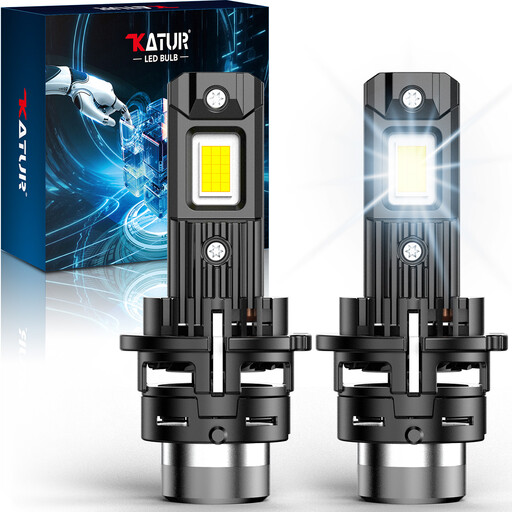
Why This Fits Their Persona: Suitable for motorists who have confirmed a D4S HID fitment and prefer a higher colour temperature with a compact replacement format for frequent evening driving.
The product information identifies it as a replacement for HID assemblies only, not halogen or factory LED units. Its listed 1:1 design and built-in driver reduce the need for wiring modifications, subject to vehicle compatibility.
The listing specifies 6500K white light, a 16,000 RPM cooling fan, aluminium construction and a stated operating life of up to 60,000 hours.
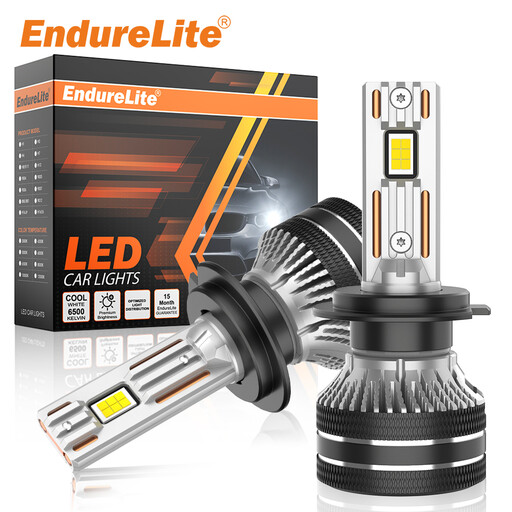
Why This Fits Their Persona: A match for DIY motorists whose vehicle uses the 9012/HIR2 halogen format and who want one bulb type for combined high- and low-beam applications.
It is listed specifically as 9012/HIR2 rather than a generic HID replacement. The 1:1 body and integrated cooling fan address fitment and heat concerns, although the dust-cover clearance should still be checked.
6000K cool white output, plug-and-play format, aluminium housing, built-in 10,000 RPM fan and stated 50,000-hour operating life.
We have compiled a complete, real-time list of products that fully satisfy these strict selection criteria and UK safety regulations.
Legality depends on the vehicle, headlamp approval, bulb type, beam pattern and installation. A conversion that causes glare, has an unsuitable beam or fails the required lighting condition can create roadworthiness and MOT problems. Check current DVSA guidance, the product documentation and your insurer before converting from halogen or HID.
Many listings state operating lives of 50,000 or 60,000 hours, but these are manufacturer-supplied figures and real service life depends on heat, vibration, moisture, electrical stability and usage. Fan condition and dust-cover fit are particularly important for long-term performance.
LEDs can have different power consumption from the original bulb, but the actual saving depends on the vehicle and replacement design. A higher-output LED may not consume less power than the bulb it replaces. Check the stated wattage and confirm that the vehicle’s CANbus monitoring system accepts the new load before buying.