
24/7 Customer Support

Free returns

Same-day & Next-day Delivery

Quality Guaranteed

Unlock Your Welcome Offers: FREE Delivery | Up to 80% OFF | Free 30-day JoyPlus trial
Download the APP
Upgrading your car's standard halogen bulbs to modern LED headlight bulbs is one of the most impactful changes you can make. It promises a clearer view on dark B-roads, a sharp, modern look and improved safety. However, the market is flooded with options, and it's easy to fall into common traps that lead to wasted money, dashboard warning lights and even a failed MOT.
As the Joybuy Product Recommendation Officer, my role is to help you navigate the marketing clutter. Before you add anything to your basket, let's look at the most frequent pitfalls UK drivers encounter and how to sidestep them.
To ensure you get a reliable and effective automotive LED lighting solution, focus on these non-negotiable parameters.
This is the most crucial step. The fitment code (e.g., H7 LED bulb, H4 LED headlight, 9005 LED bulb) refers to the specific shape and size of the bulb's base. It is not interchangeable.
The colour of the light is measured in Kelvin (K). For a modern, crisp look that provides excellent clarity, look for bulbs in the 6000K to 6500K range. This produces a cool white or xenon white light that is similar to natural daylight. Avoid bulbs with higher Kelvin ratings, as they tend to look overly blue and can attract unwanted attention, besides offering poorer visibility in rain or fog.
Equally important is a 1:1 halogen design. This means the LED chips are positioned to mimic the filament in a traditional bulb, ensuring the light is projected correctly into your car's headlight housing. This creates a sharp cut-off line for the low beam, preventing glare for other road users.
The ideal upgrade is a plug and play headlight solution. This means the bulb is designed to fit directly into the socket without needing extra adapters, external driver boxes or modifications to the wiring or dust cover. Bulbs with a compact, "mini" size are often easier to install in tight spaces.
For vehicles made in the last 10-15 years, always check for CANbus LED bulbs. These have built-in resistors or an intelligent driver to communicate correctly with your car's computer, preventing error codes. Some product descriptions will honestly state that a separate CANbus decoder may be needed for particularly sensitive vehicles.
Instead of a generic list, we've matched our recommendations to specific UK driver profiles.
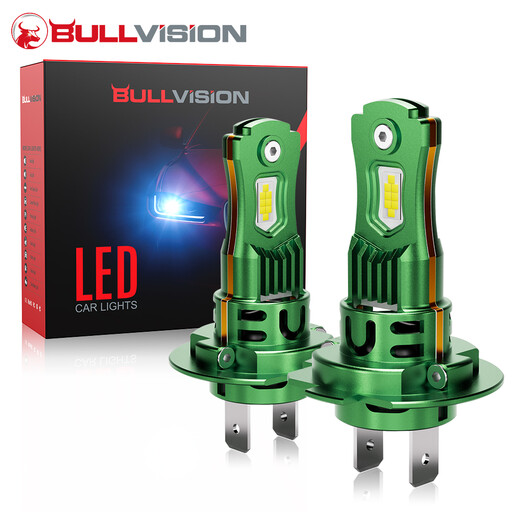
Why This Fits Their Persona: Ideal for the driver who uses their car for daily commutes and school runs. They need a reliable, no-fuss upgrade that improves visibility on motorways and poorly lit urban streets without causing electrical headaches.
Its 1:1 size design directly mimics the original halogen bulb, ensuring a correct beam pattern that won't dazzle others. The built-in intelligent driver is CANbus-ready for most vehicles, tackling the error code pitfall head-on.
True plug-and-play installation with no adapter required. The 6000K cool white colour provides a modern look and clear illumination.
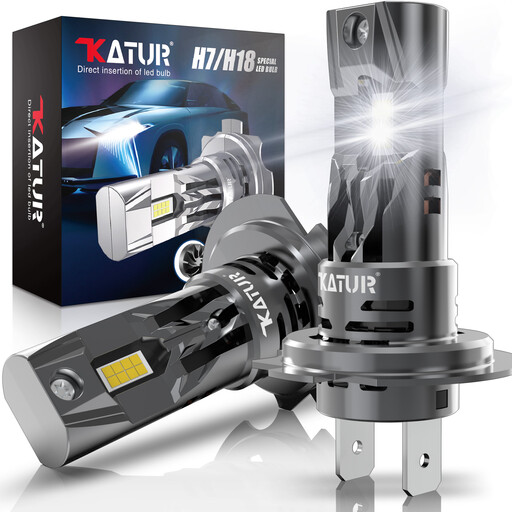
Why This Fits Their Persona: This driver wants a significant jump in performance for night-time driving on country lanes. They value high output and a robust cooling system for longevity and are comfortable with a slightly more involved installation if it means better results.
It directly addresses the overheating pitfall with a powerful 16,000 RPM turbo fan and an aviation-grade aluminium body. This active cooling helps maintain brightness and ensures a longer operational life than poorly cooled alternatives.
Features a smart external driver for improved heat management and CANbus compatibility. The ultra-thin chip spacing helps create a focused beam for a clear and wide field of vision.
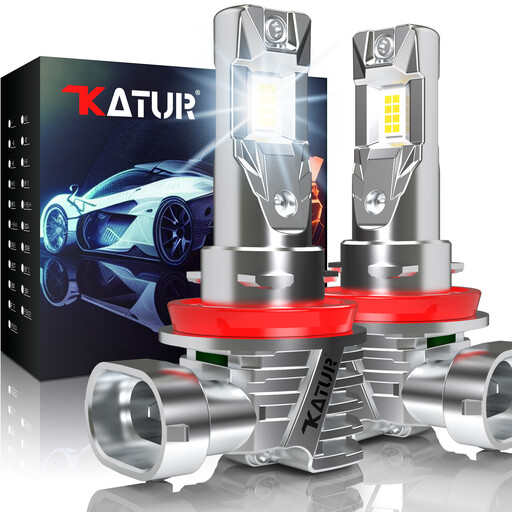
Why This Fits Their Persona: This user wants the benefits of an LED upgrade with the absolute minimum of fuss. Their priority is a silent, reliable bulb that fits easily, especially in cars with tight headlight housings or restrictive dust caps.
The fanless design eliminates a common point of failure—a seized fan motor. Its all-in-one, 1:1 mini design ensures it fits just like the original bulb, avoiding the trap of bulky units that require modifying the dust cover.
Completely silent operation and a fully integrated design with no external drivers or wires, making it one of the most straightforward types of **H11 LED** to install.
We have compiled a complete, real-time list of products that fully satisfy these strict selection criteria and UK safety regulations.
The legality of aftermarket LED headlight bulbs in the UK for road use is a nuanced topic. For a vehicle to pass its MOT, its headlights must produce a clear and correct beam pattern that does not cause glare or dazzle to other road users. While simply swapping a halogen for an LED is not an automatic pass, high-quality LED bulbs designed to replicate the original halogen's filament position are far more likely to produce a compliant beam pattern. It is essential to choose bulbs that create a sharp, clean cut-off.
If your car was manufactured after the mid-2000s, there is a high chance it uses a CANbus system. Many modern LED bulbs are "CANbus-ready" and have circuitry to prevent errors on most vehicles. However, some cars, especially from German manufacturers, have highly sensitive systems. If the product description notes that a decoder may be required for certain brands, it is a good idea to be prepared. If you install the bulbs and get a dashboard warning, a simple plug-in decoder is usually the solution.