
24/7 Customer Support

Free returns

Same-day & Next-day Delivery

Quality Guaranteed

Unlock Your Welcome Offers: FREE Delivery | Up to 80% OFF | Free 30-day JoyPlus trial
Download the APP
Upgrading to LED headlight bulbs can give your car a cleaner white appearance, quicker illumination and, where the beam is correctly formed, improved road visibility. However, buying by lumen figures alone is a common way to waste money. The right choice depends on your vehicle’s socket, headlamp design, electrical system and whether the retrofit is suitable for use on UK roads.
This guide explains the main traps to avoid, the specifications worth checking and a selection of car LED bulbs matched to different driving needs.
H7, H4, H11, H8, H9, HB3/9005 and HIR2/9012 bulbs are not interchangeable simply because they look similar. The mounting tabs, connector and dimensions differ. A bulb that appears close to the original may not lock into the housing or may sit at the wrong angle.
Check the original bulb marking, owner’s manual or vehicle parts information before ordering. Do not rely only on a general “universal fit” description.
Very high brightness figures can look persuasive, but the useful result depends on beam pattern, LED chip position and headlamp reflector or projector design. Poor alignment may create dark patches, scatter light or dazzle other road users.
A 1:1 replacement design, with chips positioned similarly to the original filament or discharge source, is usually more relevant than a headline lumen number. After installation, check the beam against a wall and have the headlamp alignment inspected if necessary.
Plug-and-play LED headlight bulbs normally connect to the original socket without cutting wires. Nevertheless, some vehicles monitor bulb resistance and may display a dashboard warning, flicker or switch the lamp off. CANbus compatibility can reduce these issues, but claims such as “98%” or “99% compatible” are not a guarantee for every model.
A sensitive vehicle may still need a decoder, resistor or additional adapter. Also check that the fan, heat sink and connector will fit beneath the original dust cover.
Start with the exact fitting:
For HID replacements, confirm whether your car uses D1S, D1R, D3S, D3R or D4S. The “S” and “R” designations relate to the original optical application, so compatibility remains important.
Many buyers choose 6500K white LED bulbs for a cool, modern appearance. Products around 6000K to 6500K generally look white with a slight cool tone, but colour temperature does not measure brightness or beam quality.
For UK driving in rain, mist and dirty winter conditions, an extremely blue-looking light may not be the most comfortable option. More important checks include:
LED fog light bulbs should also be checked carefully. Fog lamps are designed for a particular low, wide distribution; simply installing a brighter bulb does not automatically improve performance.
LED chips produce heat at the rear of the bulb, so look for an aluminium housing, heat sink, copper components or an integrated fan. Fan-cooled designs can offer strong heat removal but need enough space and may eventually develop mechanical noise. Fanless designs are quieter and have fewer moving parts, but require effective passive heat dissipation.
Check the stated voltage, wattage and ingress rating. IP65, IP67 and IP68 ratings describe resistance to dust and water under specified test conditions; they do not make a poorly sealed headlamp housing waterproof.
For UK road use, confirm that the retrofit is appropriate for your vehicle and headlamp assembly, and check relevant approval, insurance and MOT considerations. A bulb fitting the socket is not, by itself, confirmation of legal road suitability.
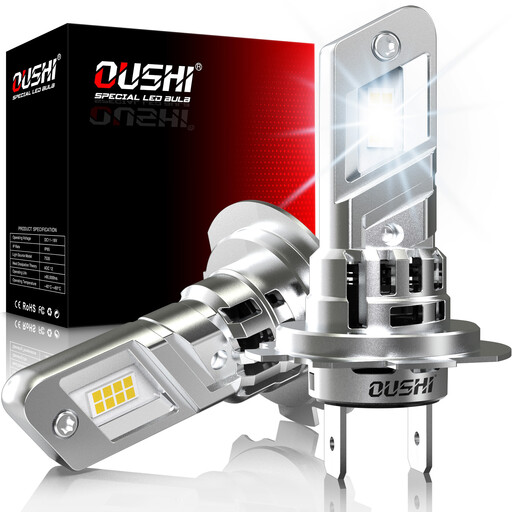
Why This Fits Their Persona: A compact option for drivers whose vehicle uses H7 halogen bulbs and who want a straightforward socket replacement for regular commuting.
Its listed 1:1 mini format and direct-fit design help address clearance and complicated wiring concerns. Some sensitive vehicles may still need a CANbus decoder.
6500K white output, built-in cooling fan, 1:1 size and CANbus system listed by the seller.
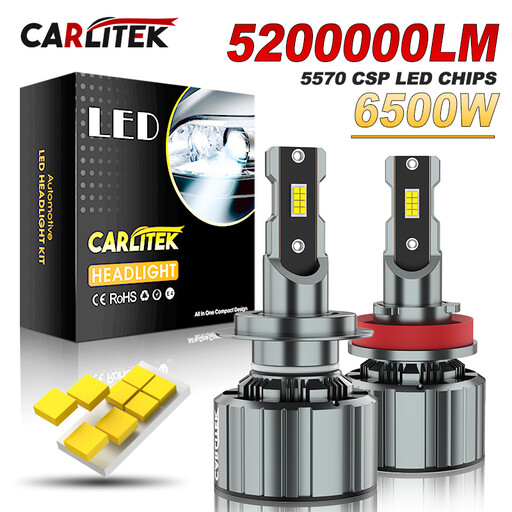
Why This Fits Their Persona: Suitable for buyers prioritising weather resistance, beam control and broad fitting flexibility across compatible headlight or fog-light applications.
The listing specifies a 1:1 filament position, built-in CANbus and IP68 construction, addressing beam scatter, warning messages and moisture concerns.
6000K cool white colour, 10,000 RPM fan, IP68 rating and H8/H9/H11 compatibility.
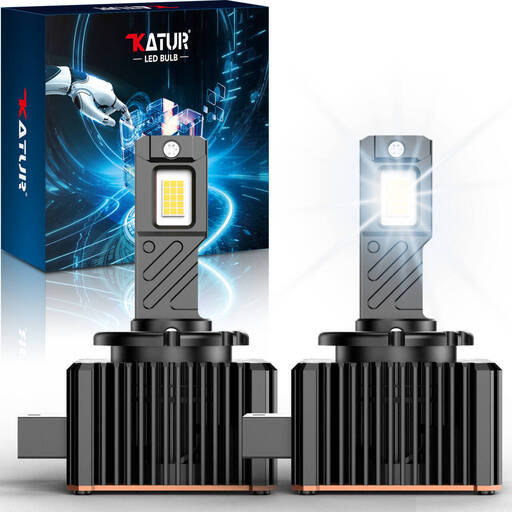
Why This Fits Their Persona: Designed for owners replacing compatible HID D3S or D3R bulbs who regularly drive after dark and want an immediate-on alternative.
The listing clearly limits use to HID assemblies, helping prevent the costly mistake of fitting a replacement HID bulb into a halogen or factory LED housing.
6500K white light, 1:1 installation, aluminium construction, cooling fan and an intelligent driver listed as CANbus-compatible.
We have compiled a complete, real-time list of products that fully satisfy these strict selection criteria and UK safety regulations.
Legality depends on the bulb, vehicle, headlamp approval and installation. A direct-fit bulb is not automatically approved for every public-road application. Check the product documentation, your vehicle requirements and current MOT guidance. Correct beam alignment is essential to avoid dazzling other drivers.
LEDs can use less power than some halogen or HID systems, but the exact consumption depends on the bulb’s wattage and driver. Compare the stated watts per pair, not just the lumen figure. Cooling fans and CANbus components also affect the overall electrical design.
Listings commonly quote service lives of 50,000 or 60,000 hours, but actual life depends on temperature, vibration, voltage, moisture and usage. Effective cooling, a properly sealed housing and a compatible electrical system are more useful buying indicators than a lifespan figure alone.