
24/7 Customer Support

Free returns

Same-day & Next-day Delivery

Quality Guaranteed

Unlock Your Welcome Offers: FREE Delivery | Up to 80% OFF | Free 30-day JoyPlus trial
Download the APP
Replacing factory halogen lamps with LED headlight bulbs can give a cleaner white appearance and a more modern lighting setup. However, choosing by lumen figures alone often leads to wasted money, poor beam control or warning lights on the dashboard.
This guide explains the specifications that matter, common buying traps and suitable options for different UK driving needs.
Listings often lead with very large brightness numbers. These figures may describe the combined output of a pair, and actual road illumination also depends on the reflector, projector, chip position and beam alignment.
A bulb advertised as 30,000 lumens is not automatically more useful than one with a lower stated output. Beam control and correct filament positioning are more important for placing light on the road without excessive glare.
An H7 LED bulb will not replace an H1, H4, H8, H9, H11, 9005 or 9006 fitting. Even when the socket matches, the bulb may be too long for the housing, dust cap or rear clearance.
Always check the vehicle handbook, the marking on the original bulb or a reputable vehicle fitment guide before ordering. For cars with factory xenon, HID or LED headlamps, a halogen-replacement bulb may not be appropriate.
LED chips produce heat at the rear of the bulb. A fan-cooled LED bulb can move heat away quickly but may produce a small operating noise and needs sufficient ventilation. A fanless LED bulb is quieter and has no fan to fail, but its passive heat sink must fit inside the housing and manage heat effectively.
Some modern vehicles monitor bulb current. A “CANbus-ready LED bulb” can reduce flickering or dashboard warnings, but it does not guarantee compatibility with every model. Sensitive European vehicles may still need an additional decoder.
Common replacement formats include:
A 1:1 halogen replacement bulb is shaped to resemble the original lamp, which can simplify installation and improve the chance of fitting beneath the factory dust cover. Still, compare the total length, collar position and connector design rather than relying on the label alone.
Many drivers choose 6000K white headlight bulbs for their crisp appearance. A 6500K product may look slightly cooler or bluer. Colour temperature does not by itself indicate brightness or legal compliance.
Look for a narrow LED chip arrangement that places the light source near the original halogen filament position. A focused beam can help maintain the intended cutoff in a reflector or projector housing. After installation, check for dark patches, scattered light and glare. The headlamp aim may need adjustment.
Aluminium housings and heat sinks are common because aluminium transfers heat away from the LED assembly. Fan-cooled designs may suit high-output applications where there is enough room behind the lamp. Waterproof ratings such as IP65, IP67 or IP68 describe resistance under defined test conditions; they do not remove the need for a properly fitted dust cover and sealed connector.
Before buying, also check:
For public-road use in the UK, confirm that the retrofit is suitable for your vehicle and lighting assembly. Check the manufacturer’s documentation, applicable approval requirements and MOT implications before fitting.
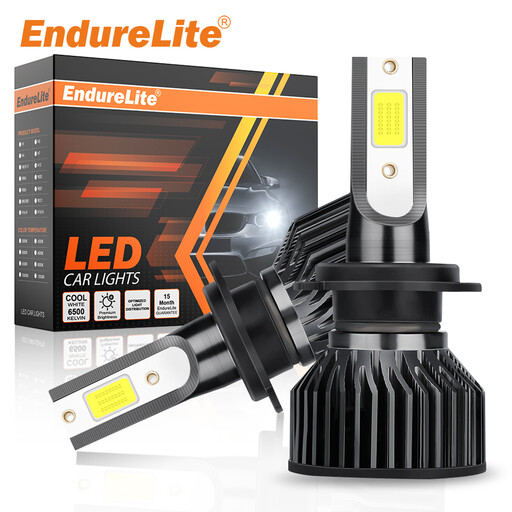
Why This Fits Their Persona: A practical multi-fit option for drivers who have confirmed one of the listed sockets and want a plug-and-play replacement in a two-bulb pack.
The listing identifies several socket types, a 1:1 beam design, integrated driver and CANbus-ready operation. Fitment should still be checked against the original bulb.
6000K colour temperature, IP68 waterproof rating, built-in fan and stated 50,000-hour operating life.
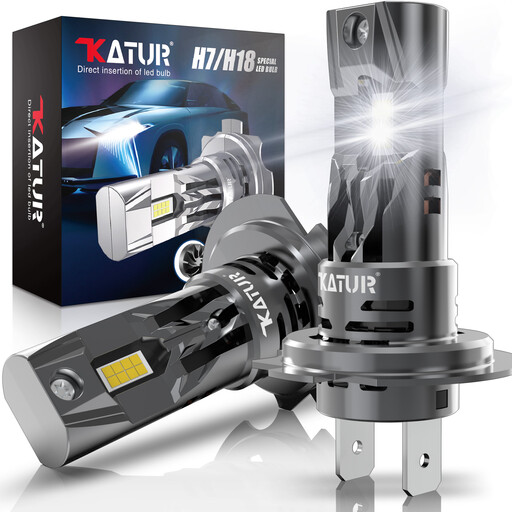
Why This Fits Their Persona: Suits drivers seeking a compact H7 design with active cooling and a stated CANbus-ready driver for regular commuting or longer journeys.
Its 1:1 mini format is intended to reduce clearance problems, while the 16,000RPM fan and aluminium body address heat management.
Pack of two, 6000K light, integrated aviation-aluminium housing and stated IP65 protection.
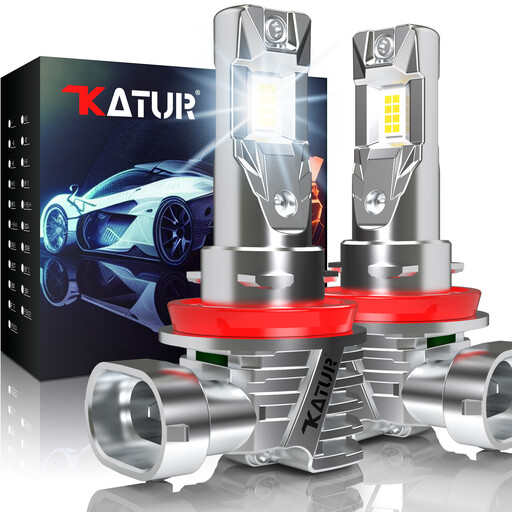
Why This Fits Their Persona: A sensible match for H8, H9 or H11 users who prioritise quiet operation and need a compact bulb for a restricted headlamp or fog-light housing.
The fanless, all-in-one construction avoids fan noise and external drivers. It is still unsuitable where the housing cannot dissipate heat adequately.
Fanless construction, 6000K white light, 1:1 mini design and stated IP rating for the two-bulb pack.
We have compiled a complete, real-time list of products that fully satisfy these strict selection criteria and UK safety regulations.
Legality depends on the bulb, vehicle, lamp housing and applicable approval requirements. A direct halogen replacement is not automatically suitable for public-road use. Check the product documentation, vehicle requirements and current MOT guidance before fitting.
LEDs can provide a given level of illumination using less electrical power, but the result varies by product and vehicle. Cooling fans, drivers and CANbus components also consume power. Compare the stated wattage and avoid assuming that a higher wattage means better road performance.
Manufacturers commonly state operating-life figures such as 50,000 or 60,000 hours. These are product claims measured under particular conditions, not a guaranteed service period in every UK vehicle. Heat, vibration, moisture, voltage fluctuations and installation quality can affect actual service life.