
24/7 Customer Support

Free returns

Same-day & Next-day Delivery

Quality Guaranteed

Unlock Your Welcome Offers: FREE Delivery | Up to 80% OFF | Free 30-day JoyPlus trial
Download the APP
Driving on poorly lit British roads, especially during winter or in heavy rain, can be a nerve-wracking experience. Standard halogen bulbs often cast a dim, yellowish light that does little to inspire confidence. It's no surprise that many UK drivers are looking to upgrade to modern LED headlight bulbs for better visibility and safety.
However, the market is flooded with options, and it's easy to fall into common traps set by confusing marketing claims. Before you spend your money, let's illuminate the three most common pitfalls that catch out unwary buyers.
To make a smart purchase, you need to look past the hype and focus on the technical details that determine real-world performance and safety. Here are the three core parameters to check.
The first step is identifying the correct bulb type for your vehicle, such as an H7 LED bulb for a dipped beam or an H4 LED bulb that handles both high and low beams. You can find this information in your vehicle's handbook or by checking the existing bulb.
However, the fitment code is only half the story. The physical size of the LED bulb is critical. Many older LED designs had bulky fans or heatsinks that prevented the headlight's rear dust cover from being refitted, compromising its weather sealing. Look for models described as 1:1 mini size or plug and play headlights, as these are designed to have the same dimensions as the original halogen bulb, ensuring a hassle-free installation without modifications.
A safe LED upgrade must replicate the precise beam pattern of the halogen bulb it replaces. This ensures the light is directed onto the road and not into the eyes of other drivers. High-quality bulbs achieve this with strategically placed LED chips and sometimes an adjustable locking collar to fine-tune the alignment. An unfocused beam is not only ineffective but also a potential MOT failure.
The colour of the light is measured in Kelvin (K). Standard halogens are around 3200K (warm yellow). A 6000K cool white light is a popular choice for LED upgrades, as it closely mimics natural daylight, improving contrast and reducing eye strain during night driving. This crisp, modern look enhances the appearance of your vehicle while providing clearer illumination.
As mentioned, heat is the primary cause of LED failure. A reliable bulb must have an active cooling system. This usually involves a body made from aviation-grade aluminium to act as a heatsink, often paired with a high-speed micro-fan (e.g., 10,000 RPM or higher) to actively dissipate heat away from the LED chips. This is non-negotiable for longevity.
For modern cars, a robust CANbus error free LED design is essential. This means the bulb has a built-in intelligent driver or resistor that communicates correctly with your car's computer, preventing dashboard errors. Be aware that some highly sensitive vehicles may still require an additional decoder, and reputable sellers are usually transparent about this.
We've filtered through the options to match specific bulbs with common UK driver profiles. This isn't about finding a single "best" bulb, but the right one for your needs.
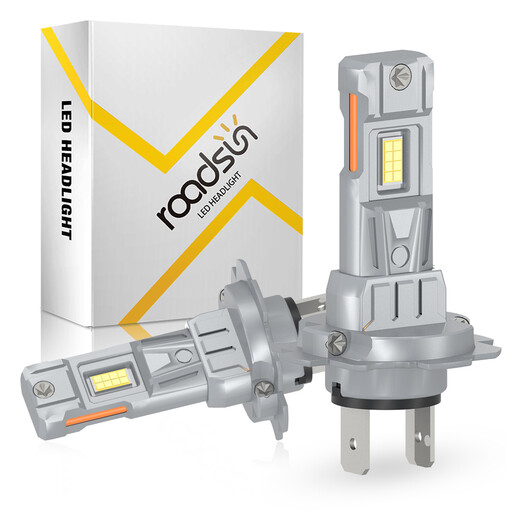
Why This Fits Their Persona: This driver needs a straightforward, reliable upgrade for their daily commute or family car. They value safety and ease of installation over extreme brightness, making this a perfect fit for replacing dim H7 bulbs in common UK cars like the Ford Focus or Vauxhall Astra.
Its "Real 1:1 Mini Size" design directly counters the fitment trap, ensuring it fits into the headlight housing without needing modifications or leaving the dust cover off.
True plug-and-play installation with no extra adapters required. The all-weather build provides reliable performance in rain and fog.
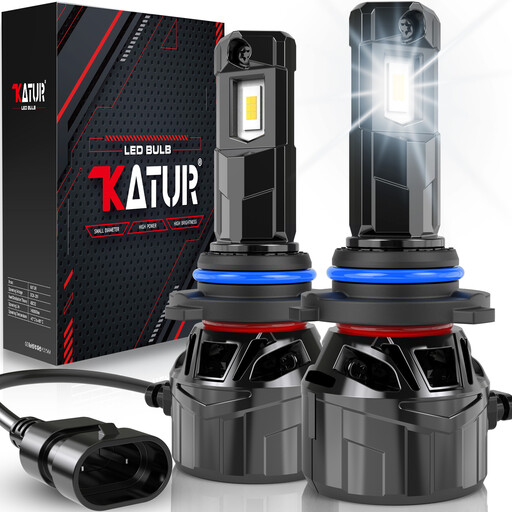
Why This Fits Their Persona: For the enthusiast who drives on unlit B-roads or wants the maximum possible illumination from their bright car bulbs. This user prioritises raw output and understands that high power requires serious thermal management.
It tackles the lifespan and performance degradation trap head-on with a high-efficiency cooling system, featuring a powerful 16,000 RPM fan and copper heat tubes to manage the heat from its high-output chips.
Delivers exceptionally high brightness for superior long-range visibility. The advanced cooling system is designed to maintain stable performance and support a long operational life.
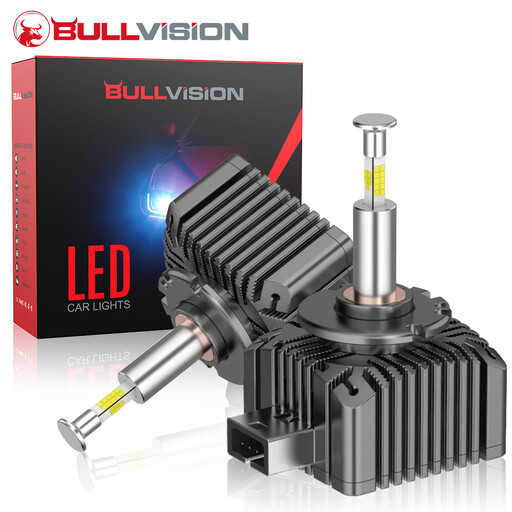
Why This Fits Their Persona: This driver owns a newer vehicle, likely with factory-fitted HID headlights (which use D-series bulbs), and their main priority is a seamless, error-free upgrade. They want modern LED performance without dashboard warnings on their Audi, BMW or Mercedes-Benz.
It directly addresses the "CANbus myth" by incorporating a built-in intelligent driver specifically designed for high compatibility, reducing the risk of the error messages that plague owners of sensitive modern cars.
Designed as a direct replacement for D1S/R HID bulbs. The focus on a perfect beam pattern ensures it works correctly within projector headlight housings common to these vehicles.
We have compiled a complete, real-time list of products that fully satisfy these strict selection criteria and UK safety regulations.
The legality of fitting aftermarket LED bulbs into housings originally designed for halogens can be complex. For a vehicle to pass its MOT test, the headlight unit must produce a compliant beam pattern that does not cause dazzle to other road users. While many high-quality LED bulbs are engineered to mimic the original halogen beam pattern accurately, the complete headlight unit may not be officially type-approved. It is always recommended to check the latest DVSA guidelines and ensure your headlights are correctly aligned after installation.
No, quite the opposite. LED bulbs are significantly more energy-efficient than their halogen counterparts. A typical halogen headlight bulb might use 55 watts of power, whereas an equivalent LED bulb might use only 20-25 watts to produce a much brighter light. This lower power consumption places less strain on your car's alternator and battery.
The "K" stands for Kelvin, which is a scale used to measure colour temperature. Lower Kelvin values (2700K-3500K) produce a warm, yellowish light similar to a traditional incandescent bulb. Higher values produce a cooler, bluer light. 6000K cool white sits in a sweet spot that is very close to natural daylight, appearing as a crisp, pure white. This helps to improve visibility by increasing the contrast of objects on the road.