
24/7 Customer Support

Free returns

Same-day & Next-day Delivery

Quality Guaranteed

Unlock Your Welcome Offers: FREE Delivery | Up to 80% OFF | Free 30-day JoyPlus trial
Download the APP
Replacing halogen headlights with LED headlight bulbs can improve the colour, appearance and perceived brightness of your vehicle’s lighting. However, a high lumen figure alone does not guarantee a suitable upgrade. The wrong fitting, poor beam control or inadequate heat management can leave you with wasted money, dashboard warnings or an uncomfortable amount of glare for other road users.
This guide explains the main buying pitfalls, the specifications worth checking and a selection of products matched to different driving needs.
LED listings often highlight very large lumen numbers. These figures may refer to the pair, peak output or a manufacturer’s stated maximum rather than the light delivered on the road. Beam pattern, chip positioning and headlight housing design also affect usable illumination.
A bulb with a 1:1 halogen replacement design aims to position its LED chips similarly to the original filament. This can help preserve the intended beam shape, but the headlight still needs to be correctly aligned after installation.
H4, H7 and HB4/9006 are different bulb fittings. Even where a product is described as suitable for many vehicles, you must confirm the original bulb code and available space behind the dust cover.
Some vehicles also monitor bulb resistance and may display a fault warning or cause flickering after an LED conversion. CANbus LED bulbs can reduce this risk, but “CANbus ready” is not a guarantee for every model. Sensitive vehicles may still require a separate decoder.
LED chips produce heat at the rear of the bulb. Fan-cooled LED bulbs can remove heat quickly, while fanless designs avoid moving parts and operating noise. Neither design is automatically suitable for every housing: check clearance around the fan, heatsink and dust cap.
Water resistance is useful for wet UK conditions, but an IP rating describes protection against dust and water under specified test conditions. It does not confirm legal approval for every headlight application. Check your vehicle manual, bulb approval information and current UK road-use requirements before fitting. After installation, confirm that the beam does not dazzle oncoming traffic.
Start with the code printed on the old bulb or listed in the vehicle handbook:
Do not rely solely on a vehicle registration lookup. Compare the original bulb, connector, locking tabs and dimensions.
A 1:1 chip position, adjustable collar and narrow chip spacing can help create a more controlled beam. This matters more than a headline brightness claim because poorly positioned LEDs may create dark patches or glare.
Many replacement bulbs offer 6000K cool white headlights, while others use 6500K. Cool white light has a blue-white appearance, but colour temperature does not directly measure brightness. Consider whether the visual appearance suits your vehicle and whether the bulb is permitted for your intended road use.
Look for an aluminium housing, clearly stated voltage range and a cooling method suited to the available space. Products in this selection list features such as IP65, IP67 or IP68 protection, built-in fans and CANbus decoding. These are useful specification points, but installation quality remains important.
A claimed operating life of 50,000 or 60,000 hours is a manufacturer-stated figure rather than a guarantee of service life in every UK vehicle. Heat, vibration, voltage variation and usage patterns can affect real-world durability.
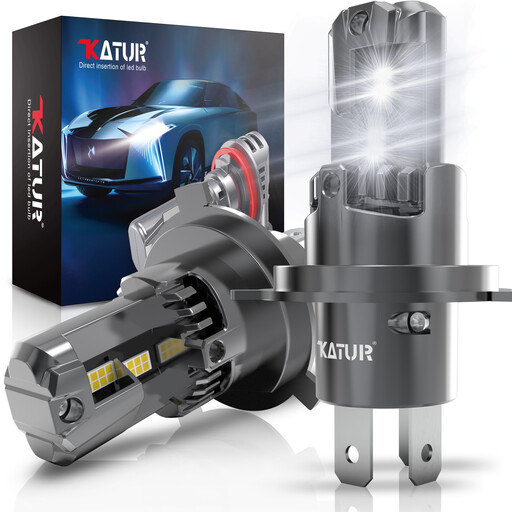
Why This Fits Their Persona: A compact option for drivers replacing H4, 9003 or HB2 bulbs on cars, vans, SUVs and motorcycles who want a straightforward plug-and-play installation.
Its listed 1:1 mini size and external driver are intended to simplify fitment while the stated CANbus-ready design addresses some warning-light and flicker issues.
6000K colour temperature, 16,000RPM fan, IP65 protection and a stated 60,000-hour operating life.
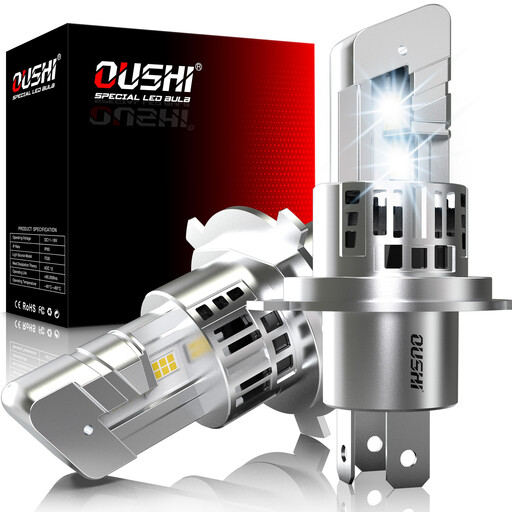
Why This Fits Their Persona: Suitable for owners prioritising compact packaging, high and low beam operation and a neat installation in vehicles with limited space.
The product description specifies a 1:1 design and notes that some sensitive vehicles may still need an additional CANbus decoder.
High and low beam function, 6500K colour, built-in turbo fan and stated CANbus compatibility.
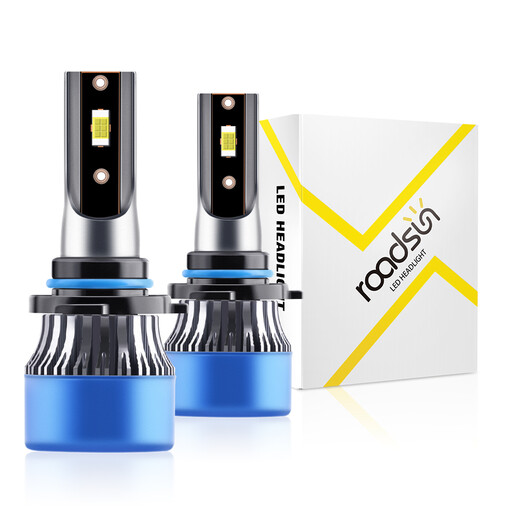
Why This Fits Their Persona: A practical match for drivers of cars, lorries, SUVs, motorcycles and powersports vehicles using HB4/9006 bulbs for driving, fog or spot-light duties.
The listing specifies a 1:1 fit, IP68 dust and water protection and an integrated fan, addressing fitment, weather and heat-management concerns.
6000K cool white output, built-in active cooling fan, plug-and-play installation and stated -40°C to 85°C operating range.
We have compiled a complete, real-time list of products that fully satisfy these strict selection criteria and UK safety regulations.
Before fitting plug-and-play car bulbs:
If the bulb does not illuminate, reverse the connector where the design permits. Persistent flickering or warning messages may indicate that a decoder is needed.
Legality depends on the vehicle, headlamp housing, bulb approval and intended road use. A plug-and-play fitting does not automatically make an LED conversion road legal. Check current UK requirements, the vehicle handbook and the product’s approval information. Correct beam alignment is essential.
Many listings state operating lives between 50,000 and 60,000 hours, with some HB4 products listing longer figures. These are manufacturer-stated estimates. Actual life can vary with heat, electrical conditions, vibration and how often the lights are used.
LEDs can use less electrical power for a comparable lighting application, but the saving depends on the specific bulb’s wattage and your driving pattern. Check the stated power draw rather than assuming every LED replacement consumes less energy.