
24/7 Customer Support

Free returns

Same-day & Next-day Delivery

Quality Guaranteed

Unlock Your Welcome Offers: FREE Delivery | Up to 80% OFF | Free 30-day JoyPlus trial
Download the APP
Upgrading your car's standard halogen headlights to modern LEDs is one of the most effective ways to improve night-time visibility and give your vehicle a contemporary look. However, the market is flooded with options, and it's easy to fall into common traps that lead to wasted money, poor performance and even potential MOT failures.
As a Joybuy Product Recommendation Officer, my role is to help you navigate the marketing clutter. This guide breaks down what really matters when choosing LED headlight bulbs, ensuring you get a safe, reliable and effective car light upgrade.
Before you add any bulbs to your basket, be aware of these widespread issues that catch many UK drivers out.
To make a smart purchase, focus on these three technical specifications. They are the true indicators of quality and performance.
This is the most fundamental check. Your vehicle's headlight housing is designed for a specific bulb type, identified by a code like H4, H1 or H11.
How to check: Your vehicle owner's manual is the most reliable source. Alternatively, the code is usually printed on the base of your existing bulb. Never guess this, as an incorrect fitment simply will not work.
If your car was made in the last 10-15 years, it almost certainly has a CANbus (Controller Area Network) system. This system will detect the lower power consumption of an LED bulb as a fault. To prevent this, you need bulbs that are CANbus ready. These have integrated circuitry that communicates correctly with your car's computer, preventing error codes and flickering without the need for extra wiring or adapters.
The colour of the light is measured in Kelvin (K). A standard halogen bulb is around 3200K (warm yellow), while 6000K cool white is a popular choice for LEDs, offering a crisp, modern look that is close to natural daylight.
More importantly, the bulb's physical design must replicate the halogen's filament position precisely. This ensures the light is projected correctly by your car's reflector or projector housing, creating a sharp cut-off line for the low beam. This prevents dazzling other drivers and is a key point checked during an MOT inspection.
Based on these practical criteria, we've matched some options to different types of UK drivers.
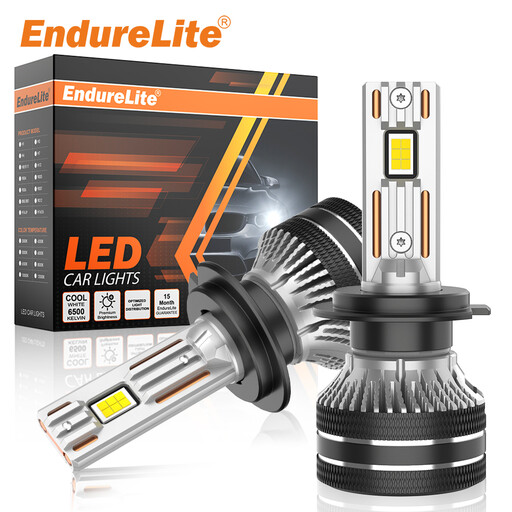
Why This Fits Their Persona: Ideal for drivers of popular UK hatchbacks and family cars that use H4 bulbs. This provides a significant, balanced upgrade for daily driving on motorways and in town, improving safety without being overly complex.
It features 1:1 beam pattern technology to avoid the "brightness over focus" trap, ensuring light is directed properly. It is also CANbus ready, tackling the dashboard error pitfall head-on.
A complete solution for H4 vehicles, combining a focused beam, high/low beam functionality and a built-in fan for effective heat management and longevity.
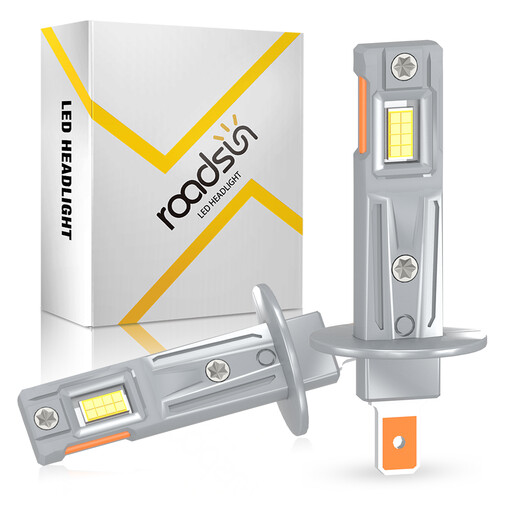
Why This Fits Their Persona: Perfect for those who frequently drive on unlit B-roads or face challenging British weather. This bulb is designed specifically for fog lights, prioritising light penetration through rain, fog and mist to improve safety.
It focuses on "strong penetration performance" rather than just brightness, a key factor for visibility in poor weather. The IP67 waterproof rating also addresses durability concerns.
Specialised for fog light application, offering enhanced visibility in adverse conditions. The 1:1 mini size ensures it fits easily into compact fog light housings.
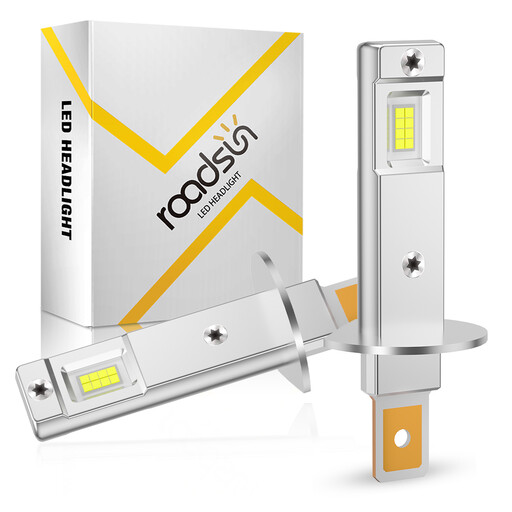
Why This Fits Their Persona: This is for the car owner who wants to perform their own simple upgrades but is wary of complex installations. The emphasis on a 3-minute, tool-free fit makes it an accessible entry into a **car light upgrade**.
It directly counters the false "plug and play" claim by having a genuine 1:1 mini size that matches the original halogen bulb, eliminating the need for adapters or modifications that often complicate installation.
The primary benefit is the extremely simple installation. Its all-in-one design with no external driver makes it one of the most straightforward upgrades available.
We have compiled a complete, real-time list of products that fully satisfy these strict selection criteria and UK safety regulations.
Yes, as a replacement for halogen bulbs, they can be road legal. However, the key condition is that they must be designed to fit and work correctly in a headlamp unit made for halogen bulbs. This means they must produce a compliant beam pattern with a clear cut-off to avoid dazzling other drivers. It is the vehicle owner's responsibility to ensure their lights are correctly fitted, aligned and MOT-compliant.
This is a common issue on modern cars with a CANbus system. To avoid it, you should specifically choose bulbs that are advertised as CANbus ready or "error-free". These bulbs include built-in resistors that tell your car's computer everything is working normally, preventing warning lights or flickering.
The fitment code relates to the bulb's base and function. H4 LED headlight bulbs are typically "dual-filament," meaning one bulb contains the light sources for both high and low beams. In contrast, H1 LED bulbs are "single-filament" and are used for only one purpose, such as a dedicated high beam, low beam or in a separate housing for fog lights. Always consult your car's manual to confirm which type you need.